
How to Start a Cleaning Business: Prices for Your First Homes
Driveway Desk team 14 October 2026 6 min read
Your next job
Less time at the desk.
Build your price book, schedule the next visit and turn completed work into an invoice.
Start your first quoteIn this article
To start a cleaning business, set up the legal basics for your state, choose who you clean for, buy a supply kit, and write prices for the three cleans you will sell: standard, deep and move-out. Then quote every new customer a deep first clean followed by a recurring standard clean. That first-visit rule is what keeps your early jobs from running at a loss.
Short answer
Price by square feet with adjustments for extra bedrooms and bathrooms. Quote the first visit as a deep clean and the recurring visits as standard, on one written quote.
Choose who you clean for
Residential recurring work (weekly, every two weeks, monthly) is the easiest start for a one-person business: steady, scheduled and close to home. Move-out cleans pay well per visit but come one at a time. Office cleaning runs on evenings and contracts. Pick one to start, so your prices, supplies and schedule all fit the same kind of job. Exterior cleaning (driveways, siding, decks) is a separate trade with its own equipment; see how to start a pressure washing business if that is the work you want.
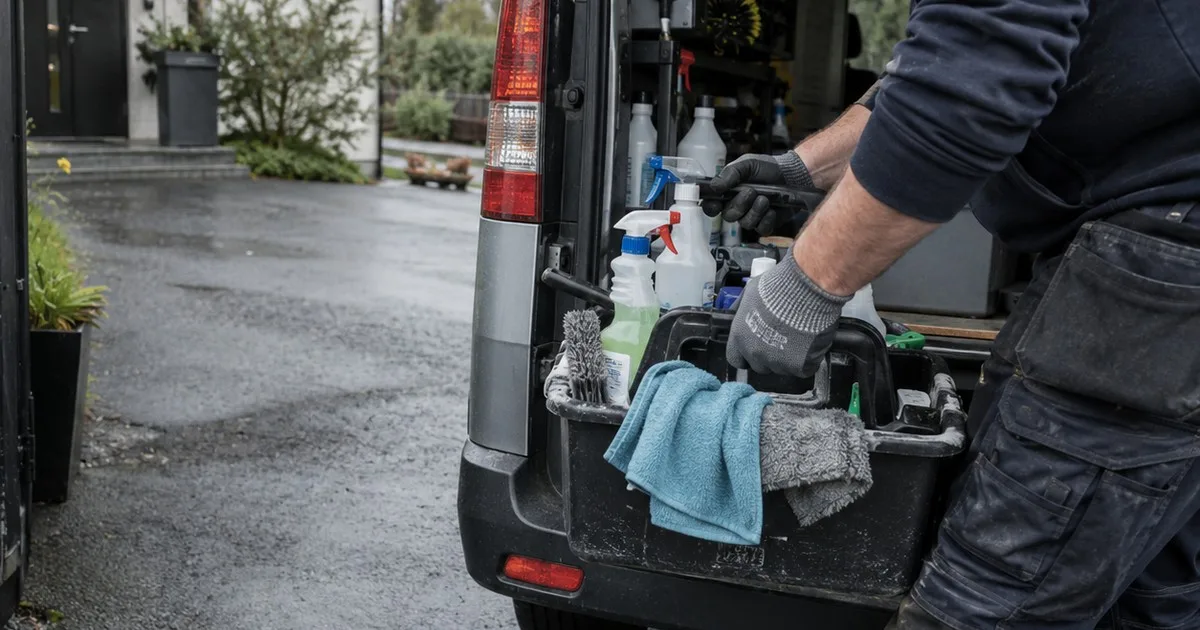
"One caddy per clean, packed the same way every time"
Set up the business basics
Rules vary by state and city. The SBA's 10 steps cover structure, registration and a business bank account. Get an EIN from the IRS if you will hire, and check the SBA licensing guide for your local business license. Get general liability insurance before your first paid clean, and ask about bonding if you will hold customers' keys.
Build a supply kit you can carry
A vacuum, a mop and bucket, microfiber cloths, gloves, scrub brushes and a short list of products you trust. Keep it small enough to carry in one trip. Restock after every job, so the kit is complete before the next one.
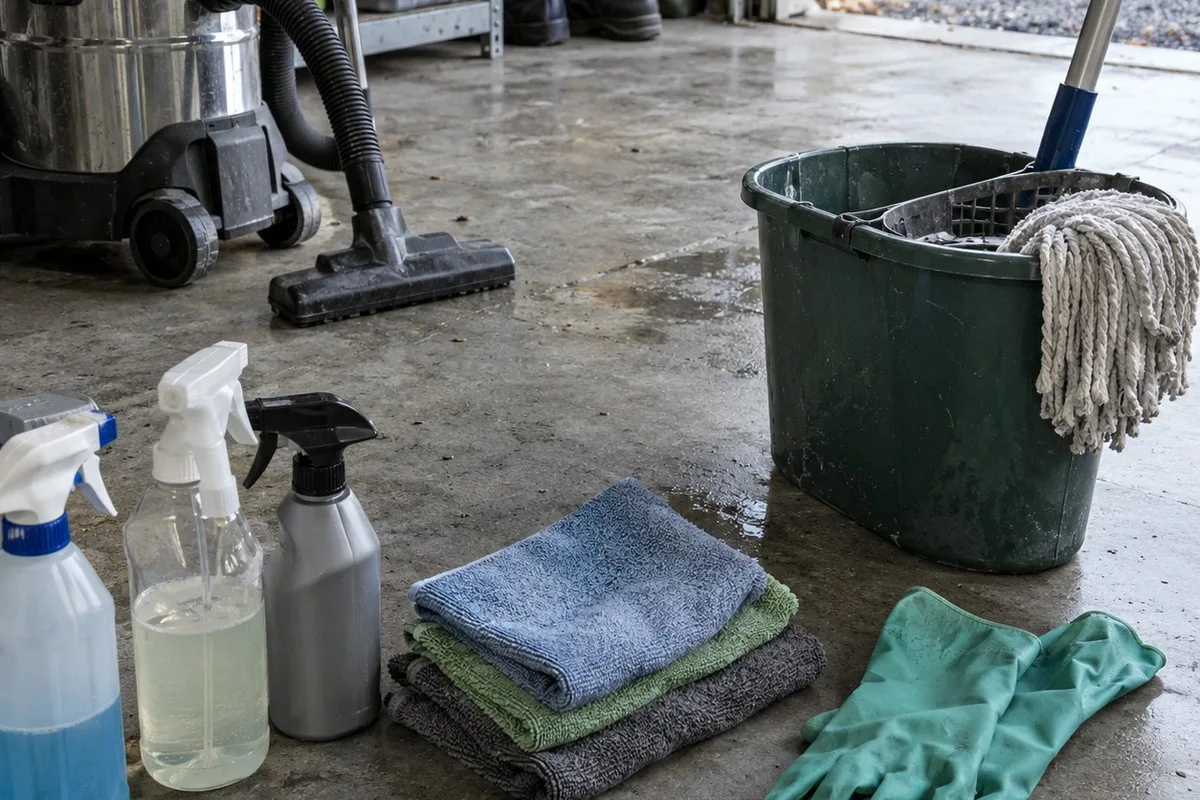 "The starter kit: a vacuum, a mop, cloths and a few products"
Write your prices
Price by home size, then adjust for rooms and the type of clean. Our house cleaning price calculator starts at $0.09 per square foot for a standard clean, adds $10 for each bedroom over three and $20 for each bathroom over two, and multiplies by 2 for a deep clean and 3 for a move-out. Those are editable starting points, not market averages:
| Home size | Standard | Deep | Move-out |
|---|---|---|---|
| 1,000 sq ft | $90.00 | $180.00 | $270.00 |
| 1,500 sq ft | $135.00 | $270.00 | $405.00 |
| 2,000 sq ft | $180.00 | $360.00 | $540.00 |
| 2,500 sq ft | $225.00 | $450.00 | $675.00 |
Here is the rule that saves new cleaners the most money: never price a first visit as a standard clean. A house that has not been cleaned professionally takes far longer the first time. If you quote $180 standard for a 2,000 sq ft home and spend a deep clean's worth of hours on it, you have worked half the day for free. Quote the first visit at the deep price and the recurring visits at standard, both on the same quote, and the customer sees why. Try it with your own home sizes:
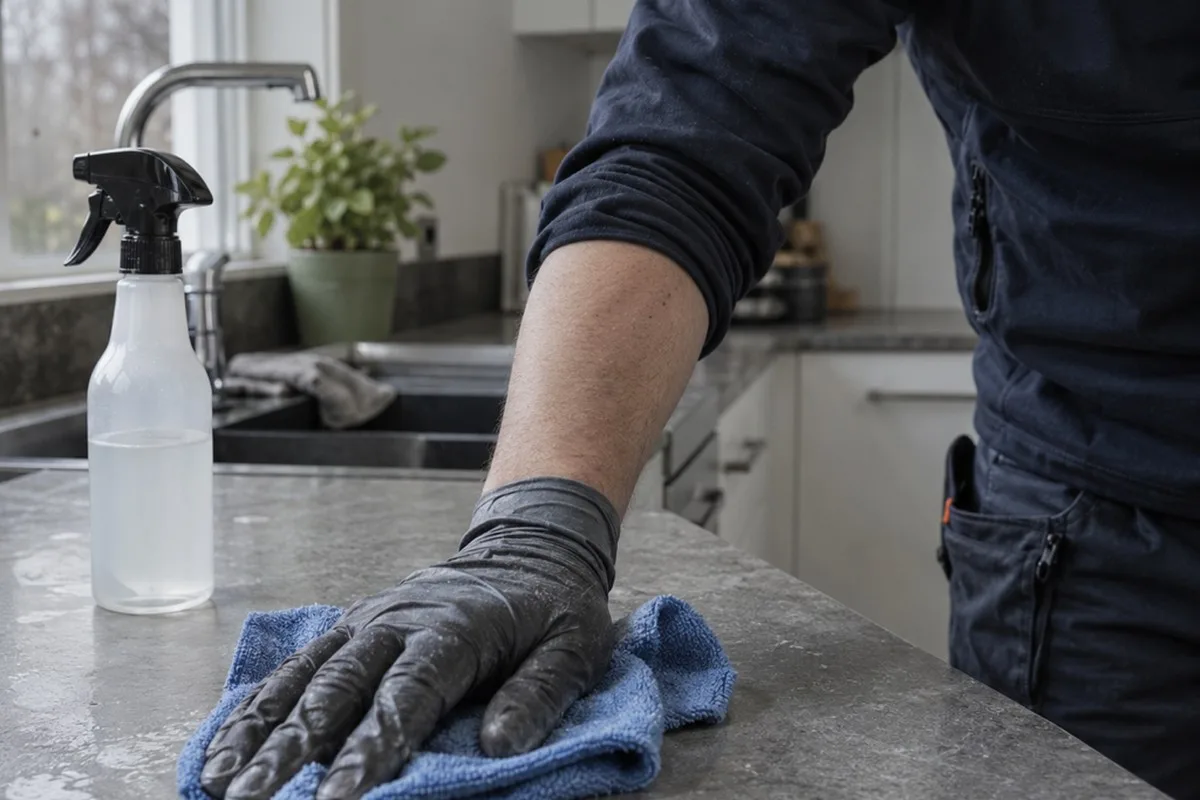 "Kitchens and bathrooms take the time; price for them"
Check the result against your time. Work out your real hourly cost with the labor cost calculator: with a $25 wage, payroll and overhead, and 65% of paid hours billable, it needs $84.62 an hour at a 25% margin. If a 1,500 sq ft standard clean at $135 takes you two hours, you are at $67.50 an hour, so adjust the rate or the scope. If you carpet-clean as an add-on, price it separately with the carpet cleaning price calculator.
Price it once, then start your first quote from the driveway next time.
Get the first customers and keep them
How to take on a new cleaning customer
- Quote from size and rooms
Ask for the square footage, bedrooms, bathrooms and pets. Send a written quote with the deep first visit and the recurring price.
- Confirm the scope
List what is included in a standard clean and what is extra (inside the oven, inside the fridge, windows). Use an estimate if you need to see the home first.
- Book the recurring slot
Give each customer a fixed day and time. A full week of fixed slots is the business.
- Bring a checklist
Put the address, entry instructions and room list on a work order, so every clean covers the same ground.
The paper version holds up for the first few homes. The wall is the admin around them: re-typing room prices into every quote, keeping the recurring schedule straight and chasing payment after each clean. Driveway Desk keeps your prices and customers, schedules the recurring visits and sends the invoice when you finish. See plans and pricing. If you are pricing the bigger apps, see what Housecall Pro costs or a simpler Jobber alternative.
Mistakes that cost new cleaning businesses money
- Standard price for a first clean. The first visit is a deep clean in all but name.
- No written scope. "Clean the house" grows to include the oven, the fridge and the windows.
- Hourly pricing for recurring work. As you get faster, you earn less. Flat prices per home reward speed.
- Scattered customers. Two homes on one street beat two homes across town, the same route rule that drives a lawn care business.
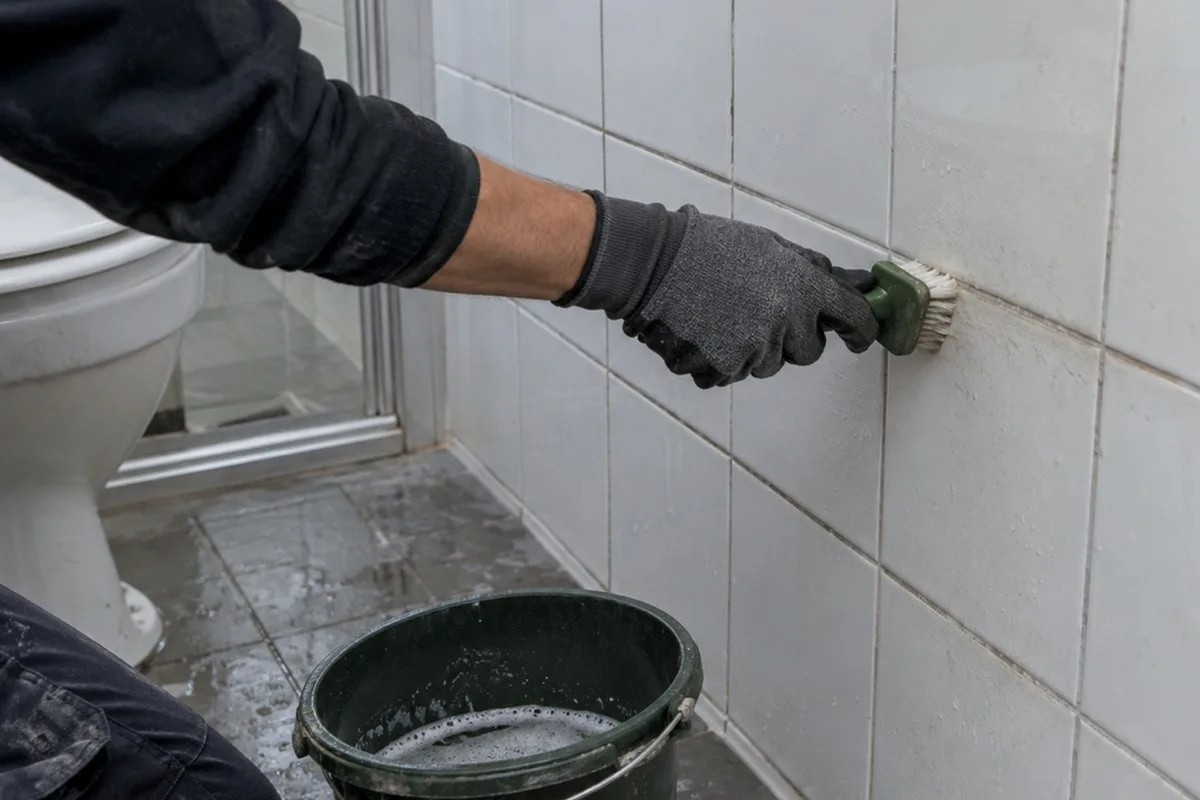 "Bathrooms over two get their own adjustment"
Start with prices you can defend
Set up the basics for your state, pick one kind of customer, carry a small kit, and quote every new home a deep first visit and a standard recurring price. Price your first three homes with square-foot cleaning rates before you send a single quote.
Put the method to work
House cleaning price calculatorPrice a house clean from floor area, room adjustments, cleaning depth, and the discount you choose.
Frequently asked questions
It can be, because startup costs are low and recurring customers fill a schedule. It works when prices cover your real hourly cost and the first visit is priced as a deep clean. Check both before you take on customers.
For pricing, the three you quote are a standard clean, a deep clean and a move-out clean. The calculator prices a deep clean at twice the standard rate and a move-out at three times, as editable starting points.
Two hours times your billable hourly rate. With the labor cost calculator defaults ($25 wage, overhead, 65% billable hours and a 25% margin) that rate is $84.62, so about $169. A solo owner with lower costs can charge less; run your own numbers.
Compare it with your true cost per billable hour. Once you add payroll taxes, travel, supplies and unbilled time, $50 an hour can fall short if you pay a helper. For a solo owner with low overhead it may work. The labor cost calculator shows your number.
Price it as a deep clean. With the calculator's defaults, a 1,500 sq ft home is $135 standard and $270 deep. Put both on the first quote so the customer sees the first visit and the recurring price together.
Put the method to work
Labor cost calculatorDivide paid-hour costs by the billable-hours ratio, then allow for your target margin to find a selling rate.
Your prices, remembered.
Build your first quote on your phone in about two minutes, send it, and get paid into your own account.
Start your first quoteShare article
About the author
Field notes team
We write practical guides for home service crews of one to five. Our editorial standard is to show the calculation, state its assumptions, cite primary sources for factual claims and date competitor comparisons. We distinguish worked examples from market prices and correct errors when they are found. We do not claim trade licenses or credentials on behalf of the team.
More articles
Running a small crew · 6 min
How to Start a Lawn Care Business: Price Visits From Time
Start a lawn care business with the legal basics, equipment sized to your lawns, visit prices worked out from mowing and drive time, and seasonal agreements.
Running a small crew · 7 min
How to Start a Pressure Washing Business: Price It Before You Buy
Start a pressure washing business with the legal basics, the right equipment and a price sheet that sets a minimum charge and sells a second surface on every visit.