
Lawn mowing price calculator: price every mow by the minute
Driveway Desk team 18 October 2026 12 min read
Your next job
Less time at the desk.
Build your price book, schedule the next visit and turn completed work into an invoice.
Start your first quoteIn this article
A lawn mowing price is your minutes on the property plus the drive, times your hourly rate. At this calculator's starting inputs, a 21-inch mower, 15 minutes of trimming, a 20-minute round trip and $60 an hour, an 8,000 sq ft lawn prices at $71.28 a visit.
Short answer
Mowing minutes = grass sq ft / (deck inches / 12 x feet per minute x productive %). Price = (mowing + trim + drive minutes) / 60 x hourly rate, never below your minimum visit.
Below: the pricing chart by lawn size, the live calculator, a worked quarter-acre weekly mow, and the one lever that moves the price more than a bigger mower. If you are still setting the business up, start with how to start a lawn care business and come back here to price the first route.
How to price a lawn mowing job
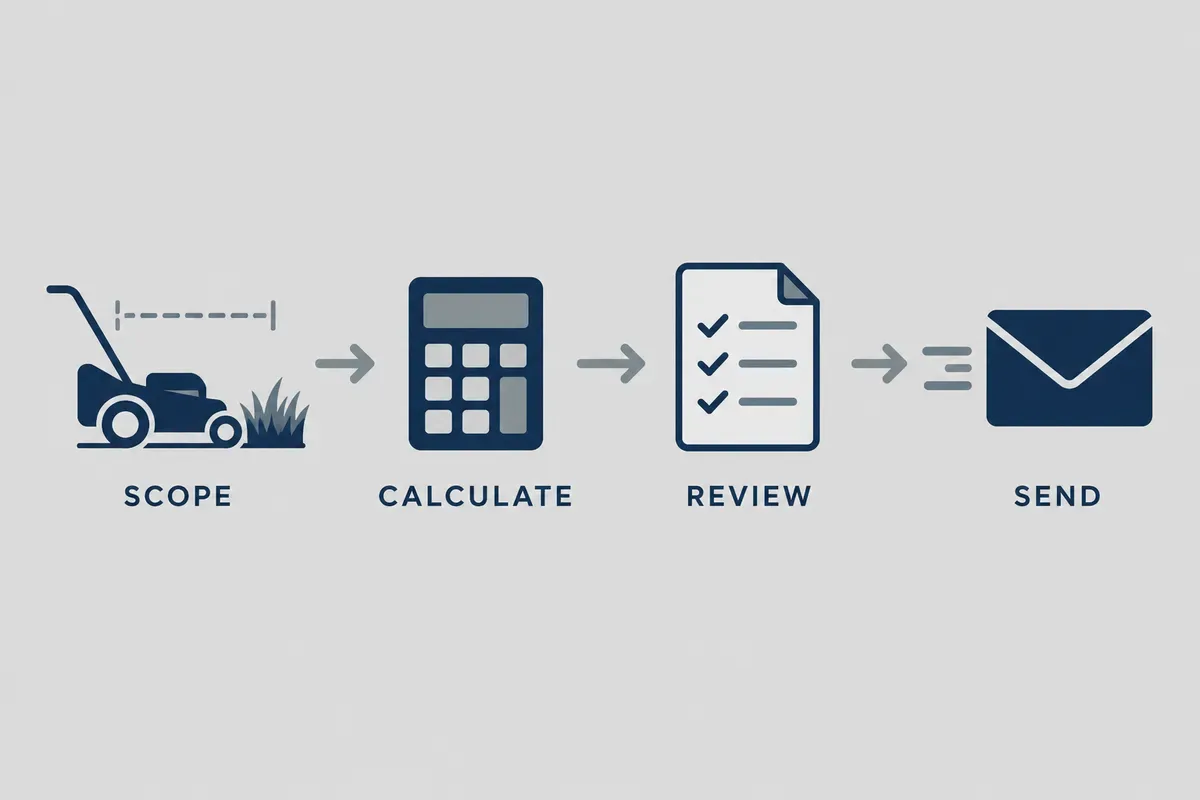
- Measure the mowable grass
Measure the turf you will actually cut. Subtract the house footprint, driveway, patio and planting beds from the lot. Split odd shapes into rectangles and add them up.
- Turn area into mowing minutes
Divide the grass area by what your mower covers in a minute: deck width in feet x walking speed in feet per minute x the share of time the deck is actually cutting. A 21-inch deck at 180 feet per minute and 70% covers 220.5 sq ft a minute.
- Add trimming and the drive
Add the minutes for string trimming, edging and blowing off hard surfaces, then the round-trip drive this stop has to pay for.
- Apply your rate and minimum
Multiply total minutes by your billable hourly rate divided by 60. If the result is below your minimum visit, charge the minimum.
- Write the scope and send the quote
Put the area, mower, trim allowance and what is excluded (bagging, leaves, overgrowth) on the quote, then send it before you leave the driveway.
How much to charge for lawn mowing
Charge for minutes, not for square feet. Square footage only tells you how long the mower runs. The customer pays for the whole visit: unloading, mowing, trimming, blowing off the walk, loading up and driving to them.
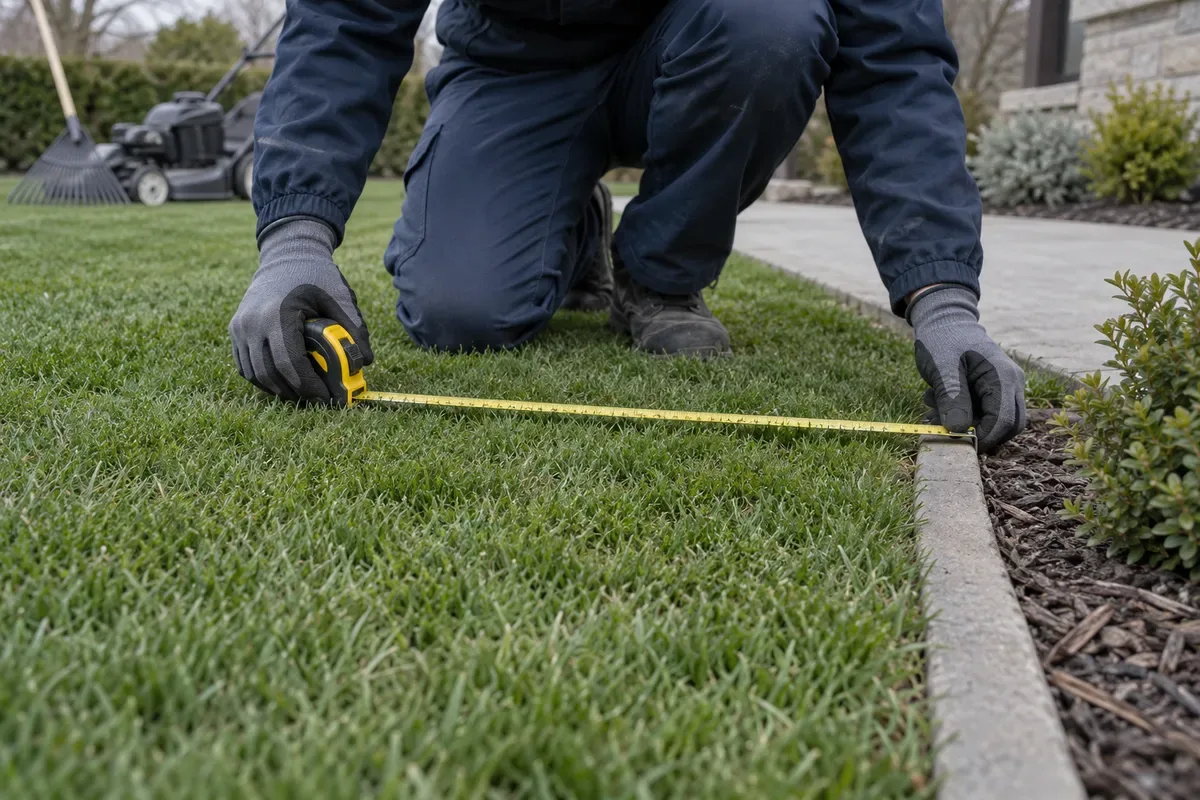
Measure grass, not parcel. A quarter-acre lot is 10,890 sq ft, but after the house, the driveway and the beds come out, you may be mowing 8,000. Entering the lot size instead of the grass size overprices that lawn by about $13 a visit at the defaults, and a customer who measured their own yard will notice.
Here is the lawn care pricing chart the calculator produces at its starting inputs: 21-inch deck, 180 feet per minute, 70% productive time, 15 minutes of trim and edge, a 20-minute round trip, $60 an hour, no frequency discount and a $35 minimum. At $60 an hour every minute is exactly $1, so you can read the price straight off the minutes.
| Mowable area | Mowing minutes | Total visit minutes | Price per visit |
|---|---|---|---|
| 2,500 sq ft | 11.3 | 46.3 | $46.34 |
| 5,000 sq ft | 22.7 | 57.7 | $57.68 |
| 10,000 sq ft | 45.4 | 80.4 | $80.35 |
| 21,780 sq ft (half acre) | 98.8 | 133.8 | $133.78 |
| 43,560 sq ft (one acre) | 197.6 | 232.6 | $232.55 |
Try your numbers
Example estimate of your job price. Before tax.
Your example price
Two things stand out. First, doubling the lawn from 2,500 to 5,000 sq ft adds only $11.34, because the 35 minutes of trimming and driving do not change. Second, the $35 minimum never bites at these defaults: trim plus drive already costs $35. It starts to matter when you shorten the drive or the trim on a tiny lawn, which is exactly when you need it.
Worked example: a quarter-acre weekly mow
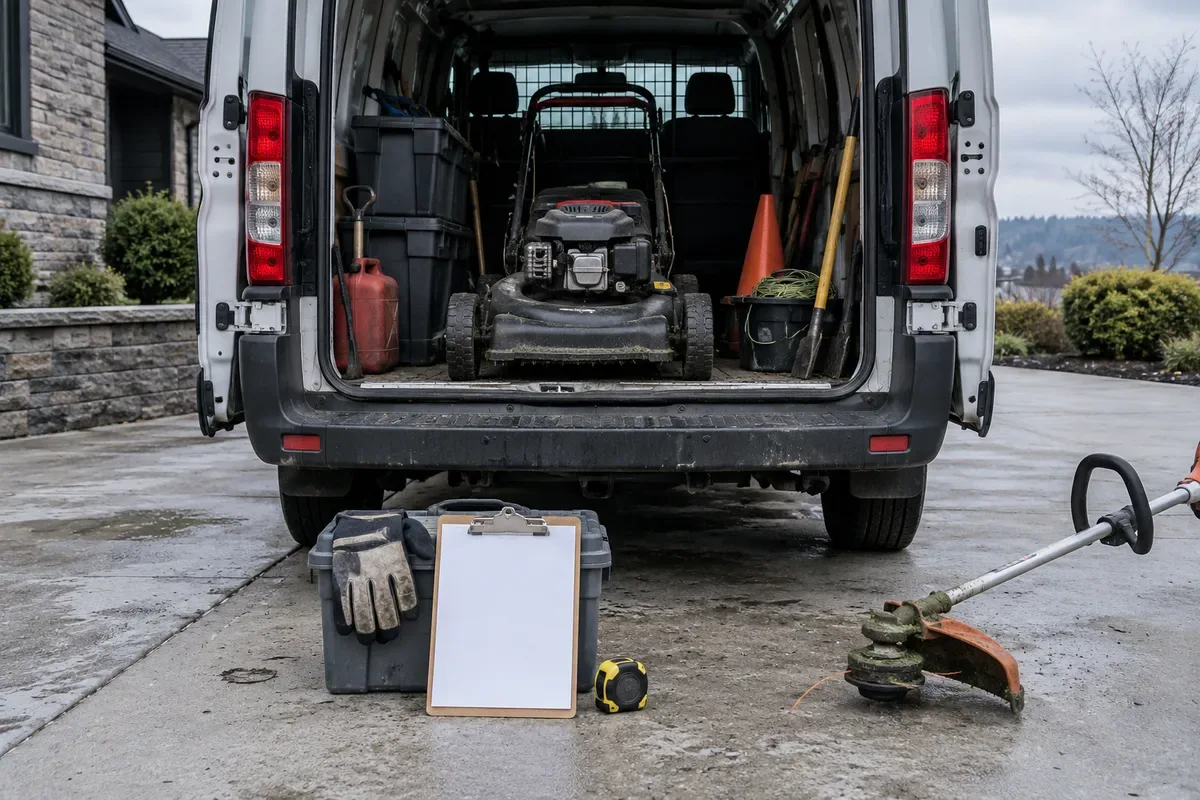
Take a typical suburban stop. The lot is a quarter acre. You walk it with a tape and a measuring wheel and get 8,000 sq ft of grass after removing the house, the driveway and walk, and the beds and patio. You run a 21-inch push mower, the gate is wide enough, and the stop is a 20-minute round trip from the rest of your route.
| Line | Working | Result |
|---|---|---|
| Lot size | 0.25 acre x 43,560 | 10,890 sq ft |
| Mowable grass | 10,890 minus house, drive, walk, beds and patio | 8,000 sq ft |
| Coverage per minute | 21 / 12 x 180 x 0.70 | 220.5 sq ft |
| Mowing time | 8,000 / 220.5 | 36.3 min |
| Trim, edge and blow | your allowance | 15 min |
| Round-trip drive | your allowance | 20 min |
| Total visit | 36.3 + 15 + 20 | 71.3 min |
| Price per visit | 71.3 / 60 x $60, minimum $35 | $71.28 |
| Per month, weekly | $71.28 x 52 / 12 | $308.89 |
Notice where the time goes. The mower runs for 36 of the 71 minutes. Almost half of what you bill on this lawn is trimming and driving. That is why a pricing chart by square footage alone always undercharges small lawns.
For a market check, Fixr's national lawn maintenance cost guide lists $75 to $200 per visit, with about $130 for weekly mowing of a lawn under an acre with clippings removal (fetched 2026-10-16). Our $71.28 sits below that band. That does not mean the formula is wrong. It means the $60 starting rate is a placeholder, and a business with insurance, a trailer and a helper probably needs more. Set your real number in the labor cost calculator before you send anyone this price.
What actually moves the price
Change one input at a time on the same 8,000 sq ft lawn and the levers sort themselves out.
| Change from the worked example | New price | Change per visit |
|---|---|---|
| None (21-inch deck, 20-minute drive) | $71.28 | $0.00 |
| 30-inch deck, same speed | $60.40 | minus $10.88 |
| Next-door stop: 5-minute drive instead of 20 | $56.28 | minus $15.00 |
| Slopes and obstacles: 55% productive time instead of 70% | $81.18 | plus $9.89 |
| 25 minutes of trimming instead of 15 | $81.28 | plus $10.00 |
| 10% frequency discount | $64.15 | minus $7.13 |
| $75 an hour instead of $60 | $89.10 | plus $17.82 |
A customer on the same street is worth more to your price than a mower with a 9-inch wider deck. Cutting the drive from 20 minutes to 5 saves $15.00 a visit; the bigger deck saves $10.88. So when you hand out a weekly discount, tie it to density: offer it to the neighbor of an existing stop, where the shorter drive pays for it, not to the isolated lawn across town.
The table also shows why trimming deserves its own line. Ten extra minutes on the string trimmer around a fence, a playset and a row of beds adds the same $10 as a much bigger lawn would. Time a few of your real stops and replace the 15-minute default with what you actually see.
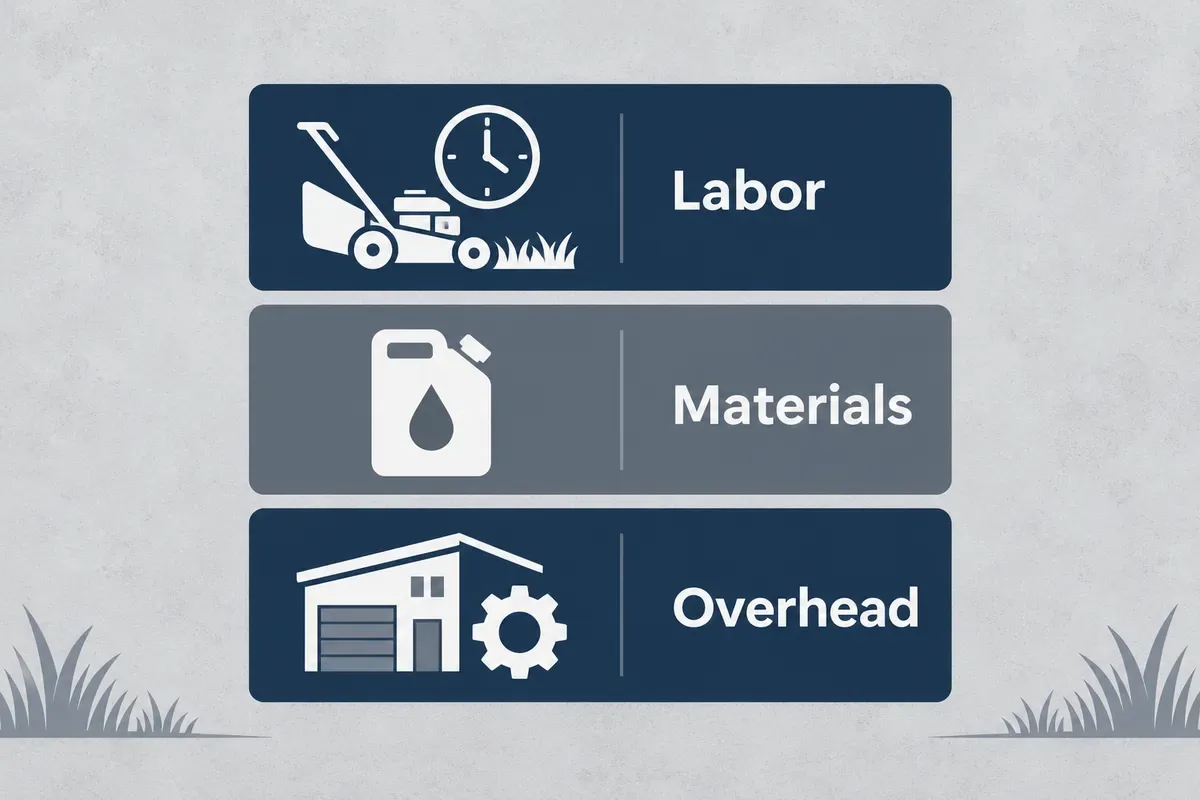
Your hourly rate is not your wage. It has to carry the labor, the fuel and blades, and the overhead behind the van: insurance, the trailer, phone, the hours you spend quoting and invoicing. Price materials such as fuel through the rate, and check what margin that leaves with the markup and margin calculator. The same minutes-times-rate method works for other trades too; the house cleaning price calculator applies it to rooms instead of square feet of grass.
Solo operator or small crew

The formula does not change with crew size. What changes is which minutes you enter and which rate you multiply them by.
| Your setup | What to enter | Watch for |
|---|---|---|
| Solo, 21-inch push mower | Your timed walking speed and your own billable rate | Drive time is your biggest lever; build tight routes |
| Solo, 30 to 36-inch walk-behind | Measured deck width, productive time 65 to 75% | A deck that cannot pass the gate does not set the price |
| Two people, one mows, one trims | Mowing minutes, trim set to 0 if it runs in parallel and finishes first, crew rate | Never price two people's time at one person's rate |
| Two to five people, several stops | Elapsed visit minutes per stop, crew billable rate | Track actual minutes per stop for a few weeks before changing prices |
If you run a crew, the rate in the calculator is the crew's selling rate for an hour on site, not one worker's hourly cost. Put two people on a lawn for 40 elapsed minutes at a one-person rate and you have given away half the labor.
Scope that belongs on every mowing quote
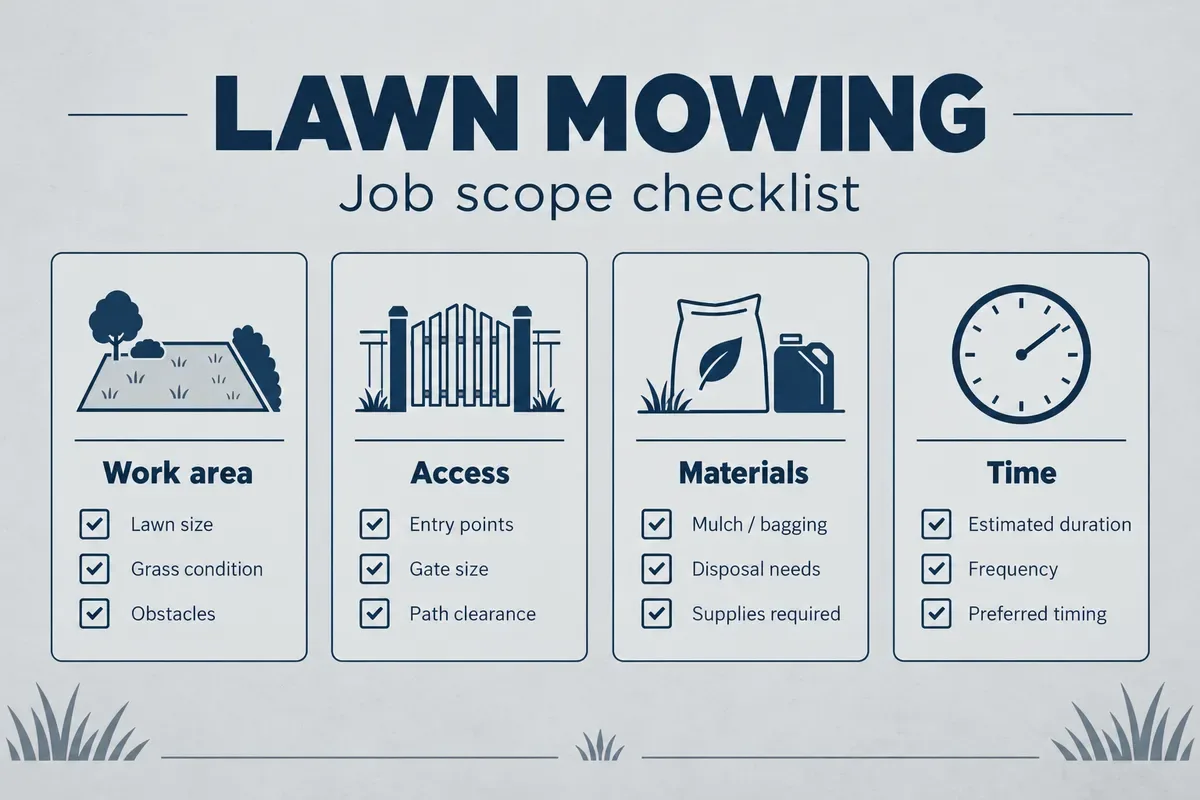
A per-visit price only holds if the visit is defined. Confirm the work area and obstacles, the access and gate width, whether clippings are mulched or bagged and hauled, and how often you come. Write it on the quote. A lawn care contract template gives you the wording for frequency, weather delays and what happens when the grass gets ahead of you.
Overgrown lawns are where flat weekly prices lose money. Clemson Cooperative Extension's guidance on mowing lawns recommends removing no more than one-third of the grass height at any one mowing. A lawn that has gone three weeks breaks that rule, so you raise the deck, cut twice or bag. Quote that first catch-up visit as its own job, then start the weekly price on the second visit.
Keep add-ons out of the mowing line. Leaf removal, hedge trimming, aeration and hauling get their own minutes and their own line on the quote. If the same customer asks you to wash the driveway, price the concrete separately with the pressure washing price calculator.
How the calculator works
Mowing minutes = mowable square feet / (deck inches / 12 x feet per minute x productive % / 100). Choosing acres multiplies the area by 43,560 to get square feet. Price = the larger of your minimum visit and (mowing + trim + drive minutes) / 60 x hourly rate x (1 - discount % / 100).
Every input is a starting point, not a market price. Speed, productive time, trim and drive allowances, the hourly rate, the discount and the minimum are all editable. The pricing chart above is a time-based scenario at those defaults, not a survey of prices in your city.
From the calculator to the quote
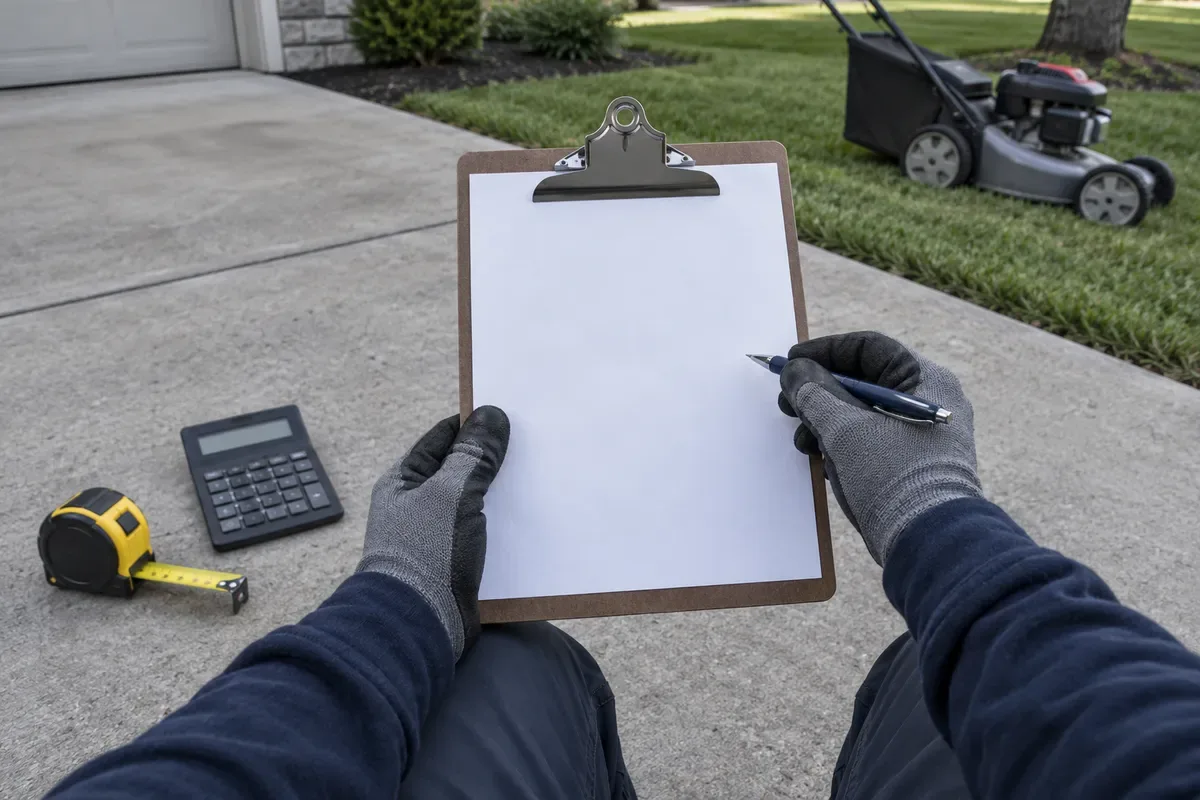
The manual method works. Measure the lawn, run the numbers here, write the scope on a clipboard and type it into a quote at night. The wall comes at 30 lawns: you re-type the same rate, trim allowance and exclusions on every quote, and the paperwork eats the evening you saved by routing tightly.
Driveway Desk keeps your price book, so the per-visit price you worked out here is remembered for the next quote. You build the quote on your phone from the driveway, review it and tap send, then invoice the visit in one tap and get paid into your own Stripe or Square account. One flat price covers the whole crew, with no contract. If you are weighing it against the big tools, see what Jobber's plans cost.
Price it once, then start your first quote from the driveway next time.
Price it once, then start your first quote from the driveway next time.
Price the minutes, then tighten the route
Measure the grass, time your real stops, and let the calculator turn minutes into a price. Then work on density: the cheapest minutes you can sell are the ones you no longer spend driving.
Your prices, remembered. Build your first quote on your phone in about two minutes, send it, and get paid into your own account. Start your first quote.
Frequently asked questions
Measure the grass you will actually mow, not the whole lot. Convert that area into mowing minutes from your deck width, walking speed and a productive-time allowance. Add trimming, edging and the round-trip drive, multiply by your billable hourly rate, and check the total against your minimum visit. Write the scope beside the price so the customer knows exactly what one visit includes.
Price = (mowing minutes + trim minutes + drive minutes) / 60 x hourly rate, with your minimum visit as the floor. Mowing minutes are the grass area divided by deck width in feet x speed x productive time. With this page's defaults, an 8,000 sq ft lawn takes about 36 minutes to mow and prices at $71.28 per visit.
At this page's starting inputs, 2,000 sq ft takes about 9 minutes with a 21-inch mower. Add 15 minutes of trimming and a 20-minute round trip and the visit is 44 minutes, or $44.07 at $60 an hour. The mowing is only a fifth of that visit. On small lawns, trimming and driving set the price, so time them honestly.
Half an acre is 21,780 sq ft. With a 21-inch deck at 180 feet per minute and 70% productive time, that is about 99 minutes of mowing before trimming and travel. A 30-inch deck at the same speed cuts it to about 69 minutes. Riding and stand-on mowers also move faster, so enter your own speed after timing a real job.
Never remove more than a third of the grass height in one mowing. Clemson Cooperative Extension's example is mowing a lawn kept at 2 inches once it reaches about 3 inches. For pricing, the rule matters because an overgrown lawn breaks it: you raise the deck, cut twice or bag the clippings. Quote that first catch-up visit separately from the weekly price.
It depends on what the $200 buys. Spread over a 4.33-week month of weekly mowing, $200 is about $46 a visit. At this page's defaults that covers a lawn of roughly 2,500 sq ft with 15 minutes of trimming and a 20-minute drive. Charge $200 a month for a bigger lawn and you are underpricing every visit, so run the numbers first.
Charge what your own minutes cost, then sanity-check it against the market. Fixr's national guide lists $75 to $200 per visit, with about $130 for weekly mowing of a lawn under an acre with clippings removal (fetched 2026-10-16). If your calculated price sits far below that band, your hourly rate or time allowances are probably too low.
Two hours at a $60 billable rate is $120, before disposal or materials. The real question is whether those two hours include your drive. Price the time on site plus the round trip, and for a two-person crew use a crew rate rather than one worker's rate. Set the hourly figure from your actual costs before you quote it.
Put the method to work
Markup and margin calculatorMarkup divides profit by cost; margin divides profit by selling price. Convert either percentage before quoting.
Your prices, remembered.
Build your first quote on your phone in about two minutes, send it, and get paid into your own account.
Start your first quoteShare article
About the author
Field notes team
We write practical guides for home service crews of one to five. Our editorial standard is to show the calculation, state its assumptions, cite primary sources for factual claims and date competitor comparisons. We distinguish worked examples from market prices and correct errors when they are found. We do not claim trade licenses or credentials on behalf of the team.
More articles

Pricing jobs · 10 min
Handyman price list
Build a handyman flat price from task hours and materials, using your own hourly rate and minimum visit.

Pricing jobs · 8 min
House cleaning price calculator
Price a house clean from floor area, room adjustments, cleaning depth, and the discount you choose.
Pricing jobs · 9 min
Carpet cleaning price calculator
Add measured carpet or room charges, stairs, stains, and upholstery, then apply your minimum job charge.
Running a small crew · 6 min
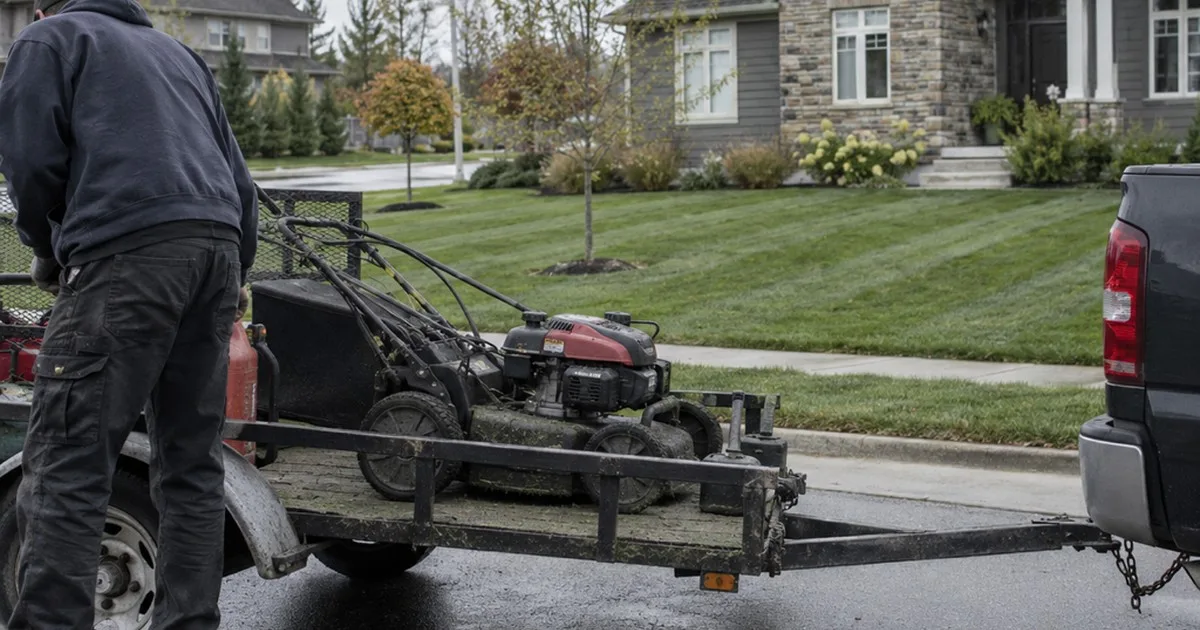
How to Start a Lawn Care Business: Price Visits From Time
Start a lawn care business with the legal basics, equipment sized to your lawns, visit prices worked out from mowing and drive time, and seasonal agreements.

Running a small crew · 6 min
How to Start a Cleaning Business: Prices for Your First Homes
Start a cleaning business with the legal basics, a small supply kit and prices for standard, deep and move-out cleans, and quote every first visit as a deep clean.
Running a small crew · 7 min
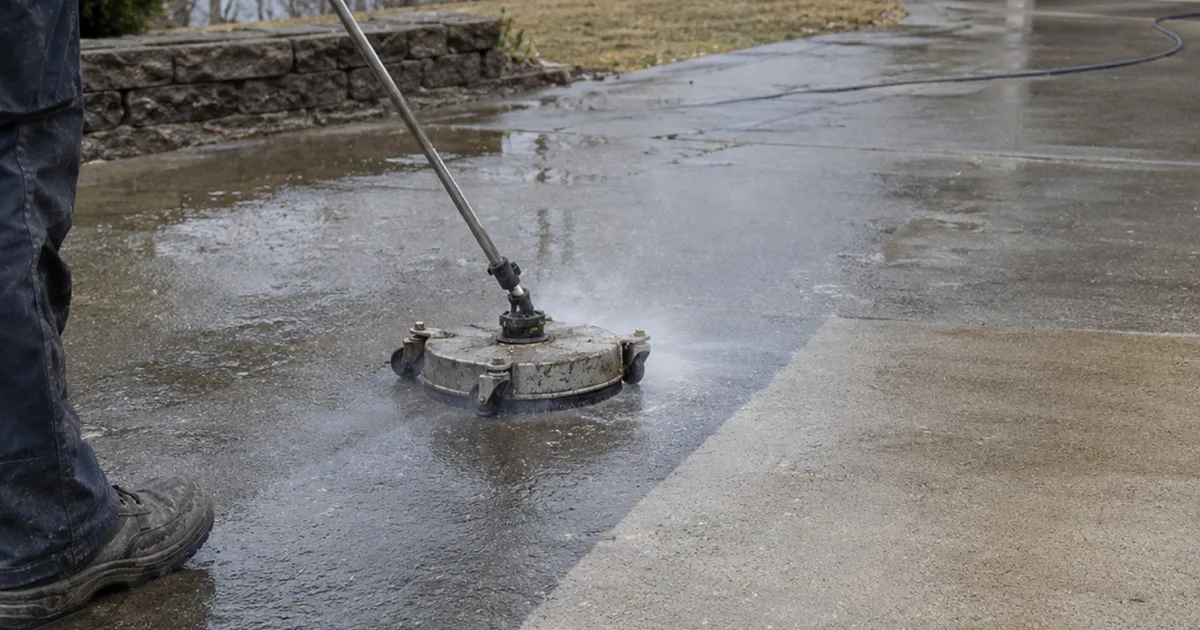
How to Start a Pressure Washing Business: Price It Before You Buy
Start a pressure washing business with the legal basics, the right equipment and a price sheet that sets a minimum charge and sells a second surface on every visit.