How to Bid a Painting Job: 7 Steps and a Worked Bid
Driveway Desk team Updated 9 November 2026 13 min read
Your next job
Less time at the desk.
Build your price book, schedule the next visit and turn completed work into an invoice.
Start your first quoteIn this article
To bid a painting job, walk the job, measure every surface you will paint, estimate the labor hours task by task, add paint and supplies, then multiply the hours by a bill rate that covers your overhead and profit. Write the scope down line by line, with what is included and what is not, and send it with a deposit term and an expiry date.
Short answer
How to bid a painting job: measure the walls (perimeter x height, minus doors and windows), estimate hours per task, price the gallons you need, multiply the hours by your bill rate, and send a written scope with options. A 1,000 sq ft interior repaint, walls and ceilings, worked out below comes to about $2,875 for one painter.
This guide is for the painter writing the bid, solo or with a helper or two. You get the walkthrough questions, the measuring method, a full worked bid with every number shown, the mistakes that eat the margin, and a quick way to send it while you are still in the driveway.
How to bid a painting job, step by step
A painting bid is a forecast of hours. The paint is a small, easy number. The labor is the big number, and it moves with every surface, every patch and every piece of furniture in the way.
How to bid a painting job
- Walk the job with the customer
Ask which rooms, which surfaces (walls, ceilings, trim, doors, closets), whether colors change, who moves the furniture and when the house is empty. Ask the year the house was built. Note every crack, stain and peeling spot.
- Measure every surface
Walls: perimeter x ceiling height, minus about 21 sq ft per door and 15 sq ft per window. Ceilings: length x width. Trim: linear feet. Count doors separately.
- Write the scope, in and out
List exactly what you will paint, how many coats and what prep is included. Then list what is not included. This list protects your margin more than the price does.
- Estimate the hours task by task
Setup and masking, patching and caulking, ceilings, each wall coat, trim, cleanup. Use your own production rates from past jobs, not a guess for the whole house.
- Price paint and supplies
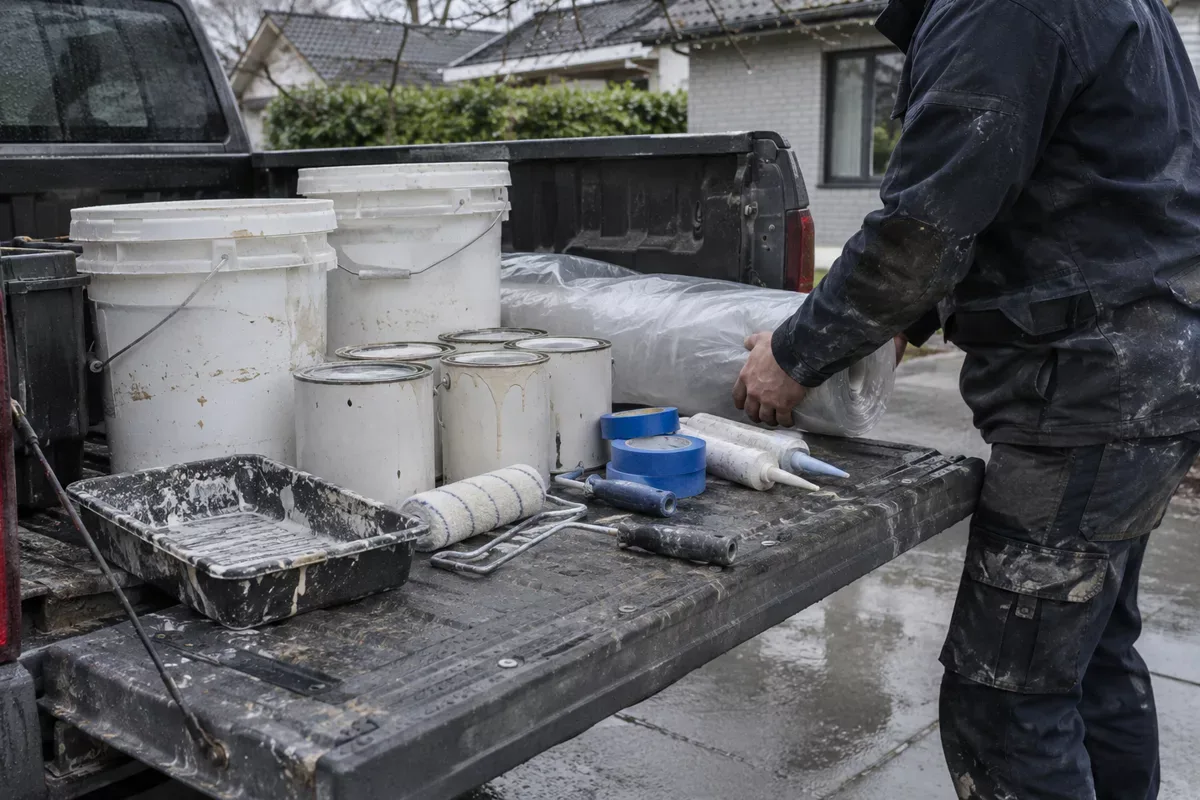
Wall area x coats / the coverage on the label (often about 350 sq ft per gallon). Round up to whole gallons. Add tape, plastic, caulk, patch and roller covers.
- Multiply by your bill rate and sanity check it
Hours x bill rate + materials = the price. Then divide by the square feet as a check against what painters in your area charge.
- Send it with options, a deposit and an expiry
Base bid first, then add-on lines (trim and doors, an extra coat, a color change). State the deposit, the payment terms and how long the price holds. Follow up within two days.
What to ask and check on the walkthrough
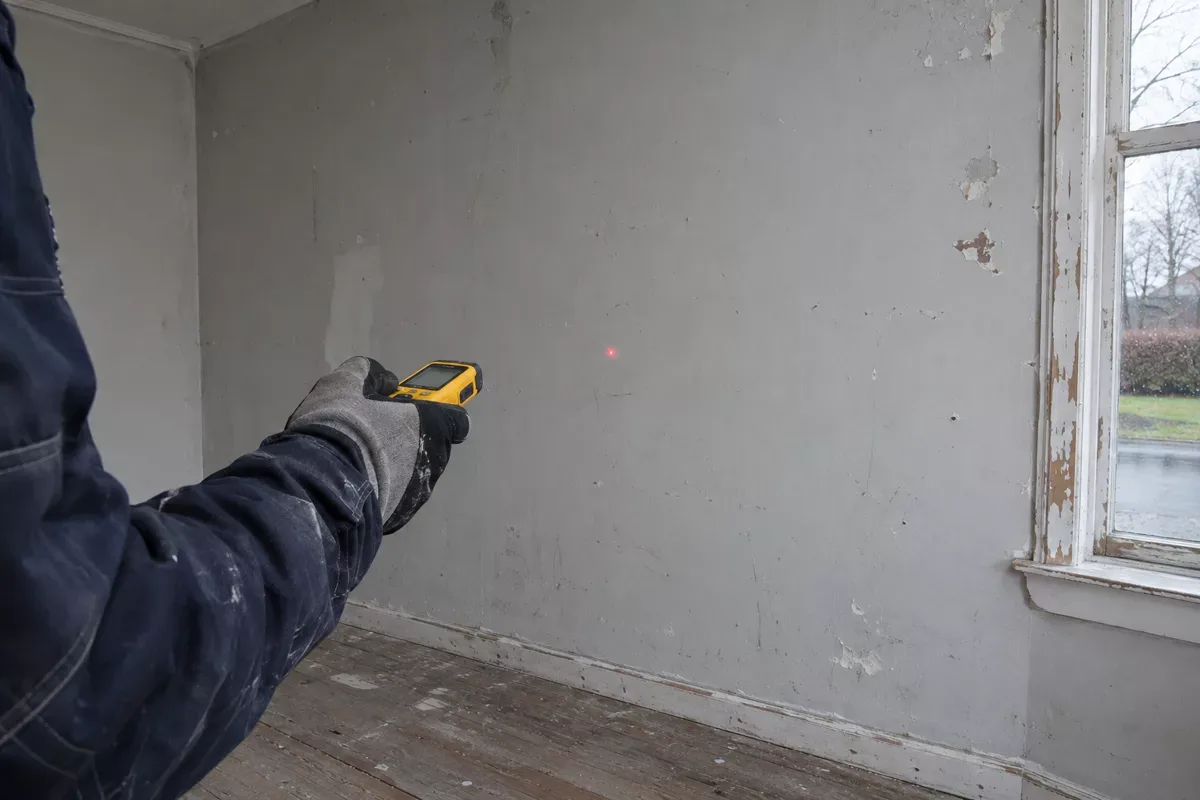
The walkthrough is where most painting bids are won or lost. You are not just measuring. You are finding the hours the customer cannot see.
- Surfaces. Walls only, or ceilings, trim, doors and closets too? Customers often say "the living room" and mean the ceiling and baseboards as well. Ask.
- Color change. Dark to light, or a fresh color over a patched wall, can mean a primer coat or a third coat. Price it as its own line.
- Condition. Nail holes, cracks, water stains, peeling trim. Stains usually need a stain-blocking primer before the topcoat.
- Access. Furniture, high ceilings, stairwells and a house full of people all slow you down.
- Age of the house. If the home was built before 1978 and the job disturbs painted surfaces, the EPA's Renovation, Repair and Painting rule requires a certified firm and lead-safe work practices. That changes your setup, your cleanup and your price, so find out before you bid, not after.
Take photos of every room as you go. They settle "was that crack there?" later, and they let you rebuild the bid at the kitchen table without driving back.
How to measure a room for a painting bid
Measure wall square feet, not floor square feet. Wall area is what the paint and the hours depend on, and it is often about twice the floor area of the same room or more.
The method for one room:
- Add the four wall lengths to get the perimeter.
- Multiply by the ceiling height.
- Subtract about 21 sq ft for each door and 15 sq ft for each window.
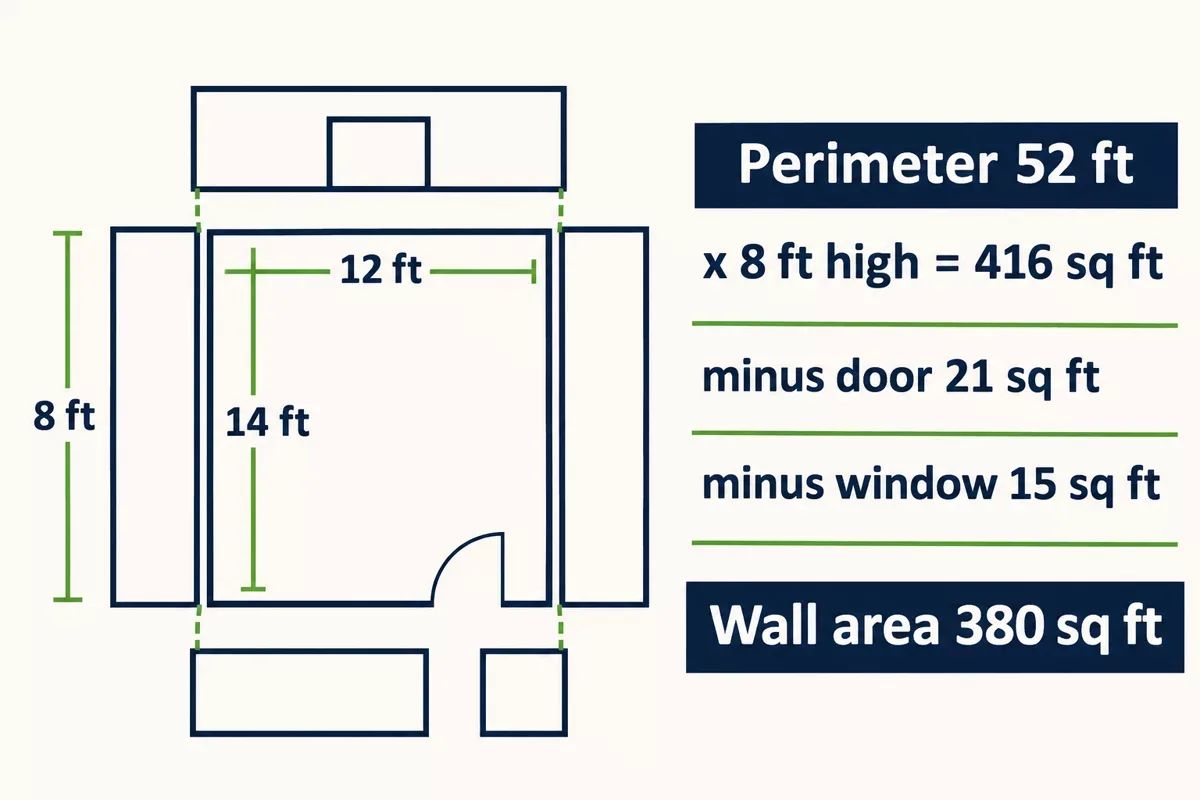
For a 12x14 bedroom with 8-foot ceilings: perimeter 52 ft x 8 ft = 416 sq ft, minus one door (21) and one window (15) = 380 sq ft of wall. The ceiling is 12 x 14 = 168 sq ft. Write both down per room, plus the linear feet of baseboard and the door count, and you have everything the bid needs.
Worked example: bidding a 1,000 sq ft interior repaint
Here is a complete bid for a 1,000 sq ft two-bedroom, one-bath house: walls in two coats, ceilings in one coat, same colors, light patching, house empty. Trim and doors are priced as an option.
Measurements. Six spaces (living room, kitchen, two bedrooms, bath, hall) with 8-foot ceilings come to 288 ft of wall perimeter. That is 2,304 sq ft gross, minus 8 doors, 8 windows and the kitchen cabinets, for about 1,980 sq ft of wall. The painted ceilings total 842 sq ft.
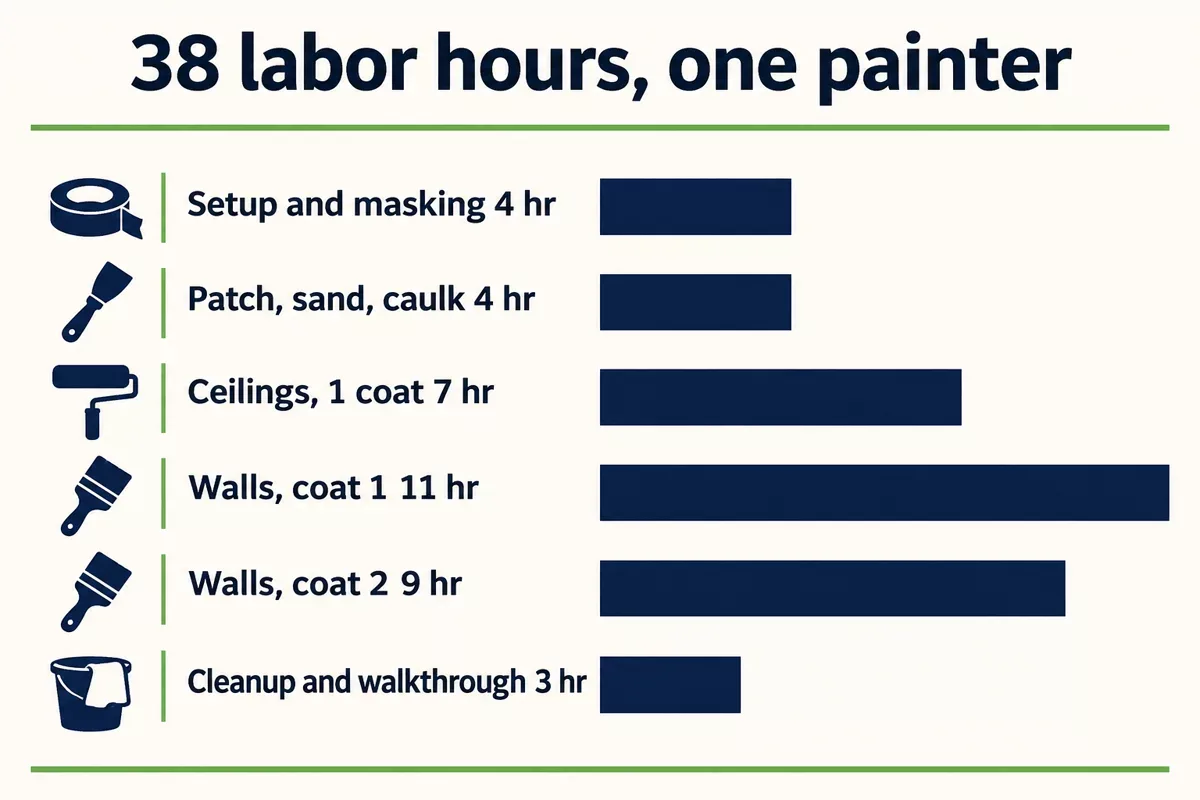
Labor. These are planning production rates for one painter. Time your own jobs and replace them, because your rates are the whole bid.
| Task | Quantity | Planning rate | Hours |
|---|---|---|---|
| Setup, move furniture, mask, cover floors | 6 spaces | 4 | |
| Patch, sand, caulk | light | 4 | |
| Ceilings, 1 coat | 842 sq ft | about 120 sq ft/hr | 7 |
| Walls, coat 1 (cut in and roll) | 1,980 sq ft | about 175 sq ft/hr | 11 |
| Walls, coat 2 | 1,980 sq ft | about 220 sq ft/hr | 9 |
| Cleanup, touch-up, walkthrough | 3 | ||
| Total labor | 38 hours |
Bill rate. We use $56 an hour, built from $28 an hour of owner pay at 70% billable time, $12,000 a year of overhead and 15% profit. If you have not built your own number yet, work out what an hour of your time really costs before you bid anything.
Try your numbers
Example estimate of your job price. Before tax.
Your billable rate
The bid.
| Line | Math | Amount |
|---|---|---|
| Labor | 38 hr x $56 | $2,128 |
| Wall paint | 1,980 sq ft x 2 coats / 350 = 11.3, so 12 gal x $45 | $540 |
| Ceiling paint | 842 sq ft / 350 = 2.4, so 3 gal x $35 | $105 |
| Tape, plastic, caulk, patch, roller covers | $100 | |
| Base bid | rounded | $2,875 |
| Option: baseboards, casings and 8 doors | 8 hr x $56 + 1 gal trim paint $55 | $503 |
Paint prices and coverage are assumptions: use your supplier's price and the coverage printed on the can. $2,875 works out to about $2.88 per floor square foot or $1.45 per wall square foot. Both are useful sanity checks, but you got there from hours, not from a per-square-foot guess. To see where your number sits against the market, compare it with what painters charge per hour, per square foot and per room.
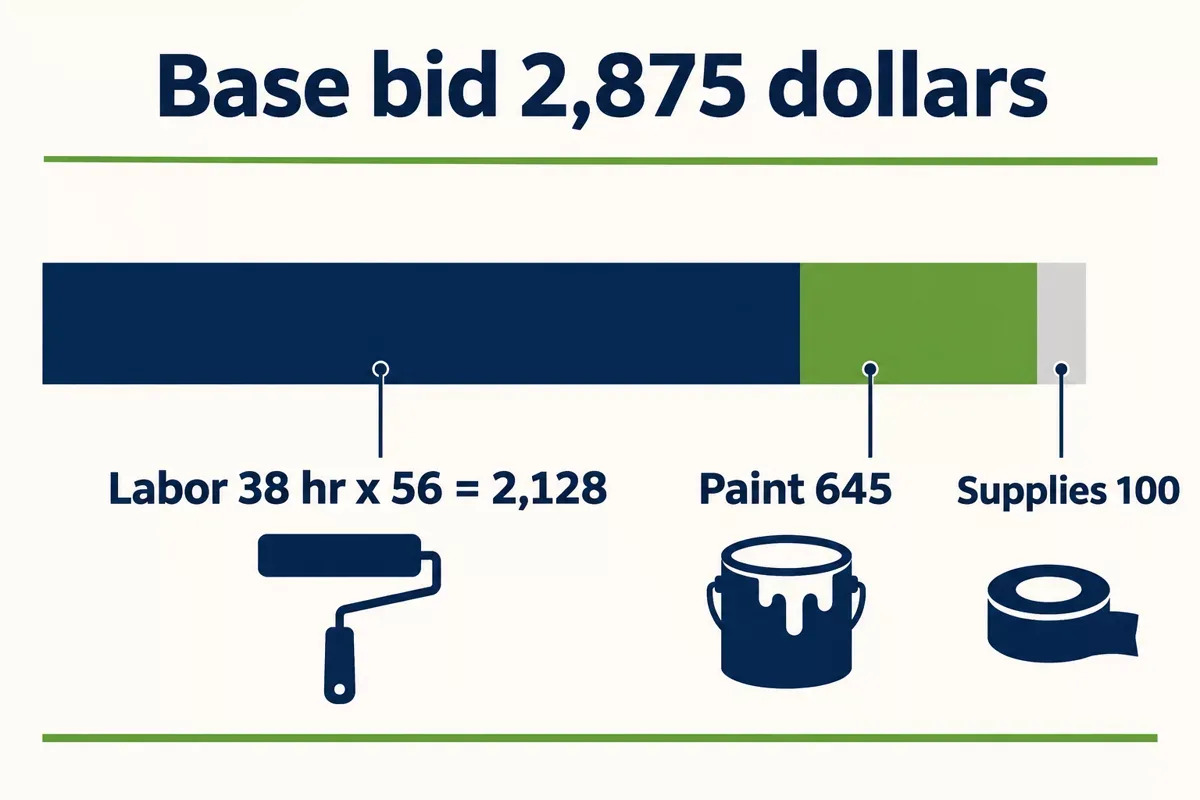
The counterintuitive part: the line that protects your profit is the "not included" list, not the price. Labor is about 74% of this bid. One unplanned extra coat on the walls is roughly 9 hours, or $504, which wipes out more than the whole profit built into the base bid. A bid that says "two coats, same color, light patching, trim not included" turns that surprise into a paid change order instead of a free Saturday.
Price it once, then start your first quote from the driveway next time.
How to write the bid so it does not cost you later
A good painting bid reads like a work order the customer signs. Put these on it, in this order:
| Section | What to write | Why it matters |
|---|---|---|
| Scope | Rooms, surfaces, coats, prep included | Stops "I thought ceilings were in" |
| Not included | Trim, doors, closets, color changes, wallpaper removal, drywall repair beyond patching | Turns surprises into paid add-ons |
| Materials | Paint line and sheen, who picks colors, by when | Avoids rework on a wrong sheen |
| Options | Each add-on with its own price | Lets the customer say yes to more |
| Schedule | Start date, days on site, house empty or not | Protects your production rate |
| Terms | Deposit, balance due on completion, how long the price holds | Gets you paid and stops a year-old price |
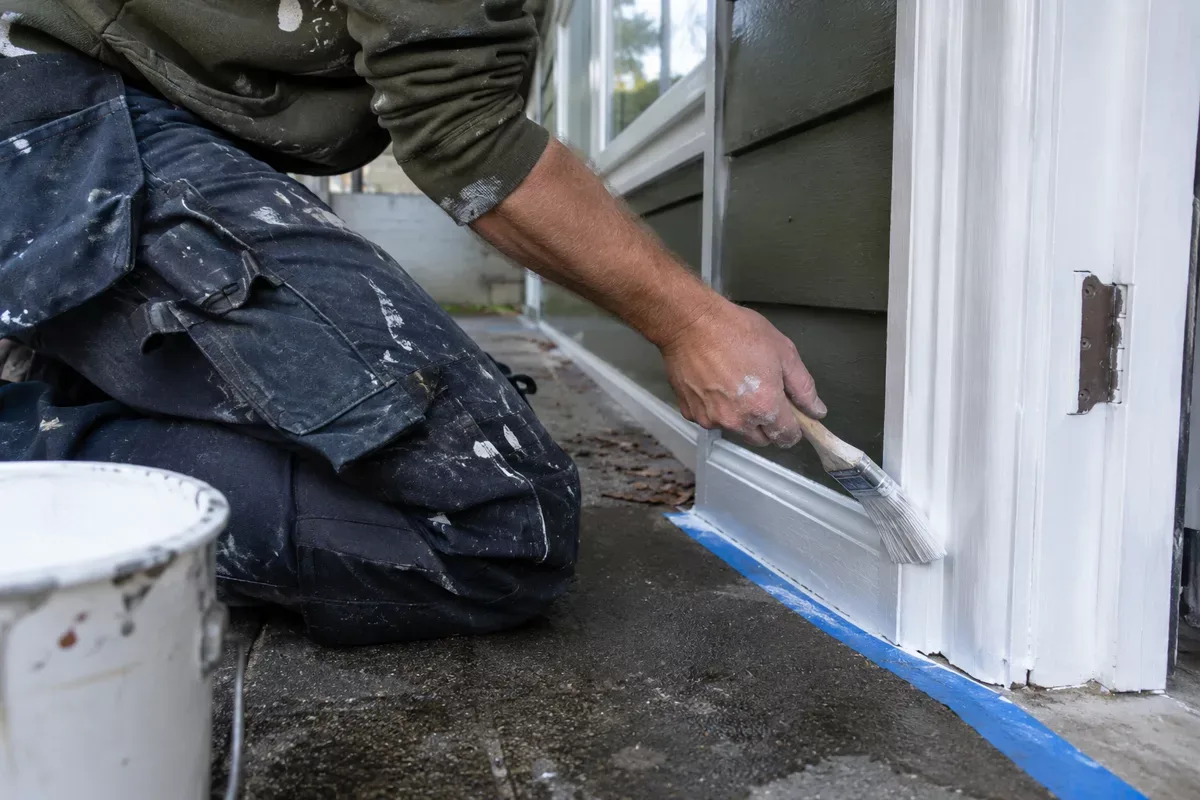
If you want a starting layout, our painting-ready estimate template has the scope, exclusions and options sections already in place. The difference between an estimate and a firm quote matters here too: say on the page whether the number can change if you find rot or water damage once the work starts. For bigger repaints, attach a simple work order so your helper knows the scope without calling you.
How to bid by job type
The method above works for every painting job, but the unit you quote in changes with the job.
| Job type | Quote it as | Watch out for |
|---|---|---|
| Single room repaint | Per room, built from hours | Ceilings and trim assumed in |
| Whole interior | Per square foot as a check, hours underneath | Furniture and an occupied house |
| Exterior | Per side or per house, built from hours | Prep, scraping, ladders, weather days |
| Cabinets | Per door and drawer front | Degreasing and cure time |
| Commercial | Line-item bid per the plans and spec | After-hours work, spec coatings, retainage |
Commercial work runs off plans, specs and takeoffs, and it is its own discipline. For residential, hours plus a tight scope is the whole game.
Mistakes that cost painters money on a bid
- Pricing from floor square feet. A 1,000 sq ft house has about twice that in wall area. Quote per floor square foot without knowing your wall rate and you are guessing.
- One lump sum. A single number with no scope leads straight to "can you also do the hallway?" at the same price.
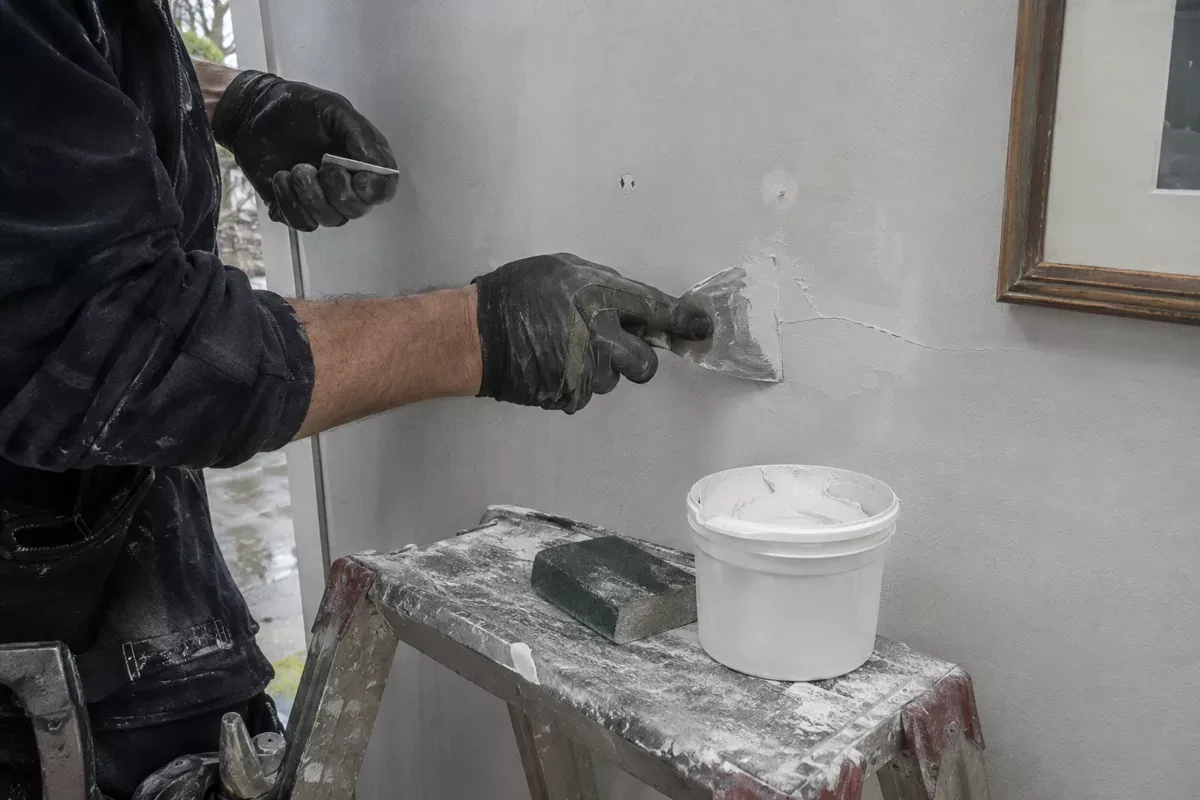
- No prep line. Patching, caulking and stain-blocking can be a full day on an older house. If it is not on the bid, you do it free.
- Forgetting the setup and cleanup hours. Masking, covering floors and the final walkthrough are often 15-20% of the hours on an interior job. In our worked example they are 7 of 38.
- No expiry date. A price that holds forever holds through every paint price increase.
- Slow follow-up. A bid sent three days later is often a bid sent after someone else got the job.
Faster bids from the driveway
The manual way works: a notepad on the walkthrough, a spreadsheet at night, a PDF by email the next day. Where it hits a wall is speed and memory. You retype your rates and your "not included" list on every bid, and the bid goes out a day late because you wrote it at the kitchen table after the job.
Driveway Desk is built for that wall. Your price book remembers your rates, your standard lines and your exclusions, so you build the bid on your phone during the walkthrough, review it and tap send before you leave. When the customer says yes, it becomes the job on your schedule, then the invoice, paid into your own Stripe or Square account. If you are weighing tools for this, here is how Jobber's plans compare to Housecall Pro's.
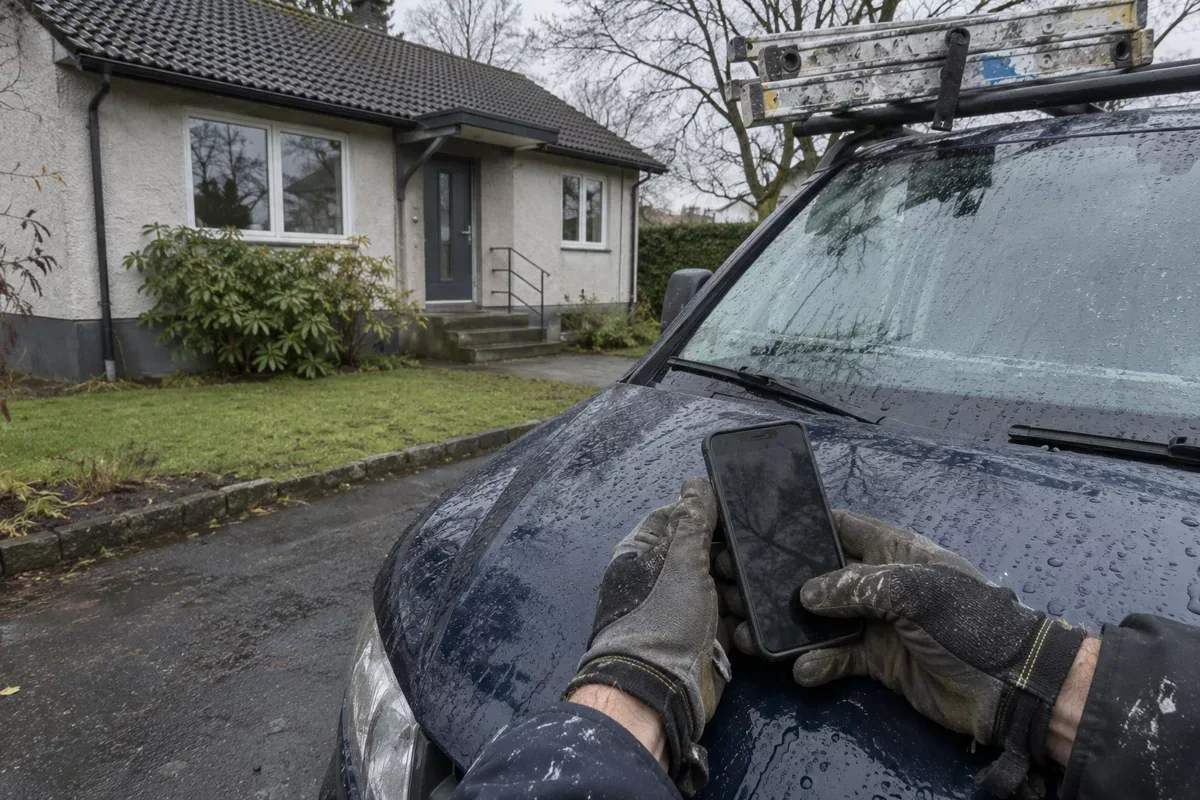
Price it once, then start your first quote from the driveway next time.
The short version
Bid a painting job from hours, not from a per-square-foot guess. Measure wall area on the walkthrough, break the labor into tasks, add the gallons, multiply by a bill rate that pays you and your overhead, then write down exactly what is and is not included. The scope list is what turns surprises into paid work.
If you are pricing other trades too, the same hours-first approach is behind our handyman price list. And before you add profit to the bid, check that you know the difference between markup and margin.
Your prices, remembered. Build your first quote on your phone in about two minutes, send it, and get paid into your own account.
Put the method to work
Estimate templateCreate a free estimate with separate materials and labor, a fixed total or range, validity and assumptions. Save the finished document as a PDF.
Frequently asked questions
Walk every room, measure the wall area (perimeter x height, minus doors and windows) and the ceilings, then estimate the hours for setup, prep, each coat and cleanup. Multiply the hours by your bill rate, add the gallons of paint and your supplies, and send a written scope that lists what is included and what is not.
Put the scope first (rooms, surfaces, coats, prep), then the exclusions, the paint line and sheen, each optional add-on with its own price, the schedule and the terms: deposit, when the balance is due and how long the price holds. A bid with that much detail reads like a work order the customer can sign.
The BLS reports a median wage of $23.75 an hour for construction and maintenance painters in May 2025, which is about $190 for an 8-hour day (BLS). Experienced painters and higher-cost areas pay more. On top of the wage, an employer also pays payroll taxes and insurance, so the day costs you more than the paycheck.
As a wage, $50 an hour is more than double the BLS median of $23.75. As a bill rate for your own painting business, it is on the low side: once you cover unbilled quoting and driving time, insurance, the van and a profit, our worked build lands at $56 an hour for a solo painter. The setup side, from licensing to the first five jobs, is in how to start a painting business.
It depends on the scope more than the size. Our worked bid for a 1,000 sq ft interior, walls in two coats and ceilings in one, comes to about $2,875 for one painter at $56 an hour, or about $3,380 with baseboards, casings and doors added. Price your own job from your own hours and rates.
Put the method to work
Quote templateFill a quote with your own scope, quantities, prices, tax and deposit. Download a free PDF or print it directly from your browser.
Your prices, remembered.
Build your first quote on your phone in about two minutes, send it, and get paid into your own account.
Start your first quoteShare article
About the author
Field notes team
We write practical guides for home service crews of one to five. Our editorial standard is to show the calculation, state its assumptions, cite primary sources for factual claims and date competitor comparisons. We distinguish worked examples from market prices and correct errors when they are found. We do not claim trade licenses or credentials on behalf of the team.
More articles

Quotes and estimates · 11 min
House Cleaning Checklist PDF: Standard, Deep and Move-Out
A one-page house cleaning checklist PDF, room by room, for standard, deep and move-out cleans. Plus the not-included list that protects your price and how to send it with a quote.

Quotes and estimates · 9 min
Lawn Care Contract Template: Free Seasonal Agreement
A free seasonal lawn care contract template with the eight sections that prevent arguments, and the math on why flat monthly billing beats per-visit in a dry year.

Quotes and estimates · 10 min
Quote Template: Free Fillable Form and a Worked Example
A free fillable quote template with every field a small-job quote needs, a line-by-line worked example, and the exclusions line that keeps a fixed price fixed.

Quotes and estimates · 13 min
Estimate template: free fill-in PDF with a worked example
A free estimate template you fill in on your phone: labor and materials lines, a fixed total or range, a valid-until date and written assumptions, saved as a PDF. Includes a worked $388.50 job.

Running a small crew · 13 min
What Do I Need to Start a Mobile Detailing Business? Full Checklist
The mobile detailing startup checklist: paperwork and insurance, the wash and interior kit for the services you sell first, how many towels to stock, and the quote, work order and payment setup.

Running a small crew · 13 min
Roofing Company Business Plan: 7 Parts + Cash Flow Example
A roofing company business plan in seven short sections, with a worked example: one reroof priced line by line, revenue by month, and how much cash a busy June ties up before homeowners pay.