What Do I Need to Start a Mobile Detailing Business? Full Checklist
Driveway Desk team 23 November 2026 13 min read
Your next job
Less time at the desk.
Build your price book, schedule the next visit and turn completed work into an invoice.
Start your first quoteIn this article
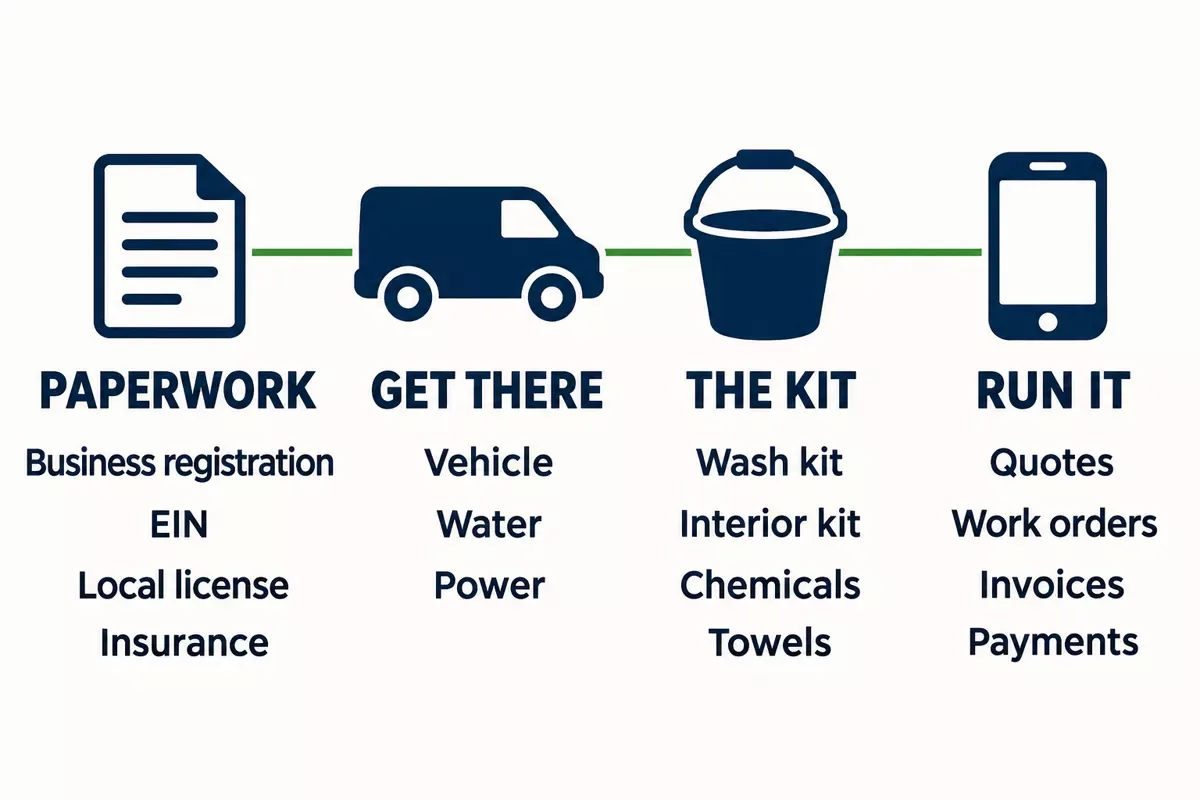
To start a mobile detailing business you need four things: the paperwork (a registered business, an EIN, a local business license and liability insurance that covers the customer's car), a way to get to the car with water and power, a wash and interior kit sized to the services you sell first, and a way to quote, book and get paid on the spot. Everything else, from the extractor to the polisher, can wait until paying work justifies it.
Short answer
Paperwork, a vehicle with water and power, a kit for the services you sell first, enough towels and chemicals for two days of cars, and a phone that quotes, invoices and takes payment.
The mobile detailing startup checklist at a glance
This is the whole list on one screen. The right-hand column is the part most lists skip: when you actually need each item. If you want the business side in order (who to serve, water rules, pricing, rebooking), our guide on how to start a mobile detailing business walks through it step by step. This post is the shopping and paperwork list.
| Category | What you need | When |
|---|---|---|
| Paperwork | Business structure, EIN, business bank account | Before the first paid car |
| Paperwork | Local business license, any mobile vendor permit, sales tax permit if your state taxes detailing | Before the first paid car |
| Insurance | General liability plus garagekeepers coverage, and ask about commercial auto | Before the first paid car |
| Vehicle | The car or SUV you already own | Day one |
| Water and power | Customer's spigot and outlet, or a rinseless wash | Day one |
| Water and power | Water tank, pump, hose reel, generator or power station | When you leave driveways |
| Wash kit | Buckets, grit guards, mitts, soap, wheel brushes, drying towels | Day one |
| Interior kit | Wet-dry vacuum, brushes, interior and glass cleaner | Day one |
| Consumables | Towels and chemicals for two days of cars | Day one |
| Upgrades | Hot water extractor, clay bar, polisher, pads, compound | When paying jobs ask for them |
| Business kit | Price sheet, quote, work order with damage photos, invoice, card payments, customer list | Before the first paid car |
What paperwork do you need to start mobile detailing?
You need a registered business, a tax ID, whatever license your city or county requires and insurance in place before the first paying car. There is no national detailing license. Rules vary by state, county and city, so treat this as the list of questions to ask, not the answers.
- Business structure. Most solo detailers start as a sole proprietor or a single-member LLC. Your state's secretary of state website handles the filing.
- EIN. Free from the IRS and needed to open a business bank account or hire a helper. Apply on the IRS EIN page; it takes minutes online.
- Business bank account. Keep detailing money out of your personal account from the first job. It makes taxes and pricing honest.
- Local license and permits. Most cities and counties want a general business license. Some add a mobile vendor or home occupation permit, or rules on wash water reaching storm drains. The SBA's licenses and permits guide shows where to look at federal, state and local level.
- Sales tax. Some states tax car washing and detailing as a service. Ask your state revenue department before you print prices, because tax changes the number the customer sees.
What insurance does a mobile detailer need?
Three policies come up, and one matters more than new detailers expect:
- General liability covers injury and damage to property that is not the car, such as a customer tripping over your hose.
- Garagekeepers coverage covers the customer's car while it is in your care. General liability usually does not, and the car is the most expensive thing you touch all day.
- Commercial auto. Your personal policy may not cover a vehicle used for business. Ask your agent before you load the car with chemicals and a tank.
Get quotes before the first paid job, not after the first scratch.
What you sell decides what you buy
Every checklist online lists the same 40 items, which is how new detailers end up with a polisher and no customers who want correction. Buy the kit for the services on your first menu, and size the consumables, not the tools, to the number of cars you book per day. Tools are bought once. Towels and chemicals are spent on every car, and they are what runs out on a busy Saturday.
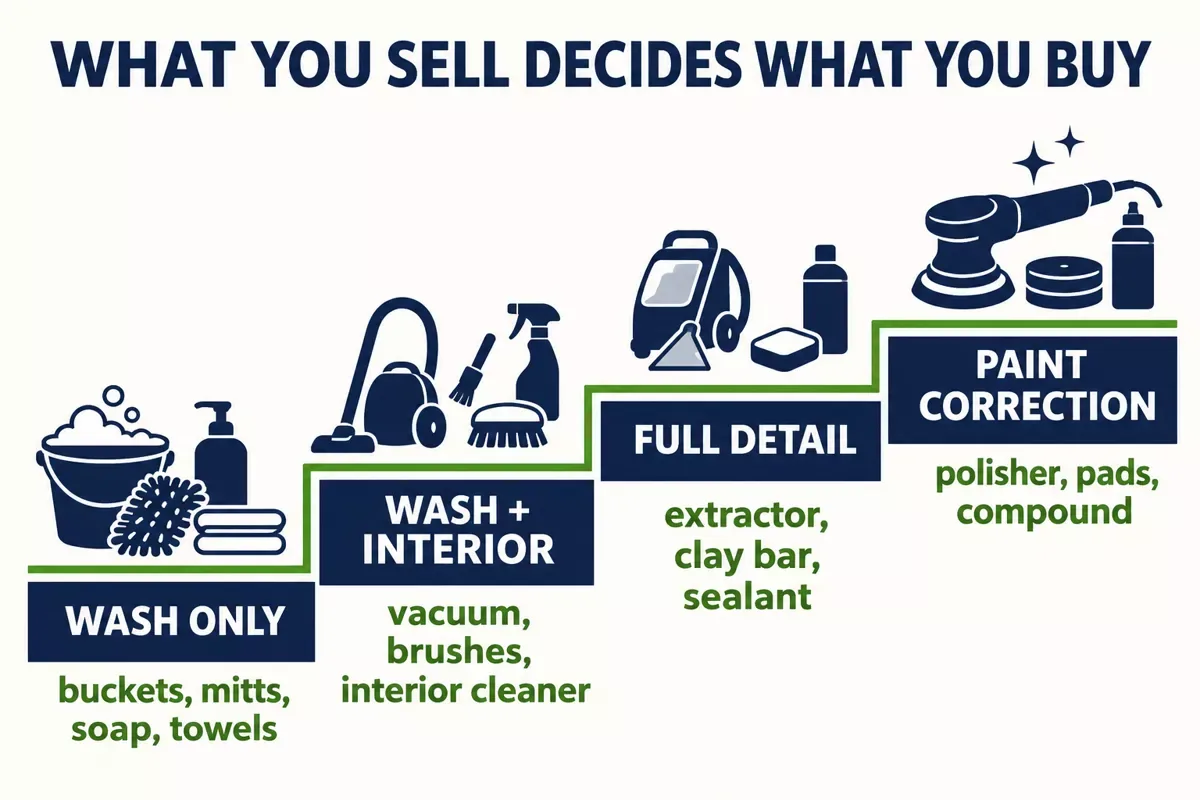
Pick the row that matches your first menu and buy that column, nothing to the right of it.
| Your first menu | Add to the base wash kit | Skip for now |
|---|---|---|
| Exterior wash only | Rinseless wash solution, extra drying towels | Vacuum, extractor, polisher |
| Maintenance wash plus quick interior | Wet-dry vacuum, brushes, interior and glass cleaner | Extractor, polisher |
| Full detail | Hot water extractor, clay bar, sealant or spray wax | Polisher, ceramic coating |
| Paint correction and coatings | Dual-action polisher, pads, compounds, inspection light | Nothing; this is the top of the stack |
Most new detailers do best starting on the second row. Maintenance washes are quick, easy to rebook and need no expensive machine.
The exterior wash kit
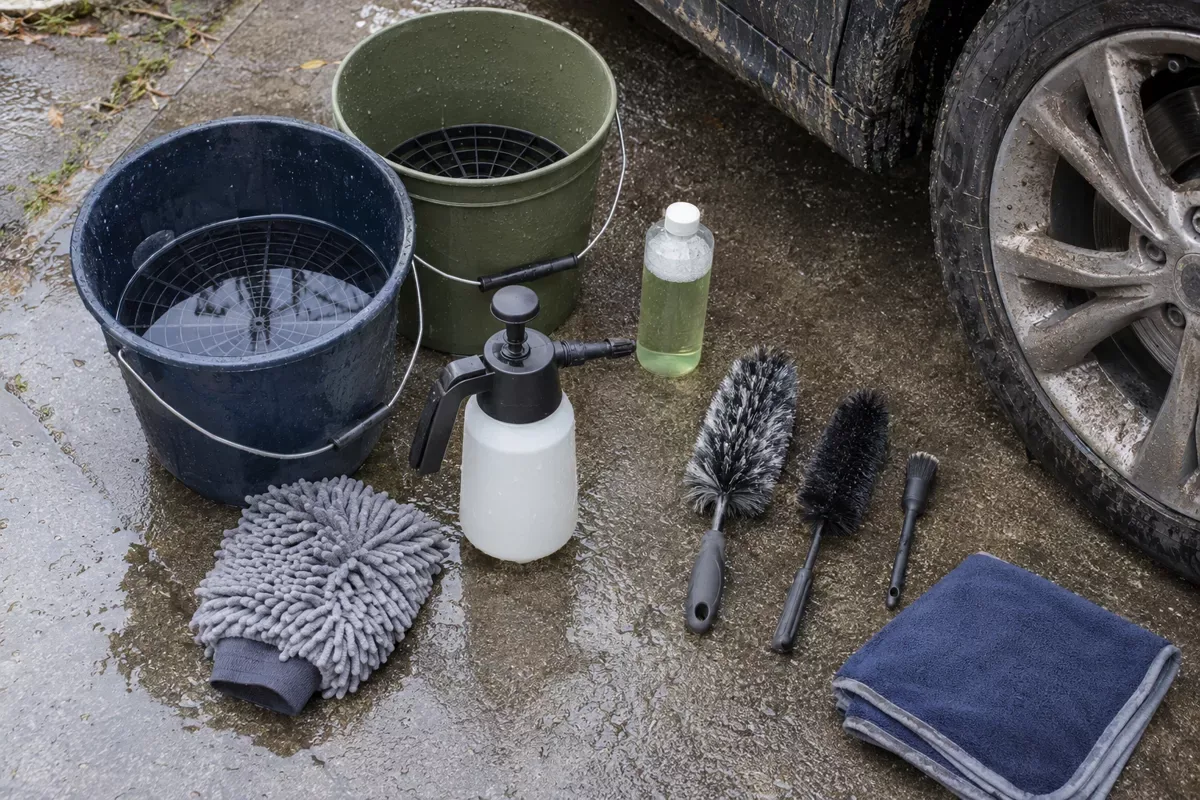
This is the base every menu sits on:
- Two buckets with grit guards, one for soap and one for rinsing the mitt
- Two or three wash mitts, so you can swap a dropped one
- pH-neutral car soap, plus a rinseless wash concentrate for places with no hose
- A pump foam sprayer or garden-hose foam gun
- Wheel cleaner and three wheel brushes (barrel, face and lug nut)
- Drying towels, at least two per car
- A tire dressing and an applicator
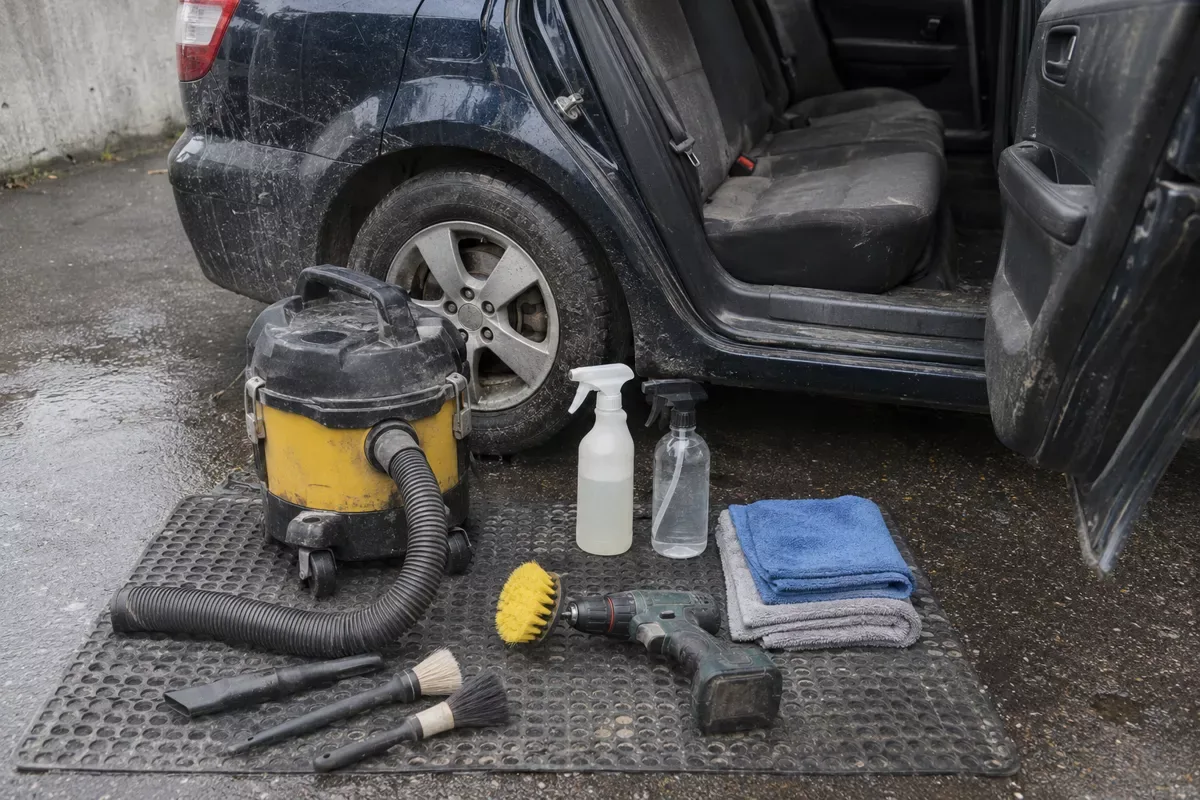
The interior kit
Interiors are where the hours go, so this is where a good tool pays for itself:
- A wet-dry vacuum with crevice and brush tools (corded if you will use the customer's outlet, battery or generator if not)
- Soft detail brushes for vents and seams, and a stiffer brush for carpet
- All-purpose cleaner diluted for interiors, a glass cleaner and an interior protectant
- Glass towels and separate interior towels, so wax from the paint never streaks the glass
- Later: a hot water extractor for stained seats and carpets, priced as an add-on
If you add seat and carpet extraction later, starting a carpet cleaning business covers the same machine and how to price it.
Towels and chemicals: the part that caps your day
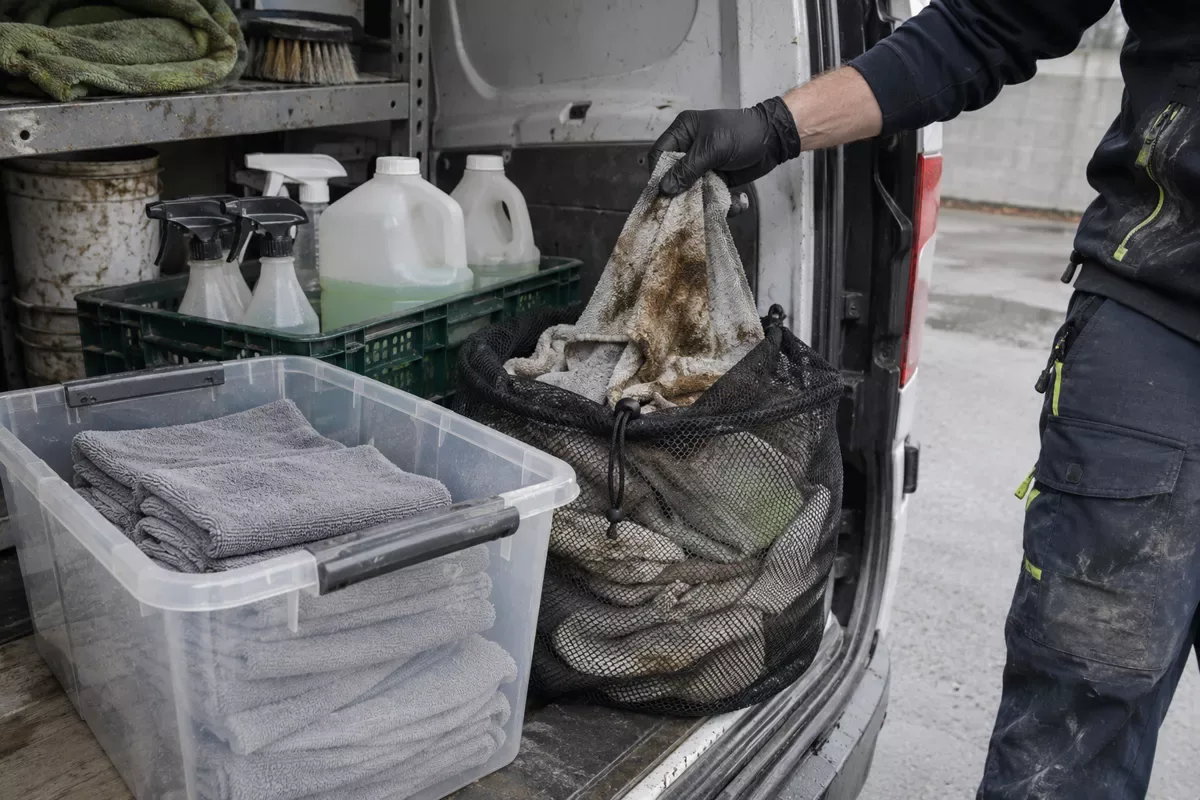
Here is the math most kit lists never show. You can own one vacuum and do six cars. You cannot do six cars with towels for three. Microfiber goes in the wash at night, takes a cycle to dry and is not ready at 7 a.m. if you used every towel yesterday.
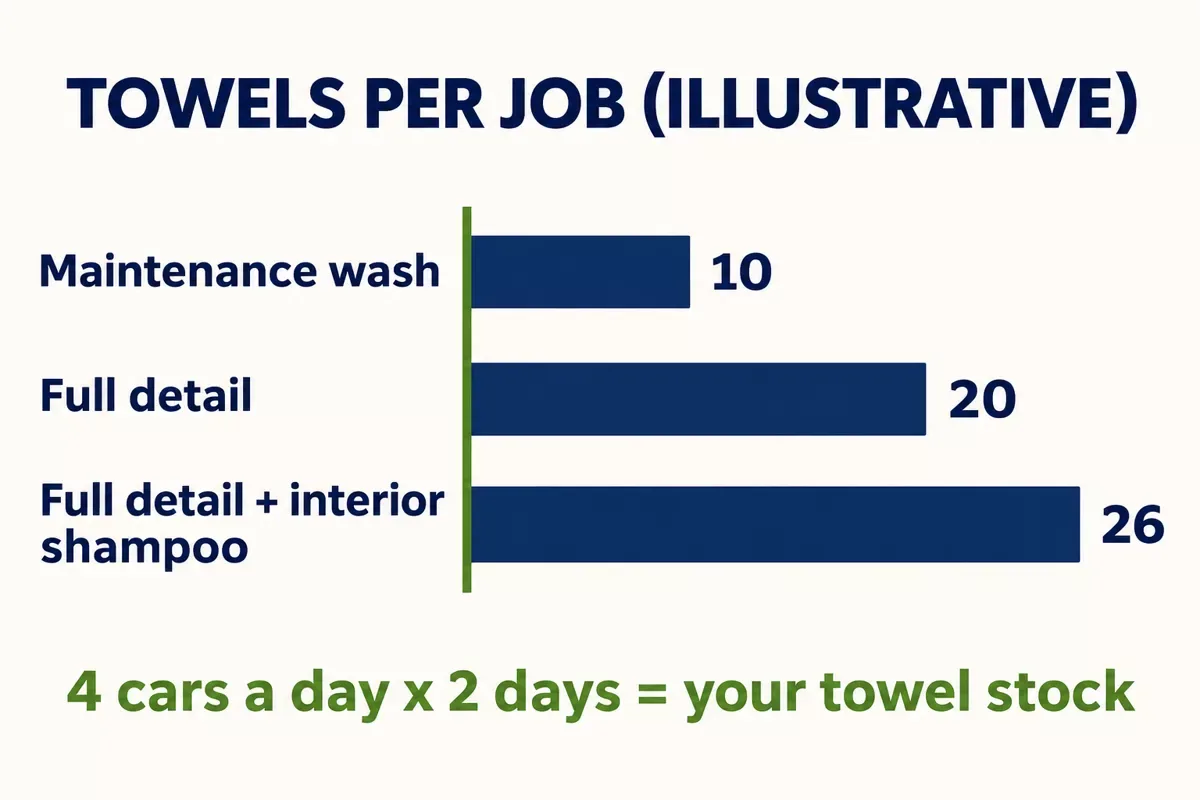
The counts below are an illustrative working assumption, not an industry figure. Count your own on your first ten cars and replace these numbers.
| Job | Towels used (illustrative) | Cars per day | Towels needed for two days |
|---|---|---|---|
| Maintenance wash | 10 | 4 | 80 |
| Full detail | 20 | 2 | 80 |
| Full detail plus interior shampoo | 26 | 2 | 104 |
Two days of stock means one load can be in the laundry while you work from the other. Chemicals follow the same rule: buy concentrates by the gallon, dilute into labeled spray bottles, and keep a second gallon of whatever you use most so a busy week does not stop on an empty jug.
Do you need a van to start mobile detailing?
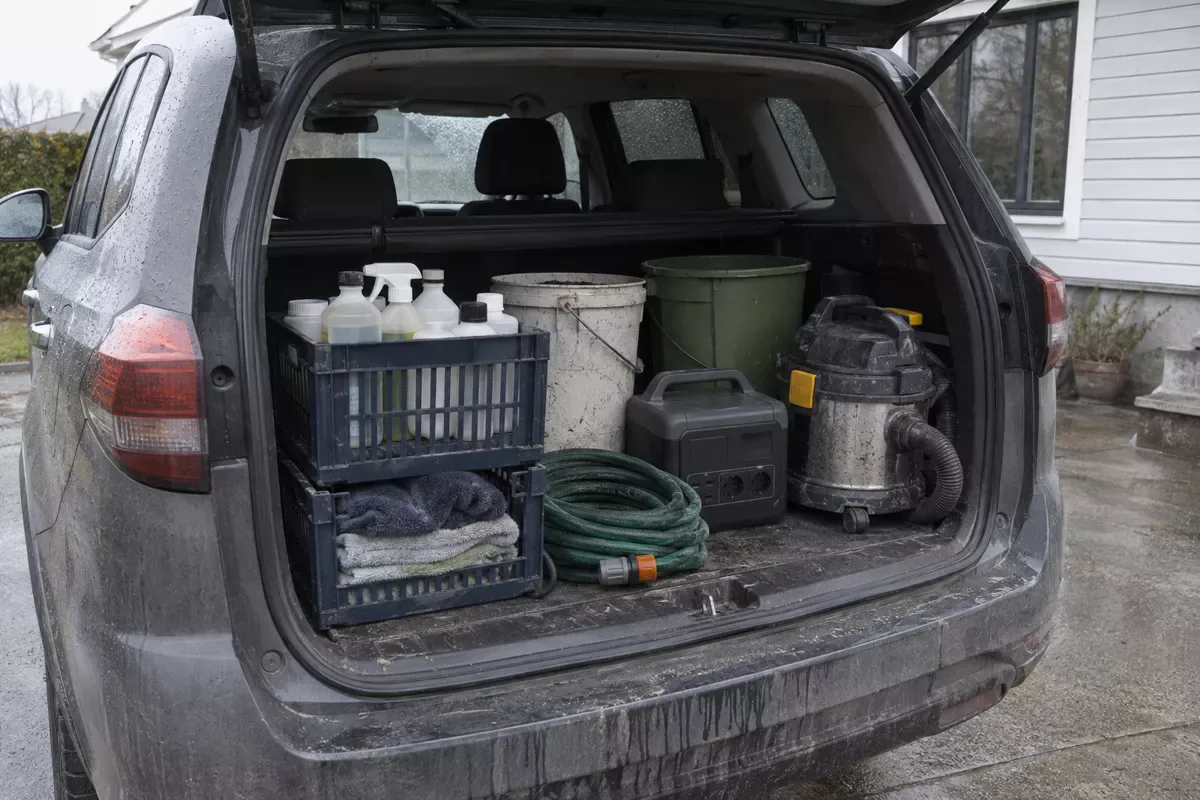
No. If your first customers are houses with driveways, the car or SUV you own carries a starter kit, and you use the customer's spigot and outlet or a rinseless wash. A van earns its cost when you want to work where there is no hose: apartment lots, offices and parking garages.
When you do move up, plan the weight. Water weighs a little over 8 pounds a gallon, so a 50-gallon tank adds over 400 pounds before the pump, hose and generator. Check the van's payload before you buy the tank, and strap everything down. For how water and runoff rules decide where you can work, see the water section of our startup guide. The same tank and pump setup also carries over if you add house washing, which starting a pressure washing business covers.
The business kit: quote, protect, get paid
The tools that wash the car are half the list. The other half keeps you paid and out of arguments:
- A price sheet built on your hours. Time each package on your own car, add drive and setup, and set a minimum. Work out the hourly figure you need with what an hour of your time really costs, then check the package margin with the markup and margin calculator.
- A written quote. Packages and add-ons (pet hair, tar, sap, odor) as separate lines on a quote template, so the customer sees what they are paying for.
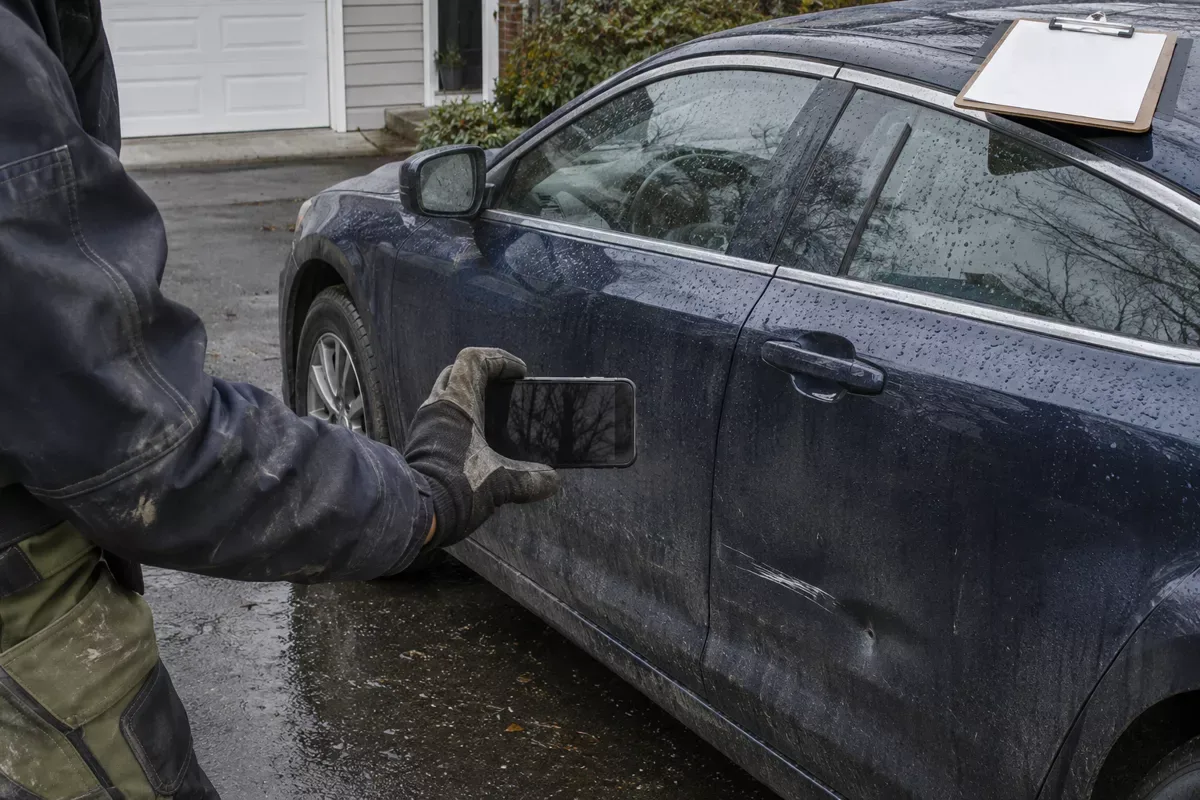
- A work order with photos. Walk the car with the customer, photograph every scratch, dent and stain before you start, and note them on a work order. This is the cheapest insurance you will buy.
- Card payments and an invoice on the spot. People pay a detailer in the driveway, not 30 days later.
- A customer list. Name, address, car, package and date for every job, so you can book the next maintenance wash. If you text reminders, get the customer's consent first (the TCPA applies).
Price it once, then start your first quote from the driveway next time.
Paper and a spreadsheet work for the first dozen cars. The wall comes when you are re-typing the same package prices into quotes at night, the damage photos sit in your camera roll instead of on the job, and nobody remembers whose car is due for a wash. Driveway Desk keeps your price book, so a quote is a few taps in the customer's driveway, the photos and notes stay on the customer's record, and the invoice goes out when the car is done and gets paid into your own Stripe or Square account. If you are weighing the bigger apps, here is what Housecall Pro charges a small crew.
Price it once, then start your first quote from the driveway next time.
Get it in order
Mobile detailing startup checklist
- Register the business and get an EIN
Choose a structure, file with your state, get a free EIN from the IRS and open a business bank account.
- Get licensed and insured
Ask your city or county about a business license and any mobile vendor permit, check sales tax, and get general liability and garagekeepers coverage quoted.
- Write your first menu
Two or three packages and a list of add-ons. The menu decides the kit.
- Buy the kit for that menu
Base wash kit, interior kit if you sell interiors, and towels and chemicals for two days of cars.
- Price every package
Hours at the car plus drive and setup, a minimum charge and add-on lines.
- Set up the paperwork for the job
Quote, work order with damage photos, invoice and card payments, all from your phone.
What you do not need yet
- A polisher before you can sell correction. Practice on your own cars first; a hologrammed hood is an expensive lesson on someone else's car.
- Ceramic coatings on day one. They pay well, but they need correction skill and a clean, covered place to cure.
- A wrapped van. Reviews and a good first ten customers do more. The playbook in how to get clients works for cars as well as houses.
- Every chemical on the shelf. A soap, a rinseless, an all-purpose, a glass, a wheel cleaner and a tar and sap remover cover most cars.
Buy for your first menu, stock for your busiest day
What you need to start a mobile detailing business is shorter than the lists suggest: paperwork and insurance first, the car you already have, a kit for the two or three services you sell, and enough towels and chemicals for two days of cars. Add the extractor, the tank and the polisher when customers ask and pay for them. Then put every package on a written quote so the price you worked out is the price you charge.
Put the method to work
Quote templateFill a quote with your own scope, quantities, prices, tax and deposit. Download a free PDF or print it directly from your browser.
Frequently asked questions
The paperwork and the starter kit are the easy part; most of it can be in place within a few weeks. The hard part is pricing so the drive and setup are paid for and finding the first steady customers. Start on a short menu, time every job and add services as people ask for them.
Tar, tree sap, baked-on bird droppings and embedded pet hair cause the most trouble, along with old stains in cloth seats. A normal wash will not lift them, which is why a tar and sap remover, a clay bar and a good vacuum belong in the kit. Price each one as an add-on line instead of hiding it in the package.
No license or permit requires one. You can learn washes and interiors on your own and friends' cars before you charge anyone. A course or hands-on class is worth it before you sell paint correction or coatings, because mistakes there damage the customer's paint.
Put the method to work
Labor cost calculatorDivide paid-hour costs by the billable-hours ratio, then allow for your target margin to find a selling rate.
Your prices, remembered.
Build your first quote on your phone in about two minutes, send it, and get paid into your own account.
Start your first quoteShare article
About the author
Field notes team
We write practical guides for home service crews of one to five. Our editorial standard is to show the calculation, state its assumptions, cite primary sources for factual claims and date competitor comparisons. We distinguish worked examples from market prices and correct errors when they are found. We do not claim trade licenses or credentials on behalf of the team.
More articles

Running a small crew · 13 min
Roofing Company Business Plan: 7 Parts + Cash Flow Example
A roofing company business plan in seven short sections, with a worked example: one reroof priced line by line, revenue by month, and how much cash a busy June ties up before homeowners pay.

Running a small crew · 11 min
How to Get Clients as a Realtor: 5 Channels That Work
How to get clients as a realtor: start with your sphere and past clients, build referral partners among the trade pros already inside homes, then add open houses and one farm area. Includes a 90-day plan and the commission math.

Running a small crew · 14 min
How to Get Bookkeeping Clients: 6 Ways That Actually Work
How to get bookkeeping clients: start with people you know and local tax preparers, sell a fixed-price cleanup first, then pick one niche, such as trade contractors, and become the bookkeeper its owners refer.

Running a small crew · 13 min
How to Start a Mobile Detailing Business: Water, Kit, Prices
Start a mobile detailing business in order: pick your first customers, sort licenses and insurance, solve water before buying a polisher, price by your real hours plus the drive, and book the maintenance wash.

Running a small crew · 13 min
How to Get Clients for Your Home Service Business: 7 Ways
How to get clients for a home service business: tell everyone you know, verify a free Google Business Profile, ask for reviews, work the street around every job, and follow up every quote you already sent before you buy a single lead.

Running a small crew · 13 min
How to Get a Contractor License in Texas: Who Needs One
Texas licenses the trade, not the title. General contractors, remodelers and roofers need no state license, just city registration. Electrical, A/C and plumbing contractors need TDLR or TSBPE licenses, experience, an exam and $100,000 to $300,000 insurance.