Deep Cleaning House Checklist: Room by Room, With Times
Driveway Desk team Updated 23 November 2026 15 min read
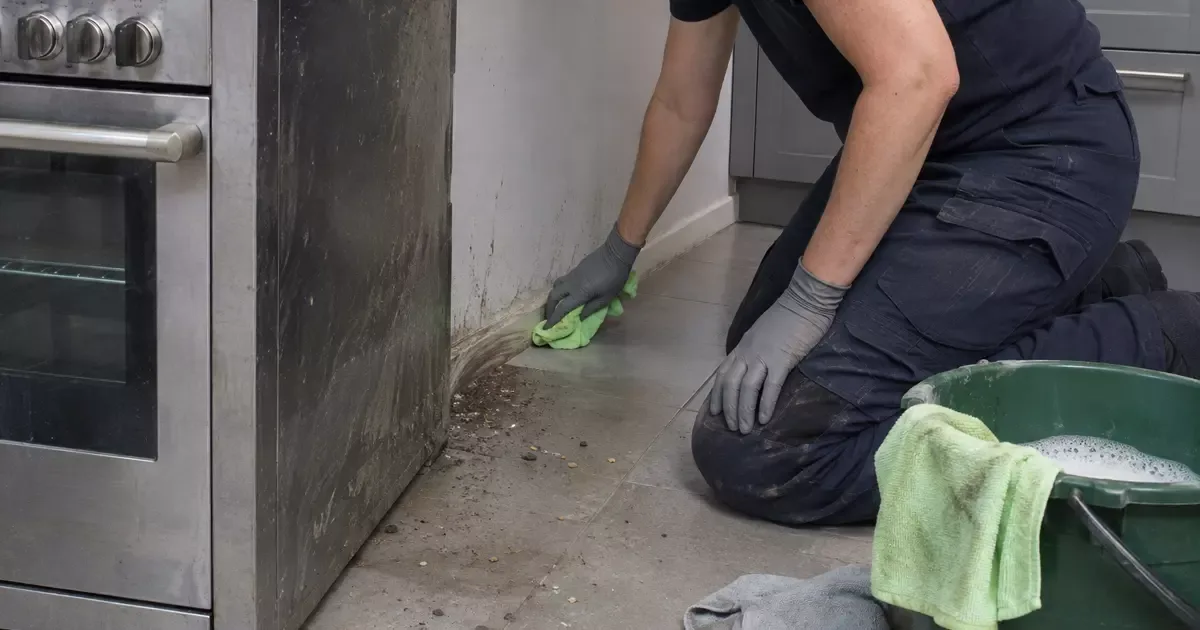
Your next job
Less time at the desk.
Build your price book, schedule the next visit and turn completed work into an invoice.
Start your first quoteIn this article
A deep cleaning house checklist covers everything a regular clean skips: inside the oven and fridge, behind and under furniture and appliances, grout, baseboards, vents, light fixtures, ceiling fans and the tops of cabinets. Work one room at a time, top to bottom and dry to wet, and do the floors last on your way out. Plan on roughly twice the time of a normal clean of the same house.
Short answer
Deep cleaning means cleaning what you have to move, open or reach: behind the fridge and stove, under beds and sofas, inside the oven, fridge and cabinets, and above head height. Go room by room, top to bottom, dry to wet, floors last. In our 2,000 sq ft example that is about 7.5 labor hours against 3.25 for a standard clean.
What does a deep clean include?
A deep clean includes every task in a standard clean plus the surfaces nobody touches week to week: inside appliances and cabinets, behind and under furniture, grout and caulk, baseboards and door frames, vents, fixtures and fans. If a task needs you to move something, open something or get on a step stool, it belongs on a deep clean.
That is the whole test. A deep clean is defined by what you move, open or reach, not by how hard you scrub. You can scrub a counter for an hour and it is still a standard clean. Pull the fridge out and wipe the floor behind it, and you are deep cleaning.
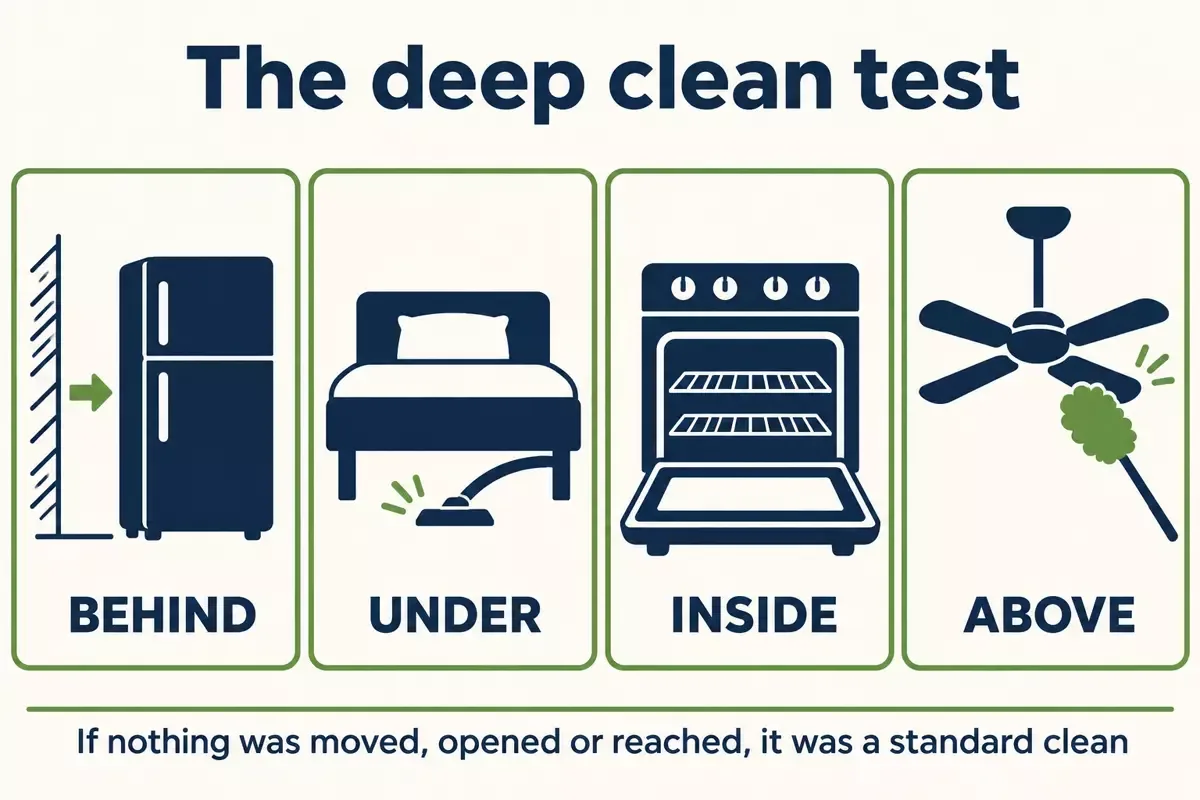
Use the four words as your checklist filter. Behind: fridge, stove, washer, dryer, sofa, headboard. Under: beds, sofas, rugs, the sink cabinets. Inside: oven, microwave, fridge, dishwasher, drawers, cabinets, closets. Above: ceiling fans, light fixtures, vents, door frames, the tops of cabinets and the fridge.
This is not a spring clean. A spring house cleaning checklist adds seasonal jobs like swapping closets, washing screens and clearing the garage. A deep clean is the same whole-house reset any month of the year: before a move, before guests, after a renovation, or when a home has gone a few months on quick cleans.
Deep clean vs standard clean: what changes in each room
The rooms are the same. What changes is how far into each room you go.
| Area | Standard clean | Deep clean adds |
|---|---|---|
| Kitchen | Counters, sink, stovetop, appliance fronts, floor | Inside oven, microwave and fridge, cabinet fronts and tops, behind the stove and fridge, range hood filter, backsplash grout |
| Bathrooms | Toilet, sink, tub and shower surfaces, mirror, floor | Grout and caulk, shower head, exhaust fan cover, behind the toilet, inside the vanity, light fixture |
| Bedrooms | Dust reachable surfaces, make beds, vacuum open floor | Under the bed, inside closets, ceiling fan, window tracks, blinds, door frames, light switches |
| Living and dining | Dust, vacuum, wipe tables | Under sofa cushions and behind furniture, lampshades, vents, baseboards, chair legs |
| Whole house | Floors and trash | Baseboards, doors, switch plates, vent covers, walls spot-cleaned, every floor edge |
Before you start: supplies and the order of work
You don't need special products. A deep clean runs on a few basics and the right order.
- Microfibre cloths, a lot of them. Ten for a three-bedroom house is not too many.
- An all-purpose cleaner, a degreaser for the kitchen and a bathroom cleaner that handles soap scum.
- A small stiff brush for grout and an old toothbrush for tight corners.
- A non-scratch sponge, a squeegee and a bucket.
- An extendable duster for fans and tops of cabinets, plus a step stool.
- A vacuum with a crevice tool and a brush head, and a mop.
If you use a disinfectant, read the label and leave the surface wet for as long as it says. The EPA's six steps for using disinfectants safely covers that contact time and the rest of the label basics. Never mix bleach with other cleaners.
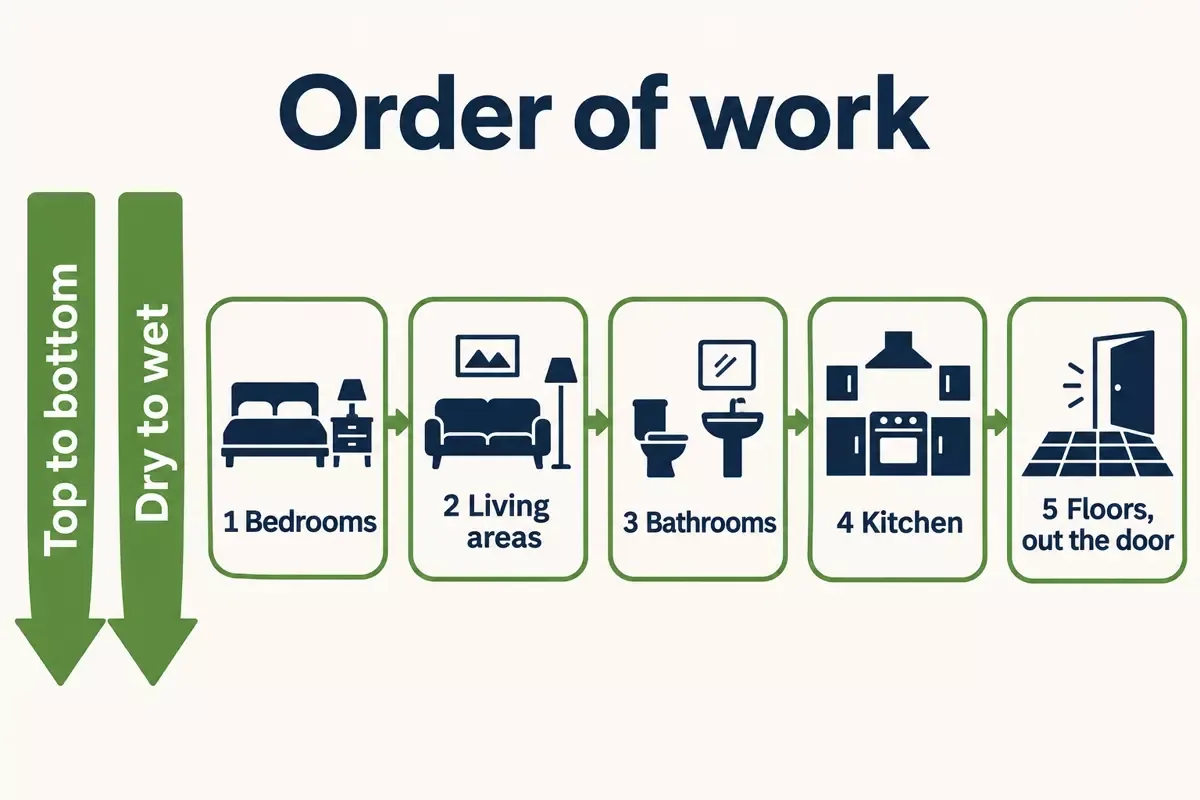
Order matters more than products. Work top to bottom so dust falls onto surfaces you haven't cleaned yet. Work dry to wet: dust and vacuum before you wipe or mop, or you turn dust into mud. Start in the rooms farthest from the door and finish the floors as you leave, so you never walk across a clean floor.
The room-by-room deep cleaning checklist
Copy this into your notes app or print it. Each room runs top to bottom.
Kitchen
The kitchen takes the longest because almost everything in it opens.
- Dust the tops of cabinets, the fridge and the range hood.
- Soak the range hood filter in hot water and degreaser.
- Empty and wipe the inside of the fridge, shelves and drawers out. Toss old food first.
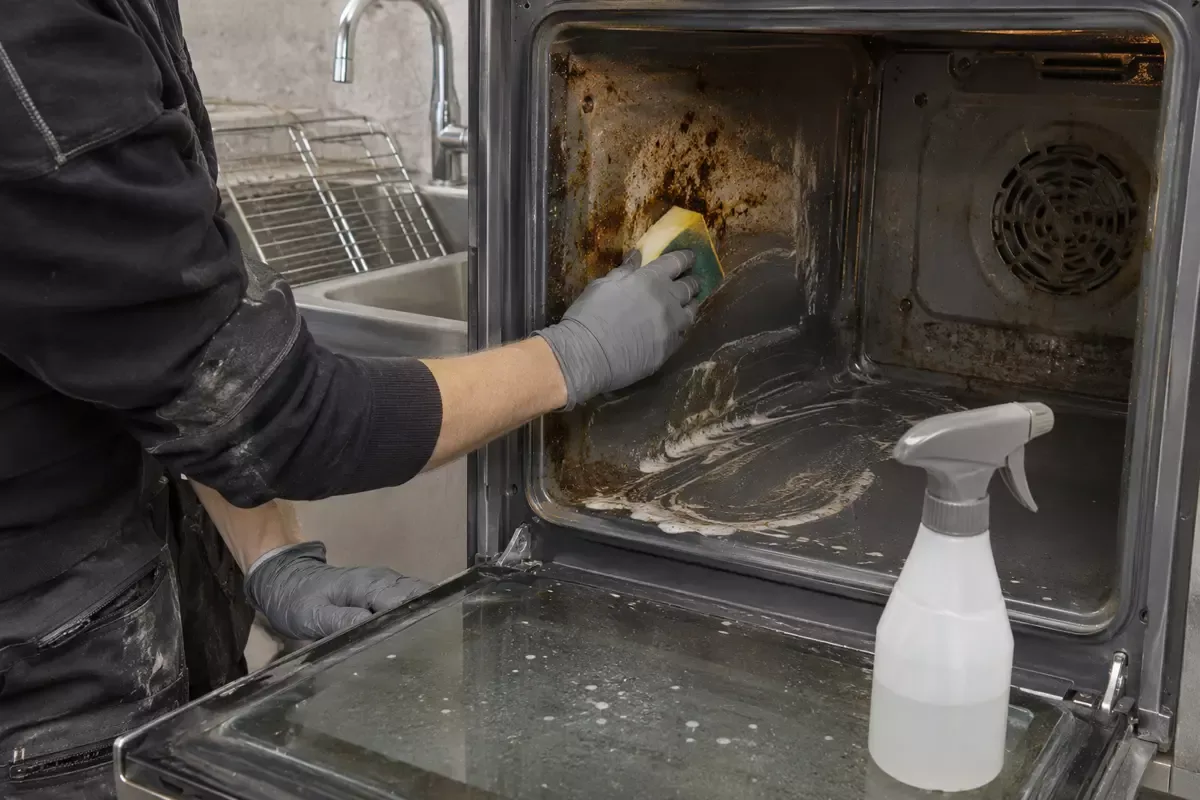
- Clean inside the microwave and the oven. Pull the oven racks and soak them in the sink.
- Wipe cabinet fronts, handles and the insides of any cabinets you are emptying.
- Scrub the backsplash and its grout.
- Pull the stove and fridge out. Vacuum and wipe the floor and wall behind them.
- Clean the dishwasher filter and wipe the door seal.
- Scrub the sink and faucet, then the counters.
- Mop last, including under the toe kick of the cabinets.
Bathrooms
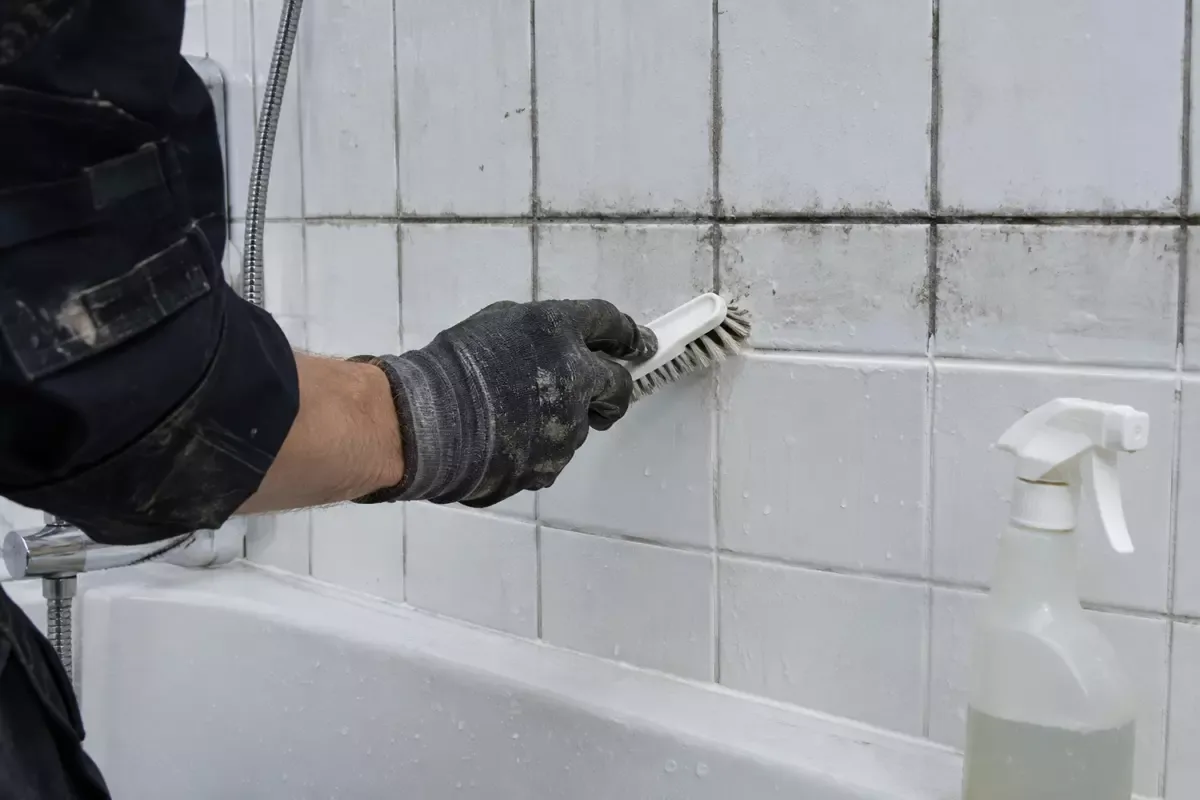
Spray first, then dust, then come back to scrub. The cleaner works while you do the dry jobs.
- Spray the tub, shower walls and toilet and let them sit.
- Dust the exhaust fan cover and light fixture.
- Wipe the mirror, the medicine cabinet and inside the vanity.
- Scrub the grout and the caulk lines.
- Descale the shower head and faucets.
- Clean the toilet top to bottom, including the base, the hinges and the floor behind it.
- Wash the bath mat and wipe the trash can inside and out.
- Mop, getting into the corner behind the door.
Bedrooms
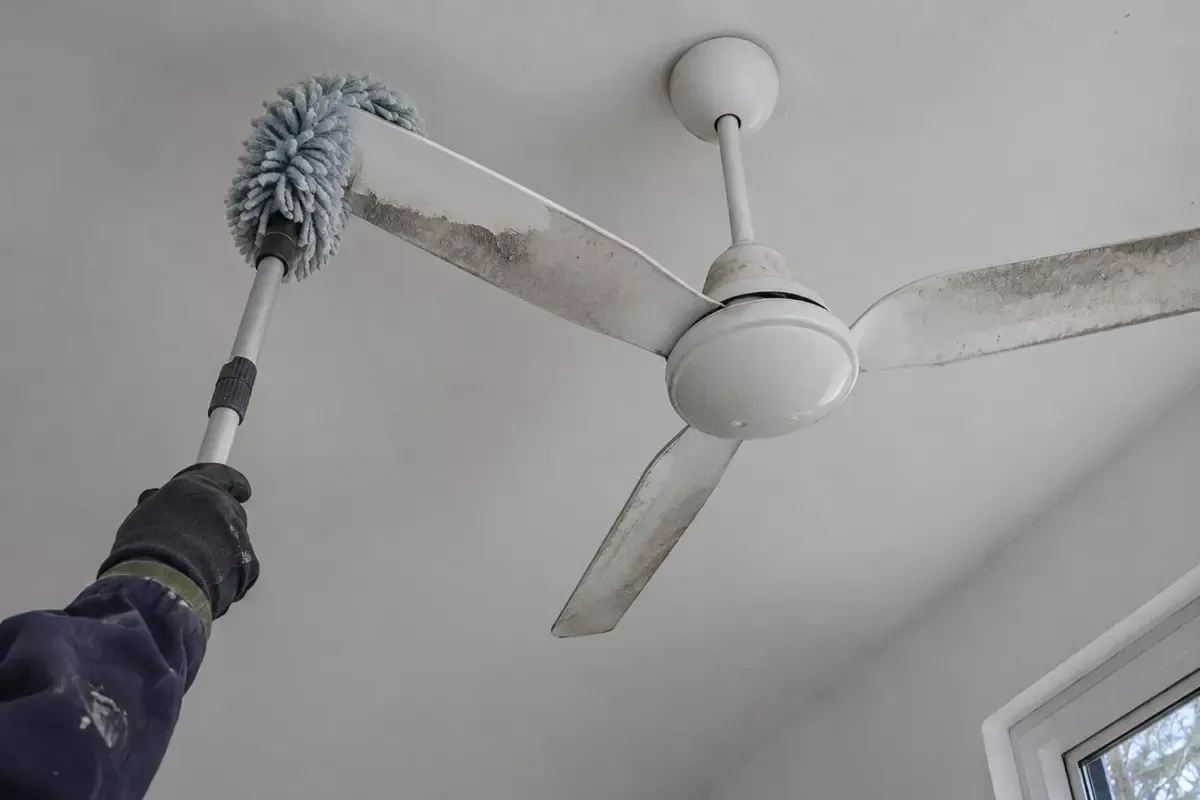
- Dust the ceiling fan and light fixture.
- Wipe the door frame, the top of the door and the light switch.
- Dust the blinds and wipe the window sills and tracks.
- Empty the nightstands and wipe them inside.
- Strip the bed and wash the bedding, pillows and mattress protector if the labels allow.
- Vacuum the mattress.
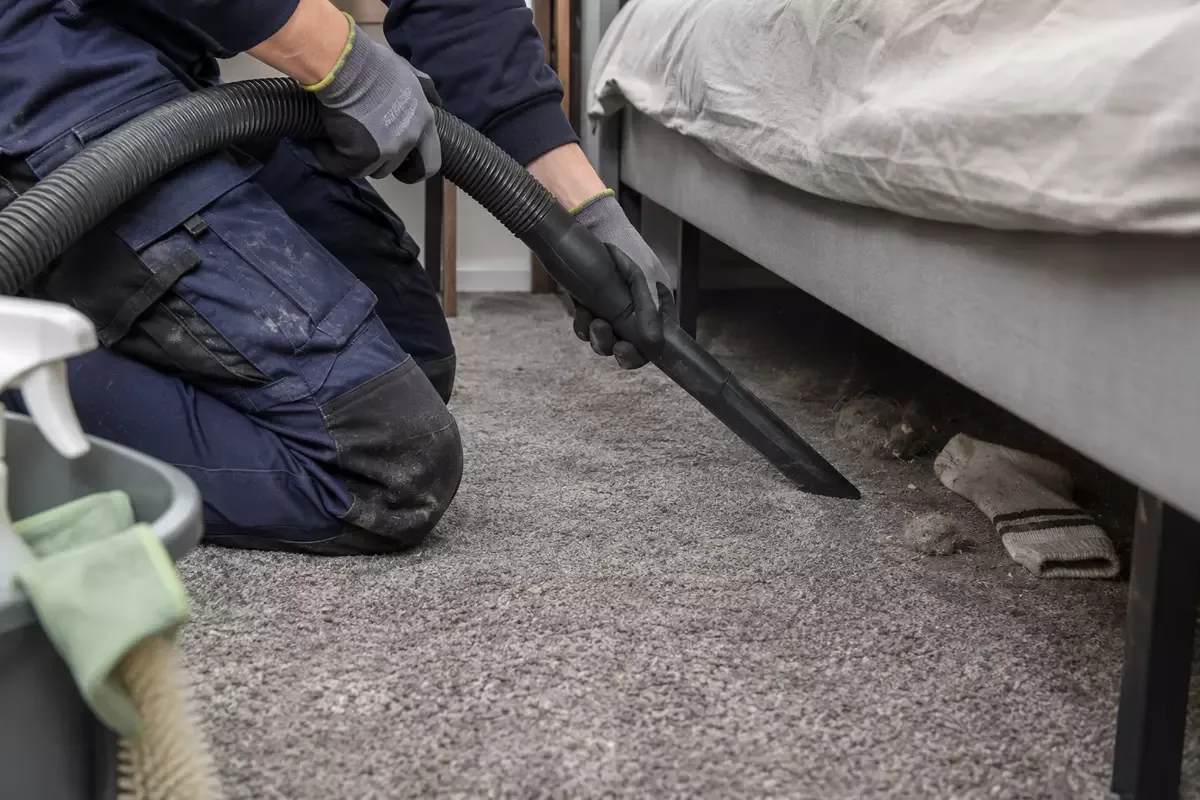
- Vacuum under the bed and inside the closet.
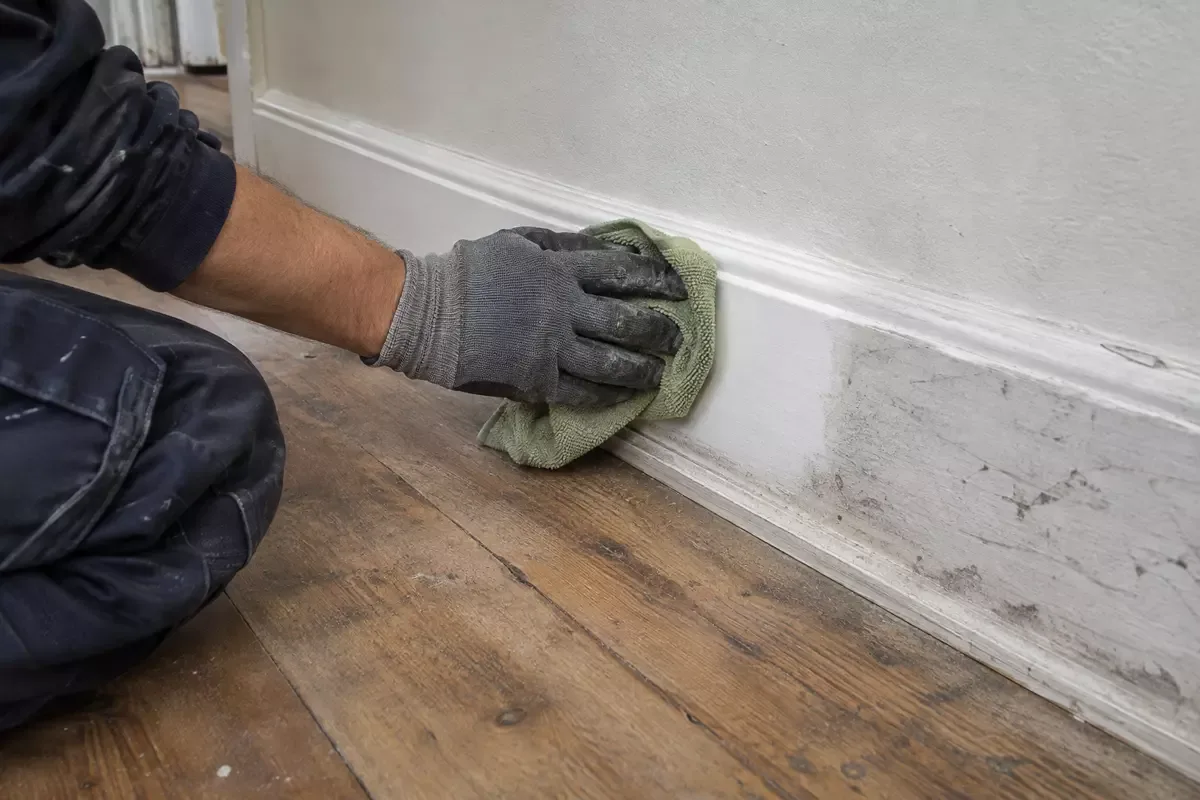
- Wipe the baseboards, then vacuum the floor edges.
Living and dining areas
- Dust the ceiling fan, light fixtures and the top of any bookcases.
- Wipe vent covers and the return air grille.
- Dust lampshades, picture frames and electronics.
- Take the sofa cushions off and vacuum under them.
- Move the sofa and chairs and vacuum behind and under them.
- Wipe the table and chair legs.
- Clean the inside of the windows and the tracks.
Entry, hallways and stairs
- Wipe the front door inside and out, plus the handle and the frame.
- Wipe light switches and the walls around them.
- Wipe the baseboards with a damp cloth.
- Vacuum the stair edges with the crevice tool.
- Shake out or wash the entry mat.
Floors, last
Vacuum every room edge to edge with the crevice tool along the baseboards. Then mop hard floors, working from the back of the house toward the front door. Carpet shampooing is its own job with its own machine, so quote it as a separate line; the carpet cleaning price calculator shows how that add-on is priced.
How to deep clean a house in one day
How to deep clean a house in one day
- Declutter before you clean
Clear counters, floors and tables first. Put a basket in each room for things that belong elsewhere. You can't clean a surface that is covered.
- Start every bathroom soaking
Spray the tubs, showers and toilets so the cleaner can work on the soap scum while you do dry jobs elsewhere.
- Dust high in every room
Do ceiling fans, light fixtures, vents and the tops of cabinets in the whole house in one pass, with one duster and one step stool.
- Do the insides
Empty and clean the fridge, oven, microwave, cabinets and drawers. Do the oven early if you use a cleaner that needs time to sit.
- Move furniture and appliances
Pull out the stove, the fridge, the sofa and the beds. Clean behind and under each one, then push it back.
- Wipe down, room by room
Go farthest room first, top to bottom: door frames, switches, sills, baseboards, then the surfaces at hand height.
- Finish the floors on your way out
Vacuum edge to edge, then mop from the back of the house to the front door.
How long does a deep clean take?
A deep clean of an average house takes about twice as long as a standard clean. In our example, a 2,000 sq ft home with three bedrooms and two bathrooms, that is about 7.5 labor hours for a deep clean against 3.25 for a standard one. One person can finish it in a long day. Two people can finish it by early afternoon. For the standard visit itself, task by task with minutes, see what a basic clean covers on every visit.
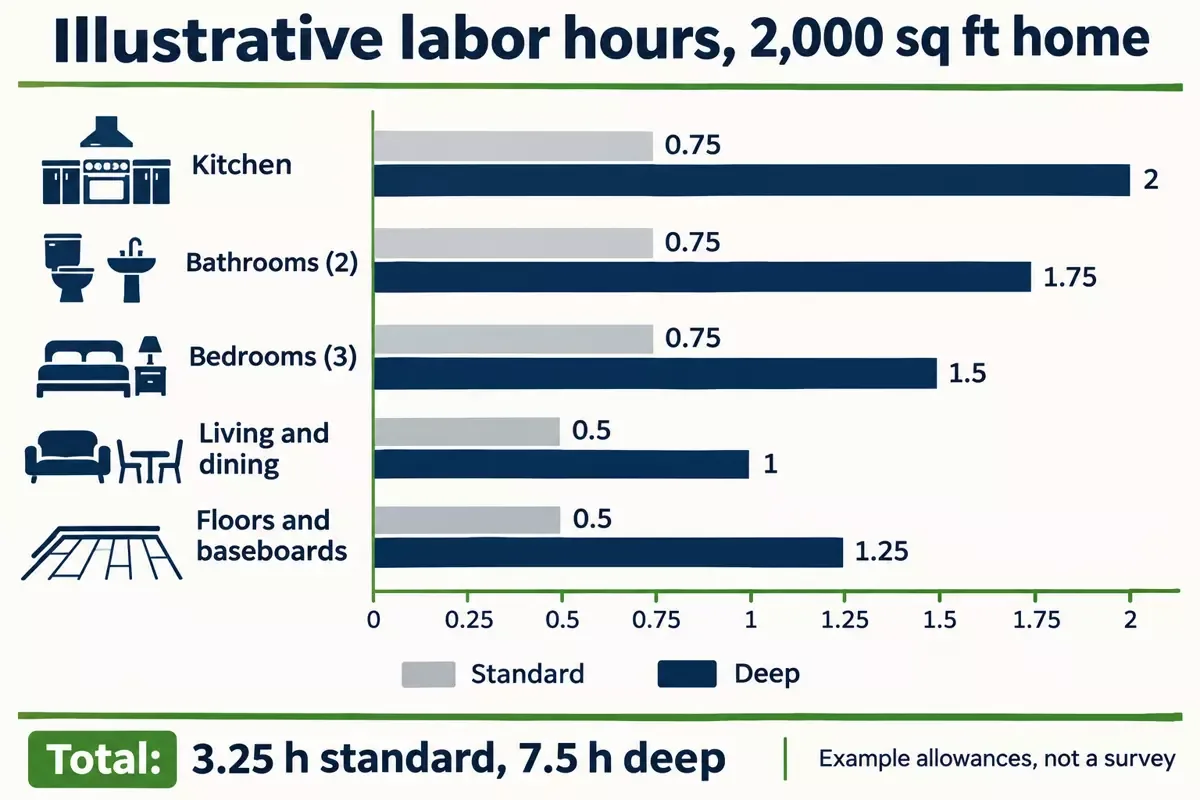
| Area (2,000 sq ft home) | Standard clean, hours | Deep clean, hours |
|---|---|---|
| Kitchen | 0.75 | 2 |
| Bathrooms (2) | 0.75 | 1.75 |
| Bedrooms (3) | 0.75 | 1.5 |
| Living and dining | 0.5 | 1 |
| Floors and baseboards | 0.5 | 1.25 |
| Total | 3.25 | 7.5 |
These are example allowances, not a survey. Time your own first deep clean room by room and use that. The kitchen is the one that runs over, almost every time, because of the oven.
Which deep clean fits your situation?
| Your situation | What to do |
|---|---|
| Doing it yourself, one free weekend | Bathrooms and kitchen on day one, bedrooms, living areas and floors on day two |
| Doing it yourself, no free weekend | One room per week for a month, kitchen first, and keep up the quick cleans in between |
| Moving out | Deep clean the empty house; inside every cabinet, closet and appliance matters most |
| Hiring a cleaner | Send them this checklist and get the scope in writing before the day |
| You clean houses for a living | Put the checklist on the quote and price the first visit as a deep clean |
If you clean houses for a living: the checklist is your quote
For a cleaner, this checklist is not just a to-do list. It is the scope of the job. The usual argument after a deep clean comes from one gap: the client thought "deep" meant inside the fridge, and you thought it meant baseboards and grout. A one-page checklist PDF with a not-included column settles that before the visit, not after it.
Write the rooms and the tasks on the quote. A written quote that lists rooms and tasks lets you point to what was included when the client asks for more. A work order for the day carries the same list for a helper.
Then price the time, not the square footage alone. Our house cleaning price calculator starts at $0.09 per sq ft for a standard clean and applies a factor of 2 for a deep clean. Those are its editable starting inputs, not market averages.
| Home size | Standard clean | Deep clean |
|---|---|---|
| 1,000 sq ft | $90 | $180 |
| 1,500 sq ft | $135 | $270 |
| 2,000 sq ft | $180 | $360 |
| 2,500 sq ft | $225 | $450 |
Try your numbers
Example estimate of your job price. Before tax.
Your example price
Check that against the hours above. A $360 deep clean that takes 7.5 hours pays $48 an hour before supplies and driving. Run your real numbers through what an hour of your time really costs before you settle on the factor. If the first deep clean of a neglected home is running you 10 hours, raise the factor for first visits, not your standard price.
Price it once, then start your first quote from the driveway next time.
A deep clean is also the best first visit you can sell. The home is reset, so every recurring clean after it is faster. That is how you turn one-time deep cleans into recurring clients, and recurring clients are what a cleaning business plan should be built on. After the reset, a printable daily, weekly and monthly cleaning checklist keeps the house there between visits.
Keep the checklist out of the glovebox
A paper checklist and a notes app work fine for one house. The wall comes when you sell the job every week: you re-type the same rooms and tasks into every quote at night, the client asks in week three whether inside the oven was included, and the deep clean that turned into a recurring client lives in three different apps. Driveway Desk keeps your price book and your task lists, so a deep clean quote for a new home is a few taps from their driveway. The recurring cleans after it go on the schedule with reminders, and invoices get paid into your own Stripe or Square account. If you are weighing the bigger apps, here is what Housecall Pro costs for a one or two person crew.
Price it once, then start your first quote from the driveway next time.
Mistakes that make a deep clean take twice as long
- Cleaning bottom to top. Dust from the fan lands on the counter you just wiped. You do it twice.
- Wiping before dusting. A damp cloth on a dusty sill makes a grey paste.
- Skipping the soak. Scrubbing soap scum dry takes three times the effort. Spray first, scrub later.
- Mopping before vacuuming the edges. Hair and grit in the corners end up stuck to the mop head.
- Not moving anything. If the fridge, the stove and the beds stay put, it was a long standard clean, not a deep one.
- Doing the whole house in one go with no plan. Go room by room, or the oven and the grout get pushed to the end and skipped.
- For cleaners: quoting a deep clean without a written scope. "Deep" means something different to every client. Write it down.
How to keep the house clean after a deep clean
A deep clean holds for months if a few daily habits stop the build-up. Six that do most of the work:
- Make the bed every morning.
- Wash or load the dishes before bed, and wipe the counters.
- Wipe the bathroom sink and mirror after you use them.
- Put away ten things before you sit down for the evening.
- Take out the trash and recycling when they are full, not overflowing.
- Do a quick vacuum of the kitchen floor and the entry most days.
Then put the deep clean on the calendar. Every three to six months is a sensible rhythm. A home with pets, kids or allergies needs it more often.
Deep clean once, then keep it with small habits
The checklist comes down to one test: behind, under, inside and above. If you moved it, opened it or reached it, you deep cleaned. Work room by room, top to bottom, dry to wet, and do the floors on your way out. Expect about twice the time of a standard clean, and spend the most of it in the kitchen.
If you clean for a living, the same list is your scope. Put it on the quote, price the hours, and use the deep clean to win a recurring client. New to the trade? Start with how to start a cleaning business.
Put the method to work
House cleaning price calculatorPrice a house clean from floor area, room adjustments, cleaning depth, and the discount you choose.
Frequently asked questions
A deep clean includes everything in a standard clean plus the parts you have to move, open or reach: inside the oven, fridge, microwave and cabinets, behind and under appliances and furniture, grout and caulk, baseboards, door frames, vents, light fixtures and ceiling fans. A standard clean covers the surfaces you can see and reach.
It is an informal tidying habit, not a cleaning standard, and the versions vary. One common version is to spend five minutes putting away five things in each of five spots. It keeps clutter down between cleans, which makes the next clean faster, but it does not replace a deep clean.
Make the bed, do the dishes and wipe the counters before bed, wipe the bathroom sink after use, put away a handful of things each evening, empty the trash when it is full, and give the kitchen and entry floors a quick vacuum. Those six stop most of the build-up a deep clean has to fix.
A standard clean of a 2,000 sq ft, three-bedroom house takes about three hours for one person in our example, and a deep clean about twice that, around 7.5 hours. Bigger homes, pets and a home that has gone months without a clean all add time. Time your own first clean room by room and plan from that.
Put the method to work
Labor cost calculatorDivide paid-hour costs by the billable-hours ratio, then allow for your target margin to find a selling rate.
Your prices, remembered.
Build your first quote on your phone in about two minutes, send it, and get paid into your own account.
Start your first quoteShare article
About the author
Field notes team
We write practical guides for home service crews of one to five. Our editorial standard is to show the calculation, state its assumptions, cite primary sources for factual claims and date competitor comparisons. We distinguish worked examples from market prices and correct errors when they are found. We do not claim trade licenses or credentials on behalf of the team.
More articles

Running a small crew · 11 min
Basic House Cleaning Checklist: 12 Tasks, Every Visit
A basic house cleaning checklist of 12 tasks you finish on every visit: kitchen, bathrooms, dusting, beds and floors, in the right order, with real timings for a 3 bed, 2 bath house and how to price it.

Running a small crew · 12 min
House Cleaning Checklist Printable: Free Room-by-Room Sheet
A free printable house cleaning checklist, room by room, with daily, weekly and monthly columns. Plus the supplies you need and how a cleaning business turns the same sheet into a recurring quote.

Running a small crew · 13 min
Spring House Cleaning Checklist: 7 Areas, Plus How to Price It
A spring house cleaning checklist room by room: windows and tracks, fans, baseboards, behind appliances, inside the fridge and oven, entryway salt. Plus how a cleaning business should quote it and turn it into a recurring client.

Running a small crew · 14 min
House Cleaning Business Plan: 7 Parts and the One Number That Matters
A house cleaning business plan in seven short parts, with a worked example: how many recurring clients cover your costs and your pay, plus prices, startup costs, goals and a one-page sample plan.

Running a small crew · 13 min
How to Get Cleaning Business Clients: 7 Free and Paid Ways
How to get cleaning business clients: start with the people you know and local groups, verify a Google Business Profile, hang door hangers around every client and ask for referrals. Count recurring clients, not leads.

Running a small crew · 12 min
How to Get Commercial Cleaning Contracts: 7 Steps and the Bid Math
How to get commercial cleaning contracts: start with small local offices, get insured and bonded, win the walkthrough, price the visit from your own timed hours and send a one-page proposal with a 30-day trial the next day.