How to Get Commercial Cleaning Contracts: 7 Steps and the Bid Math
Driveway Desk team Updated 14 November 2026 12 min read
Your next job
Less time at the desk.
Build your price book, schedule the next visit and turn completed work into an invoice.
Start your first quoteIn this article
To get commercial cleaning contracts, pick one type of building you can clean well, get insured and bonded, then walk into small offices within 15 minutes of home and ask for the person who handles the cleaning. Offer a free walkthrough, time the job, and send a one-page proposal with a monthly price within 24 hours. Bid sites and government contracts come later, once you have references.
Short answer
Start with small local offices, not bid sites. Insure and bond the business, knock on doors, do a walkthrough, price the visit from the hours you timed, and send a one-page proposal the next day with a 30-day trial.
Where do commercial cleaning contracts come from?
There are four ways in. They differ in how fast you get the first yes, how much paperwork stands in the way, and how much of the price you keep.
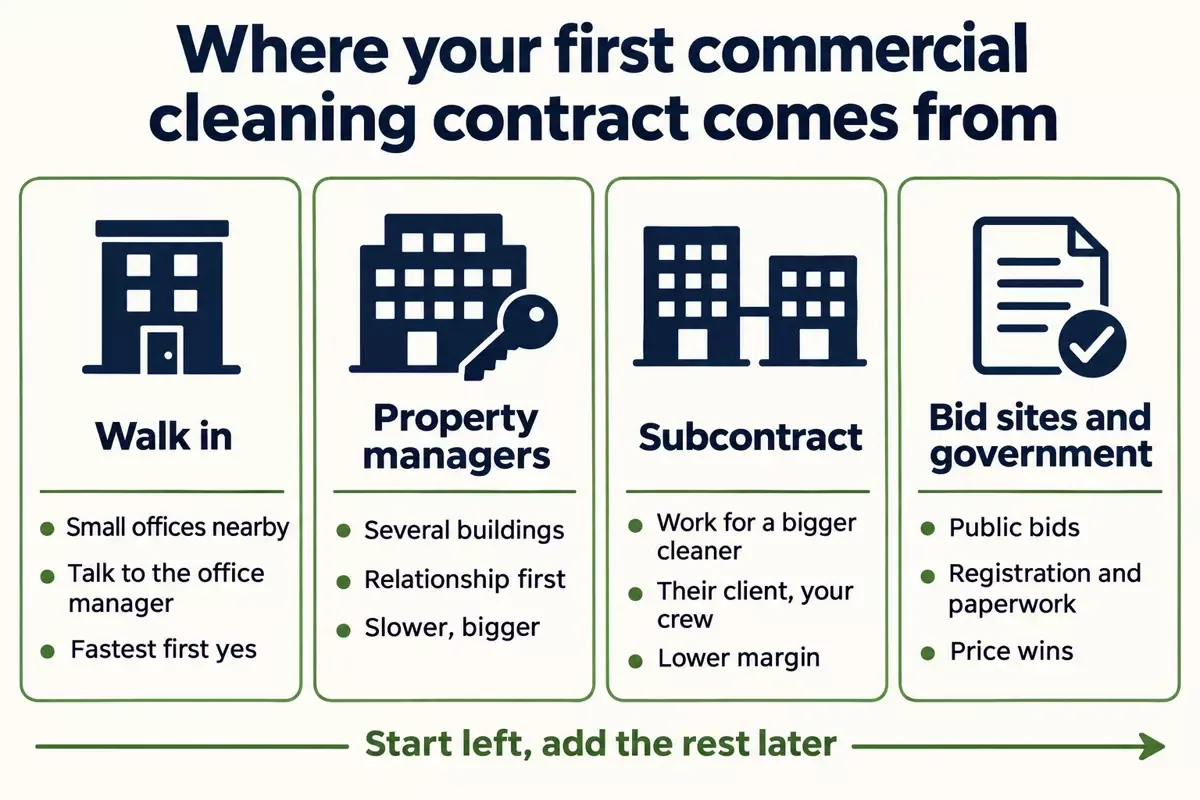
Your first commercial contract is a small building nobody else is bidding on. A 2,000 to 5,000 sq ft office, a dental practice or a small gym that has no cleaner yet, or quietly hates the one it has. There is no bid package and no lowest-price race. There is an office manager who wants the bins emptied and the restroom clean without having to think about it, and the first owner who shows up, looks around and sends a clear price usually gets the job.
Pick the route that fits your situation
| Your situation | Start with | Why |
|---|---|---|
| Solo house cleaner adding evening work | Walk-in small offices | One or two buildings a week fit around residential days |
| New business, no clients yet | Walk-in plus subcontracting | Subcontract hours give you experience and cash while you knock on doors |
| Crew of three to five with two references | Property managers | One relationship can open several buildings |
| Established, insured, with past performance | Bid sites and government | Large contracts, but slow, formal and decided mostly on price |
Walk in to small offices
This is the route that works with no references. Walk a strip of offices, medical suites and small retail near home in the mid-morning, when the front desk is not slammed. Ask who handles the cleaning, leave a one-page sheet with your name, insurance and services, and ask for a 15-minute walkthrough. Write down every building you visit so you can follow up a week later. Most yeses come on the second or third contact, not the first. The same mid-morning walk past small retail is how you sign storefronts if you build a window cleaning business instead.
Work with property managers
Property managers run several buildings and hire cleaners for the common areas, the vacant units and the turnovers. They want a cleaner who answers the phone and shows up. Ask your first office clients who manages their building, then call that company with a reference already in hand. Many property managers also need homes cleaned between tenants, which is one of the channels for finding residential cleaning clients too.
Subcontract for a bigger cleaning company
Larger cleaning companies and janitorial franchises sometimes win more buildings than their own crews can cover, and they pass the work to subcontractors. You clean their client's building and they keep a cut. The margin is lower and the client is not yours, but it pays your crew while you build your own list. Read any franchise or subcontract agreement in full before you sign: fees, territory and who owns the account matter more than the first month's work.
Bid sites and government contracts
Public and federal contracts are advertised as bids. Before you can bid on a federal contract, you register in SAM.gov and get a Unique Entity Identifier. The SBA is blunt about the cost: it can take a long time and significant money to win a first government contract, and some businesses spend $80,000 to $130,000 to earn their first one. Treat it as a year-two or year-three goal, not a launch plan.
Get insured and bonded before you knock
Commercial clients ask for proof of insurance before the walkthrough ends. Rules vary by state, so confirm with your state and your insurer, but the usual set is:
- General liability insurance, with a certificate of insurance you can email the same day.
- A janitorial bond, which covers theft by your staff in the client's building. Many offices ask for it by name.
- Workers' comp once you have a helper, as your state requires.
- A business license and EIN. The SBA's 10 steps to start your business cover the registration order.
If you are still setting all of this up, starting a cleaning business walks through the full launch list.
Do the walkthrough like a contractor
The walkthrough is where you win or lose the price. Walk every room the client wants cleaned with a clipboard or your phone, and write down:
- Square footage, floor types (carpet tile, VCT, sealed concrete) and the number of restrooms.
- Number of desks, trash bins and kitchen or break areas.
- Visits per week and the time window: after 6 pm, before 7 am, or weekends.
- Who supplies paper towels, toilet paper, soap and trash liners.
- Anything special: glass entry doors, a stairwell, a server room you cannot enter.
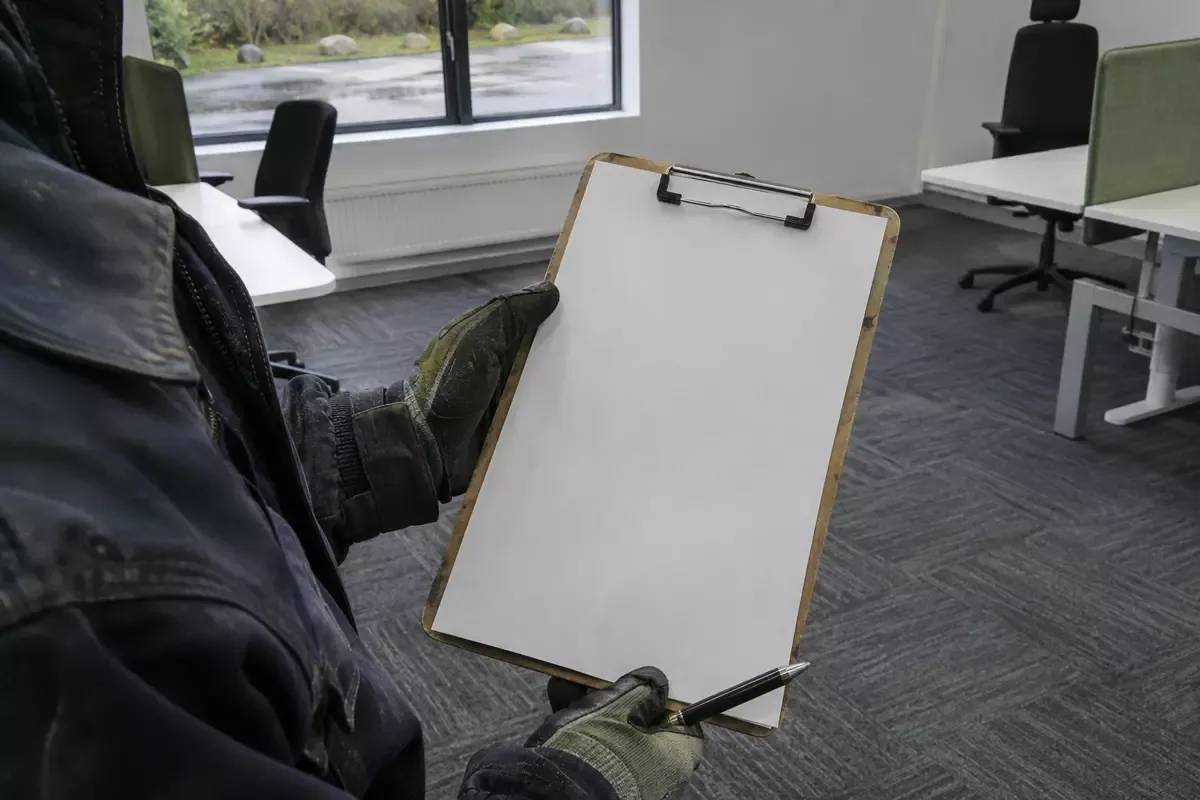
Then estimate the hours honestly. Better still, clean one room while you are there and time it. Your own timed hours beat any production rate you read online, because your building, your kit and your pace are the ones on the bill.
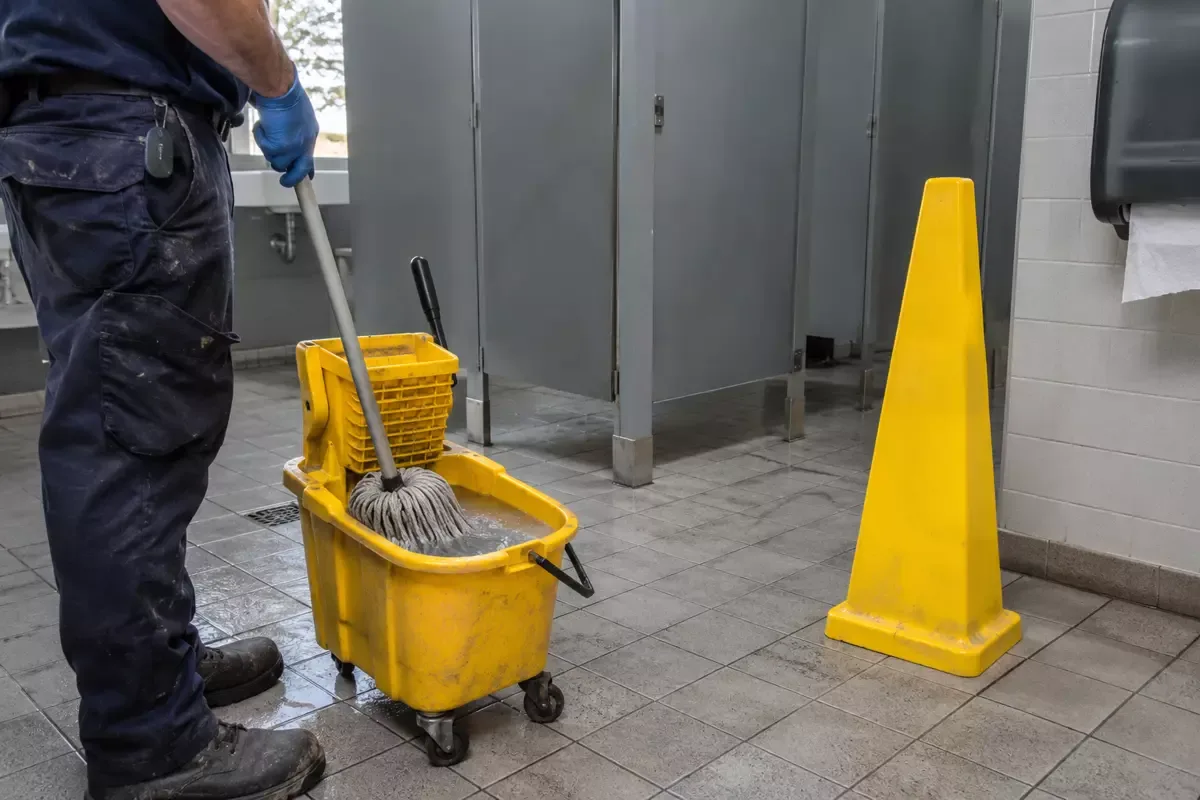
How to bid a commercial cleaning job
Price the visit from your timed hours, then turn it into a monthly price. Here is the math for a 3,000 sq ft office cleaned three nights a week. These are illustrative inputs, not market prices: put your own numbers in.
| Line | Illustrative input | Per visit |
|---|---|---|
| Labor | 2.0 hours at $22/hr including payroll | $44 |
| Travel | 0.5 hours at $22/hr | $11 |
| Supplies | Chemicals, liners, pads | $6 |
| Insurance and overhead | Policies, bond, phone, vehicle, divided by visits | $14 |
| Cost of the visit | $75 | |
| Profit | 25% of the price | $25 |
| Price per visit | $100 | |
| Monthly price | 3 visits a week x 52 weeks / 12 = 13 visits | $1,300 |
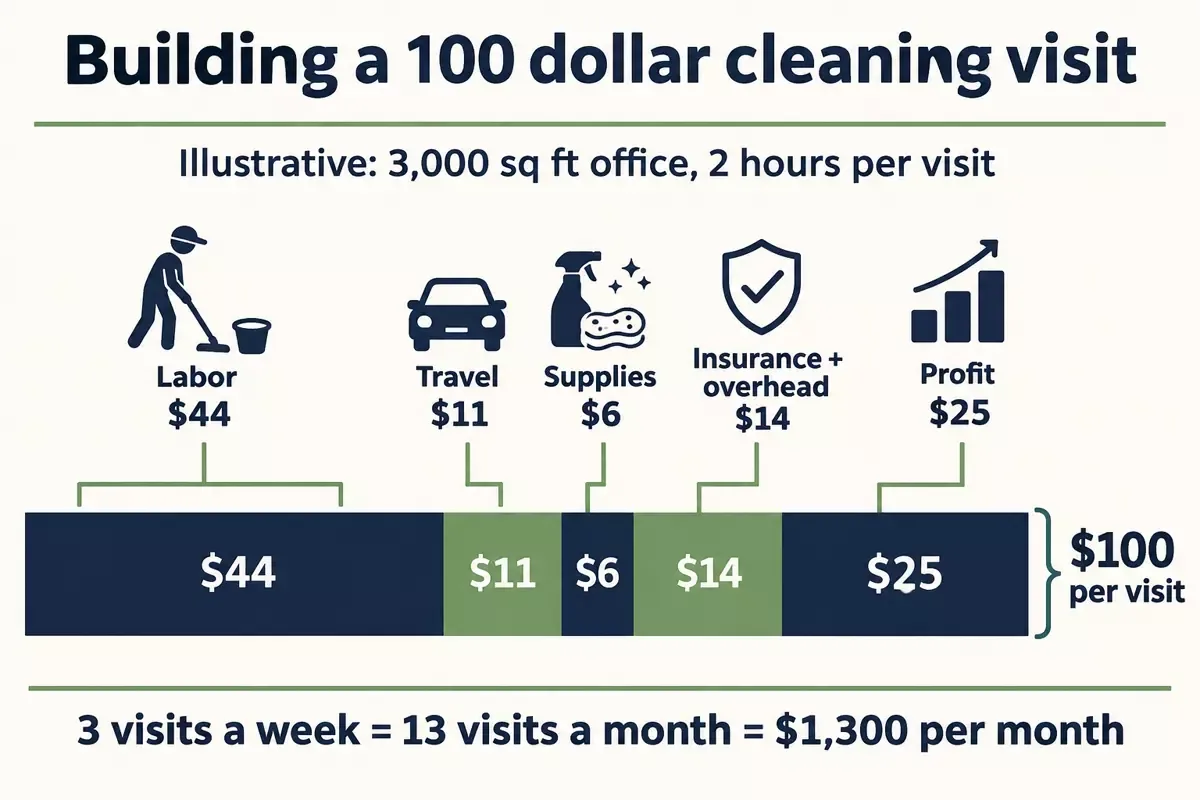
Quote the monthly figure, not the per-visit one. Offices budget by the month, and a flat $1,300 a month reads cleaner than "$100 a visit". Work out your real hourly cost with what an hour of your time really costs, then check the margin on the markup and margin calculator. The house cleaning price calculator uses the same hours-first logic for residential jobs, if you run both.
Price it once, then start your first quote from the driveway next time.
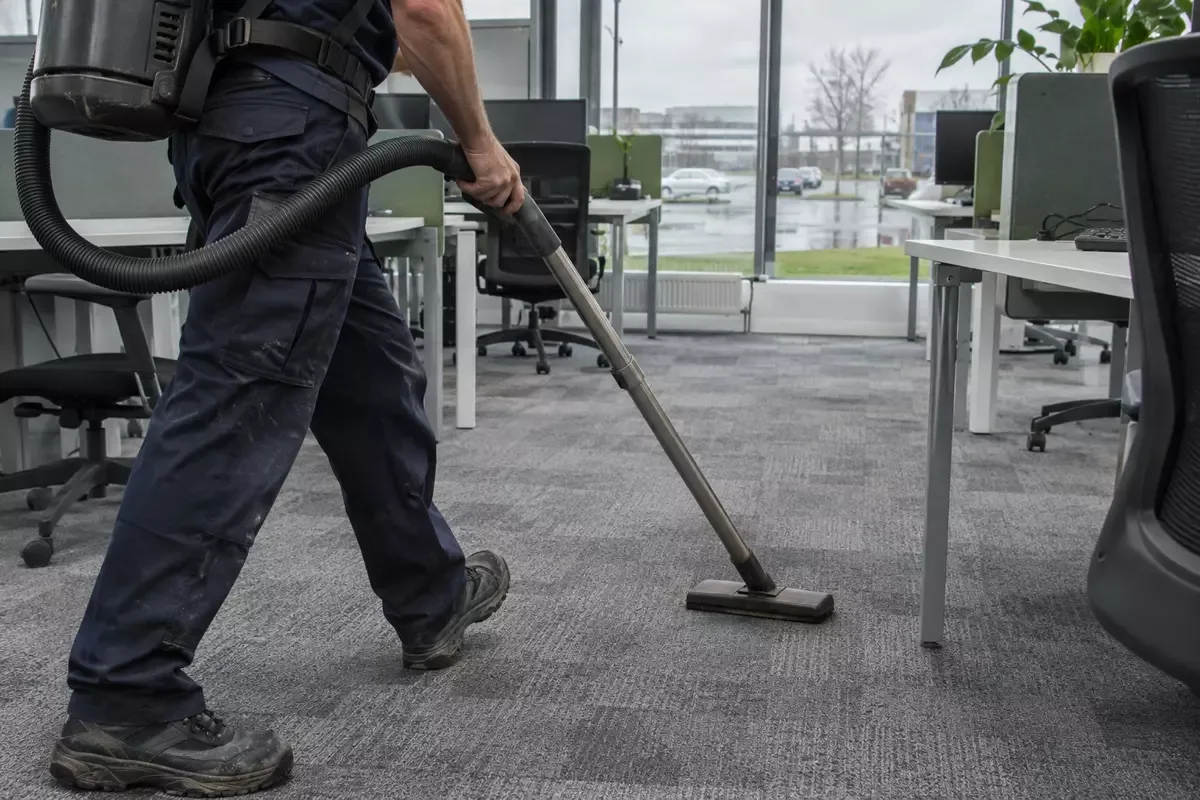
Send a one-page proposal within 24 hours
Speed wins small contracts. The office manager just walked you around; send the proposal while they still remember your face. Keep it to one page, write it as a fixed quote rather than an open estimate, and offer a 30-day trial with a short notice period. A trial takes the risk off the client and it is the easiest yes you will get.
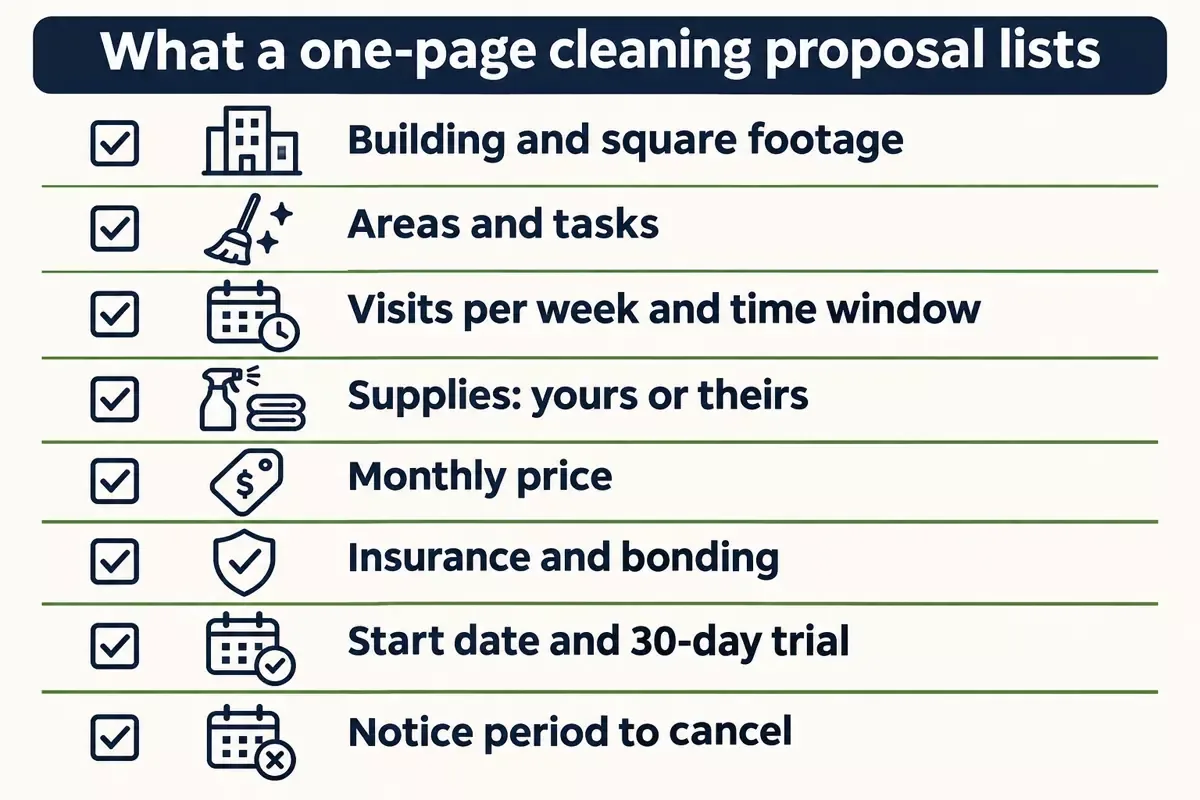
After you win, copy the task list onto a work order for each visit, so whoever cleans that night does the same job you priced.
How to get commercial cleaning contracts
- Pick one type of building
Small offices, medical suites or gyms. One type means one checklist and one price logic.
- Get insured and bonded
General liability, a janitorial bond and a business license, with a certificate you can send the same day.
- Build a list of 50 buildings near home
Stay within 15 minutes of your base so travel does not eat the margin.
- Walk in and ask for a walkthrough
Ask who handles the cleaning, leave a one-page sheet and book 15 minutes.
- Time the job and price the visit
Measure, count restrooms and bins, time one room, then build the monthly price.
- Send a one-page proposal within 24 hours
A fixed monthly price, the task list, your insurance and a 30-day trial.
- Follow up and ask for referrals
Call a week later, and once you are in, ask the client who else in the building needs a cleaner.
Run the contracts from your phone
A spreadsheet holds up for two or three buildings. The wall comes after that: you re-type the same rates into every proposal at night, monthly invoices go out late, and the notes about which door code goes with which office live in your head. Driveway Desk keeps your price book, so a proposal for a new building is a few taps after the walkthrough. Recurring visits go on the schedule with reminders, the monthly invoice goes out on time and gets paid into your own Stripe or Square account, and each client's history sits on their record. If you are weighing the bigger apps, here is what Housecall Pro actually costs for a small crew.
Price it once, then start your first quote from the driveway next time.
Mistakes that cost new commercial cleaners the contract
- Starting on bid sites. Large bids go to companies with references and past performance. You spend weeks on paperwork and lose on price.
- Quoting per square foot from a chart. A carpeted office and a tiled clinic of the same size take very different hours. Time it.
- No insurance certificate ready. If you cannot email one the same day, the next cleaner who can gets the job.
- Forgetting travel and supplies. A building 30 minutes away costs you an hour of drive time every visit.
- No notice period. Without one, a client can drop you on a day's notice after you turned down other work for their time slot.
- Underpricing to win. A price you cannot hold forces you to rush the clean, and rushed cleans are how you lose the contract at month three.
Start local, price from your hours, add bids later
Pick one type of building, insure and bond the business, walk into small offices near home and win them with a timed walkthrough and a one-page proposal the next day. Price every contract from your own hours, quote it by the month and offer a 30-day trial. Once you have three or four references, add property managers, then bids. The same quote-first habit wins other trades too: bidding a painting job follows the same walk, measure, price order, and carpet care is a natural add-on if you start a carpet cleaning business alongside.
Put the method to work
Quote templateFill a quote with your own scope, quantities, prices, tax and deposit. Download a free PDF or print it directly from your browser.
Frequently asked questions
Start with small offices near you that have no cleaner yet. Get insured and bonded, walk in, ask for a walkthrough and send a one-page proposal with a 30-day trial. A trial lets the client judge your work instead of your experience. Subcontracting for a larger cleaning company is the other way to log commercial hours before your first contract.
Do a walkthrough, count the square footage, restrooms, bins and floor types, and time one room. Multiply the hours by your hourly cost, add travel, supplies and overhead, then add your profit to get a price per visit. Multiply by the visits per month (three a week is 13 a month) and quote that monthly figure.
Ask every client you have for a referral, because the office next door and the property manager are the easiest next yes. Keep a list of every building you visit and follow up a week later, then again a month later. Once you have three or four references, approach property managers who run several buildings.
Using the illustrative office above at $1,300 a month, one contract is $15,600 a year in revenue, so about seven contracts that size bring in $100,000. That is revenue, not profit. At a 25% profit margin, $100,000 of profit takes about 26 contracts that size, or fewer, larger buildings.
The biggest costs are insurance, a janitorial bond, a business license and the equipment the buildings need, such as a commercial vacuum, mops, buckets and a cart. If you already clean homes, much of the kit carries over. Get three quotes for insurance and the bond before you knock on your first door, and add those to your equipment list to get your startup budget.
Put the method to work
Labor cost calculatorDivide paid-hour costs by the billable-hours ratio, then allow for your target margin to find a selling rate.
Your prices, remembered.
Build your first quote on your phone in about two minutes, send it, and get paid into your own account.
Start your first quoteShare article
About the author
Field notes team
We write practical guides for home service crews of one to five. Our editorial standard is to show the calculation, state its assumptions, cite primary sources for factual claims and date competitor comparisons. We distinguish worked examples from market prices and correct errors when they are found. We do not claim trade licenses or credentials on behalf of the team.
More articles

Running a small crew · 11 min
Basic House Cleaning Checklist: 12 Tasks, Every Visit
A basic house cleaning checklist of 12 tasks you finish on every visit: kitchen, bathrooms, dusting, beds and floors, in the right order, with real timings for a 3 bed, 2 bath house and how to price it.

Running a small crew · 12 min
House Cleaning Checklist Printable: Free Room-by-Room Sheet
A free printable house cleaning checklist, room by room, with daily, weekly and monthly columns. Plus the supplies you need and how a cleaning business turns the same sheet into a recurring quote.

Running a small crew · 15 min
Deep Cleaning House Checklist: Room by Room, With Times
A room-by-room deep cleaning house checklist: what a deep clean adds to a standard one, the order of work, a one-day plan, how long it takes for a 2,000 sq ft home, and how cleaners can turn the list into a quote.

Running a small crew · 13 min
Spring House Cleaning Checklist: 7 Areas, Plus How to Price It
A spring house cleaning checklist room by room: windows and tracks, fans, baseboards, behind appliances, inside the fridge and oven, entryway salt. Plus how a cleaning business should quote it and turn it into a recurring client.

Running a small crew · 14 min
House Cleaning Business Plan: 7 Parts and the One Number That Matters
A house cleaning business plan in seven short parts, with a worked example: how many recurring clients cover your costs and your pay, plus prices, startup costs, goals and a one-page sample plan.

Running a small crew · 13 min
How to Get Cleaning Business Clients: 7 Free and Paid Ways
How to get cleaning business clients: start with the people you know and local groups, verify a Google Business Profile, hang door hangers around every client and ask for referrals. Count recurring clients, not leads.