How to Get Cleaning Business Clients: 7 Free and Paid Ways
Driveway Desk team Updated 21 November 2026 13 min read
Your next job
Less time at the desk.
Build your price book, schedule the next visit and turn completed work into an invoice.
Start your first quoteIn this article
To get cleaning business clients, start with the people you already know, then post in your local Facebook and Nextdoor groups, set up a verified Google Business Profile, and hang door hangers on the street of every client you win. Ask each happy client for a referral and push every one-time clean toward a recurring visit. Paid lead sites come last, once your price and your reviews can carry the lead.
Short answer
Tell the 50 people you know, post in local groups, verify a Google Business Profile, hang door hangers around every client and ask for referrals. Count recurring clients, not leads: one every-two-weeks client is worth 26 cleans a year.
Where do cleaning business clients come from?
Most new house cleaners get their first clients from free, local channels, not ads. There are seven that work for a one-person or small crew business. Five cost you time, two cost you money. The same channels work for plumbers, lawn crews and handymen, and the post on how to get clients for any home service business adds a follow-up plan for quotes that go quiet.
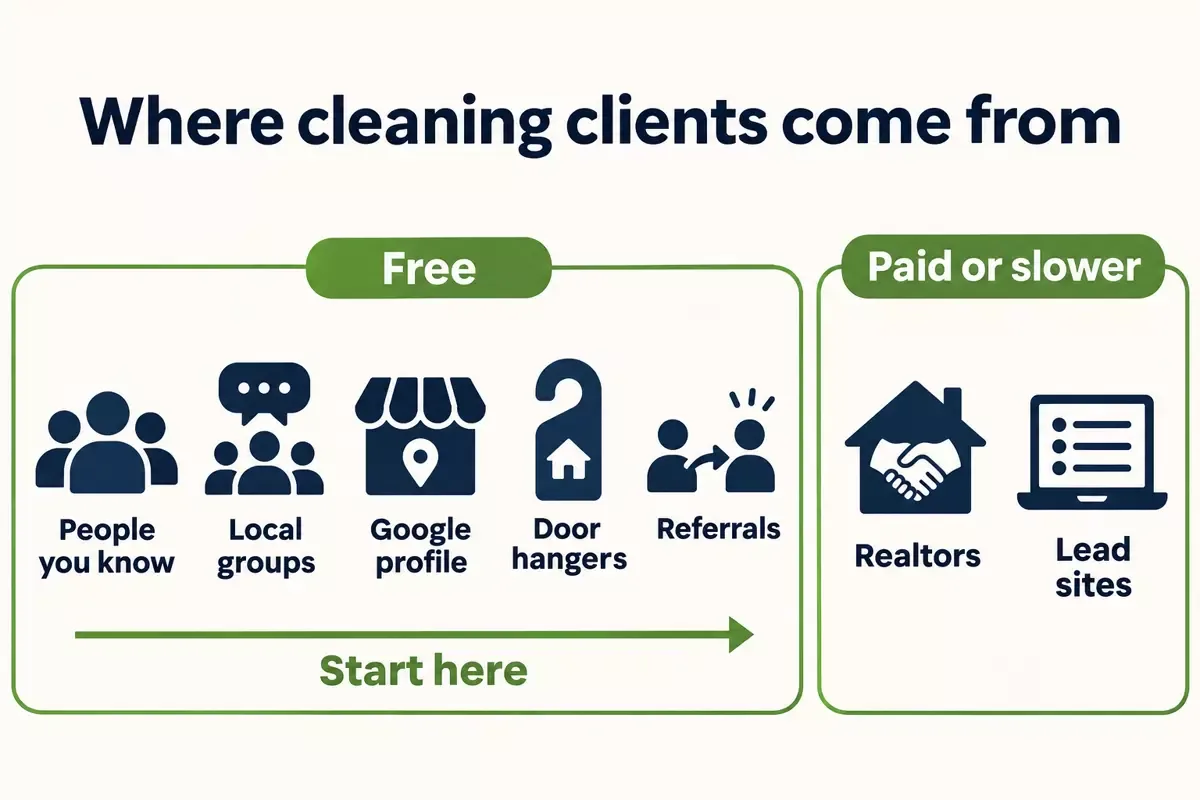
Which one to lean on depends on where you are right now.
| Your situation | Start with | Why |
|---|---|---|
| Brand new, zero clients | People you know, local groups | Fastest first yes, no money spent |
| Three to ten clients, gaps in the week | Door hangers around clients, referrals | Each new client lands on a street you already drive |
| Full week, want better clients | Google Business Profile and reviews | Reviews let you raise prices and pick recurring work |
| Crew of three to five, need volume | Realtors, property managers, lead sites | Move-out and turnover cleans fill whole days |
| Want office or building work | Walk-in to small offices | A different sale, covered in how to get commercial cleaning contracts |
Count recurring clients, not leads
The client you want is not the one-time deep clean. It is the every-two-weeks client on a street you already drive. A one-time job pays once. A recurring client pays all year and costs you nothing more to find. Seasonal jobs work the same way: a spring house cleaning checklist job is a one-time deep clean, and its real value is the recurring client it starts.
Here is the yearly value of one client for a 2,000 sq ft home, using the starting inputs of our house cleaning price calculator: $180 for a standard clean and $360 for a deep clean. Put your own prices in.
| Client type | Visits a year | Price per visit | Yearly revenue |
|---|---|---|---|
| One-time deep clean | 1 | $360 | $360 |
| Monthly | 12 | $180 | $2,160 |
| Every two weeks | 26 | $180 | $4,680 |
| Weekly | 52 | $180 | $9,360 |
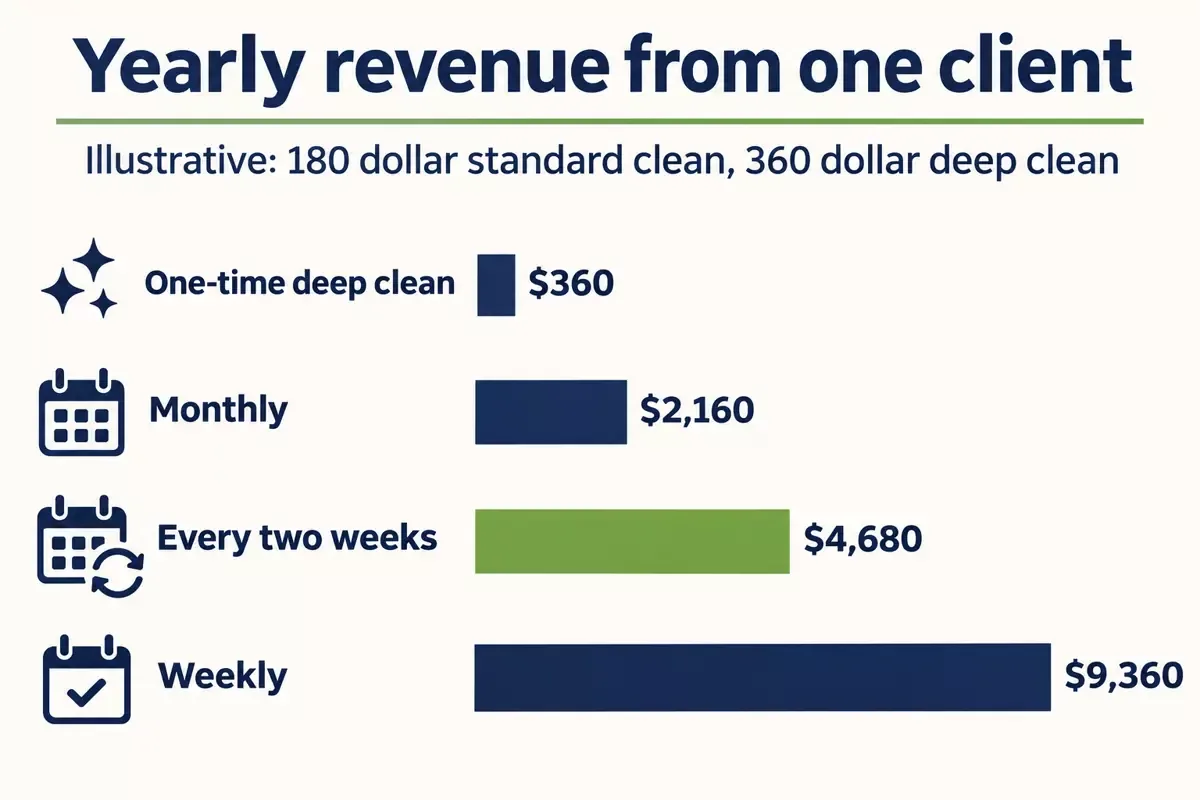
So judge every channel by how many recurring clients it brings, not by how many people call. Ten leads from a deal site that book one cheap clean and vanish are worth less than one neighbor who books every other Friday. To turn that into a target, this one-page plan for a cleaning business works out how many recurring clients cover your monthly costs and your pay.
1. Tell the 50 people you already know
Your first client is almost always someone who already trusts you. Write down 50 names: family, friends, old coworkers, your kids' school parents, your gym, your church. Send each one a short personal message, not a group blast. Say what you clean, which neighborhoods you cover, and that you have two openings this month.
Ask for a referral, not a favor. "Do you know anyone who wants a cleaner every two weeks?" is easier to say yes to than "Will you hire me?" Before you message anyone, have your basics in place: a business name, insurance and a way to take payment. The cleaning business startup checklist covers the order.
2. Post in local Facebook and Nextdoor groups
People ask for cleaner recommendations in neighborhood groups every week. Request access to the groups for the areas you want to work in, read the rules on business posts, and do two things:
- Answer requests fast. When someone asks "anyone know a good cleaner?", reply within the hour with your name, area and one line on what you do.
- Post once a week where it is allowed. A real photo of a clean kitchen or bathroom you did, what you charge for, and how to book. No stock photos.
This is the "clients without ads" channel the YouTube videos talk about. It costs nothing but it rewards speed, so turn on notifications for the groups that matter.
3. Set up a Google Business Profile and get reviews
When someone searches "house cleaner" in your town, Google shows a map with local businesses. You need to be on it. Create a free Business Profile and finish verification: Google says customers can only find your profile after you complete verification.
Fill in every field. Your service area, hours, services (standard, deep, move-out), and real photos of your work. Then get your first five reviews from your first five clients. Ask in person at the end of a clean, then send the review link the same day while they are looking at a clean kitchen.
Reviews do two jobs. They bring in new calls, and they let you charge more, because the cleaner with 30 reviews is not competing on price with the one who has none. If you send review requests by text, get the client's consent to text them first; text messages fall under the federal TCPA rules.
4. Hang door hangers around every client
This is the channel most new cleaners skip, and it is the one that builds a profitable week. Every time you win a client, hang a door hanger on the houses on either side of them and across the street. Do it on the day you clean, when your car is already parked outside.
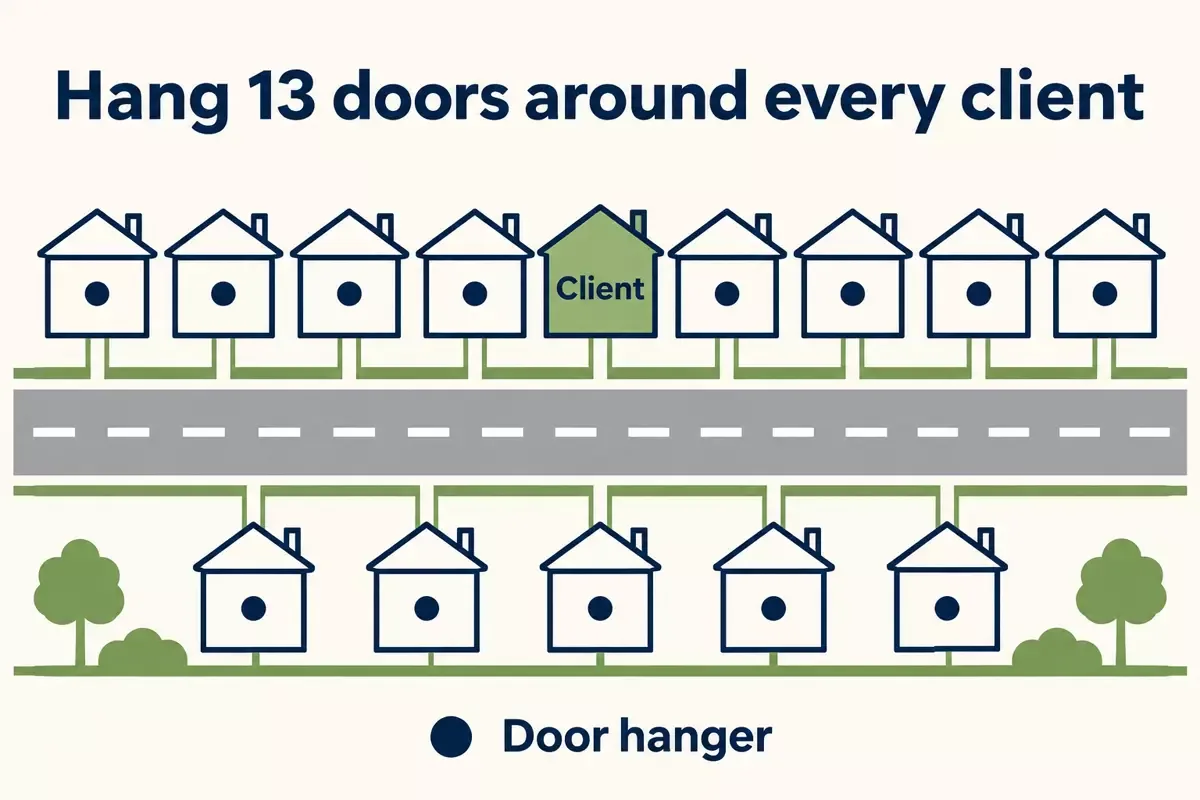
Write something specific: "We clean your neighbor's home every other Friday. We have one more Friday opening on this street." Neighbors trust a cleaner the people next door already use, and a client two doors down adds no drive time to your day.
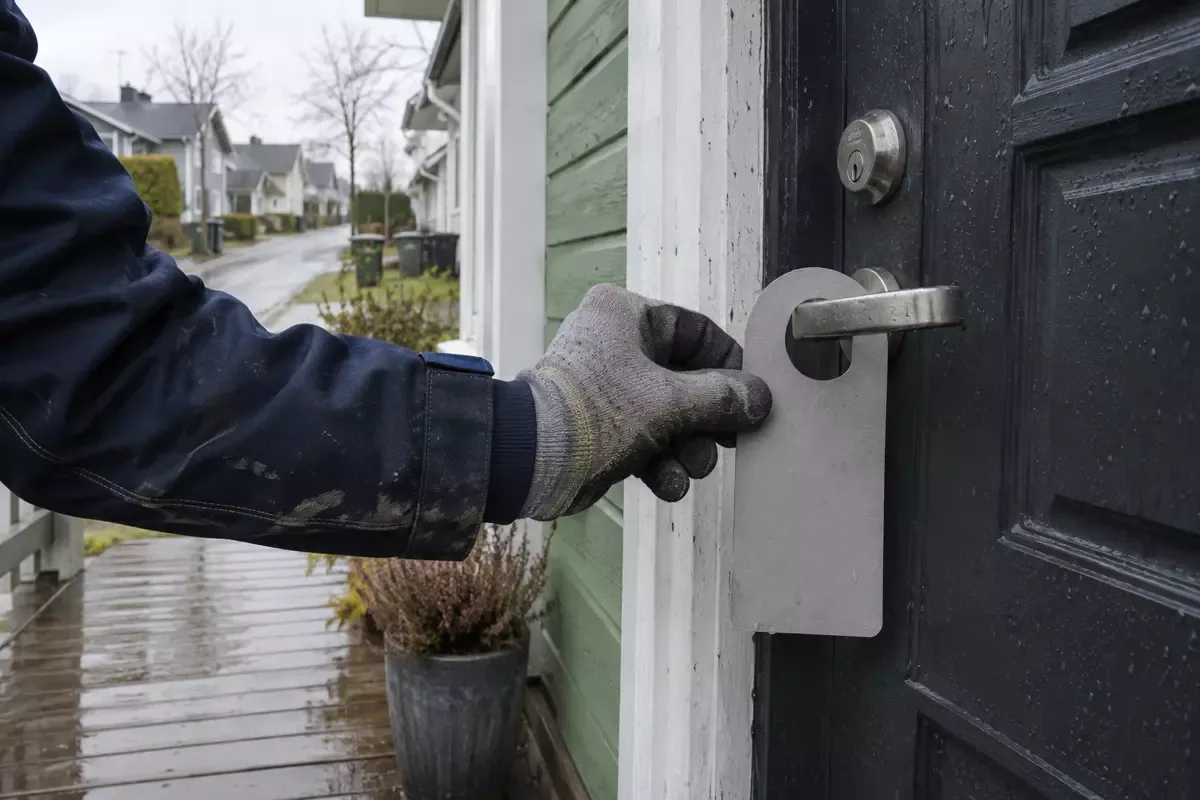
Drive time is the hidden cost of a scattered client list. A client 25 minutes out costs you almost an hour on the road every visit, unpaid. Run your real hourly cost through what an hour of your time really costs and you will see why a tight route beats a higher price across town. Window cleaners and carpet cleaners use the same street-by-street trick, which is one reason starting a window cleaning business pairs so well with residential cleaning.
5. Ask for referrals and reward them
Your happiest clients are your best sales team. Ask them directly after the third or fourth clean, when they have seen you are consistent. Make it easy: give them two of your cards or a link they can forward.
A small reward helps. A common setup is a credit off their next clean for every friend who books a recurring visit. Tie the reward to recurring bookings, not one-time cleans, so you pay for the clients you actually want.
6. Work with realtors and property managers
Realtors need homes cleaned before listing photos and after a sale. Property managers need move-out cleans between tenants. Both send repeat work, and a single good relationship can fill several days a month.
Call or visit three local real estate offices and two property management companies. Bring a one-page sheet with your services, your insurance and a fixed price for a standard move-out. They care about two things: you show up on the date they need, and the unit passes inspection. If you add carpet work, carpet cleaning as an add-on business is the service these clients ask for next. Agents are looking for you too, because partnering with cleaners and handymen is one of the better ways for a new realtor to get clients.
7. Use lead sites last
Sites like Thumbtack and Angi send you leads from people actively looking for a cleaner. You pay for those leads, and you often pay whether or not you win the job, so check each site's current pricing page before you sign up.
They work best once you have reviews, a clear price and fast replies. Without those, you pay for leads that go to the cleaner who answered first or had more stars. Treat them as a way to fill gaps in a busy week, not as your first source of clients.
Price the first clean so they rebook
Getting the client is half the job. Keeping them is the other half, and it starts with the first price you quote.
- Never price the first visit as a standard clean. A home that has not been cleaned professionally takes longer. Quote the first visit as a deep clean, then the recurring price after.
- Quote a fixed price, not an open hourly rate. Clients book a clear number faster. Send it as a written quote with the rooms and tasks listed, so both of you know what is included.
- Set a minimum. A short job still costs you the drive and the setup. Many cleaners set a minimum visit price so a two-hour clean is still worth the trip.
- Know what you keep per hour. Billing $50 an hour is not the same as earning $50 an hour once drive time and supplies come out.
Here is that last point in numbers. These are illustrative inputs, not market prices.
| Line | Illustrative input | Amount |
|---|---|---|
| Billed | 3 hours at $50/hr | $150 |
| Supplies | Chemicals, cloths, bags | -$8 |
| Unpaid drive time | 30 minutes each way | 1 hour |
| Hours you actually spent | 3 hours cleaning + 1 hour driving | 4 hours |
| What you earn per hour | ($150 - $8) / 4 hours | $35.50 |
Price it once, then start your first quote from the driveway next time.
Turn one-time cleans into recurring clients
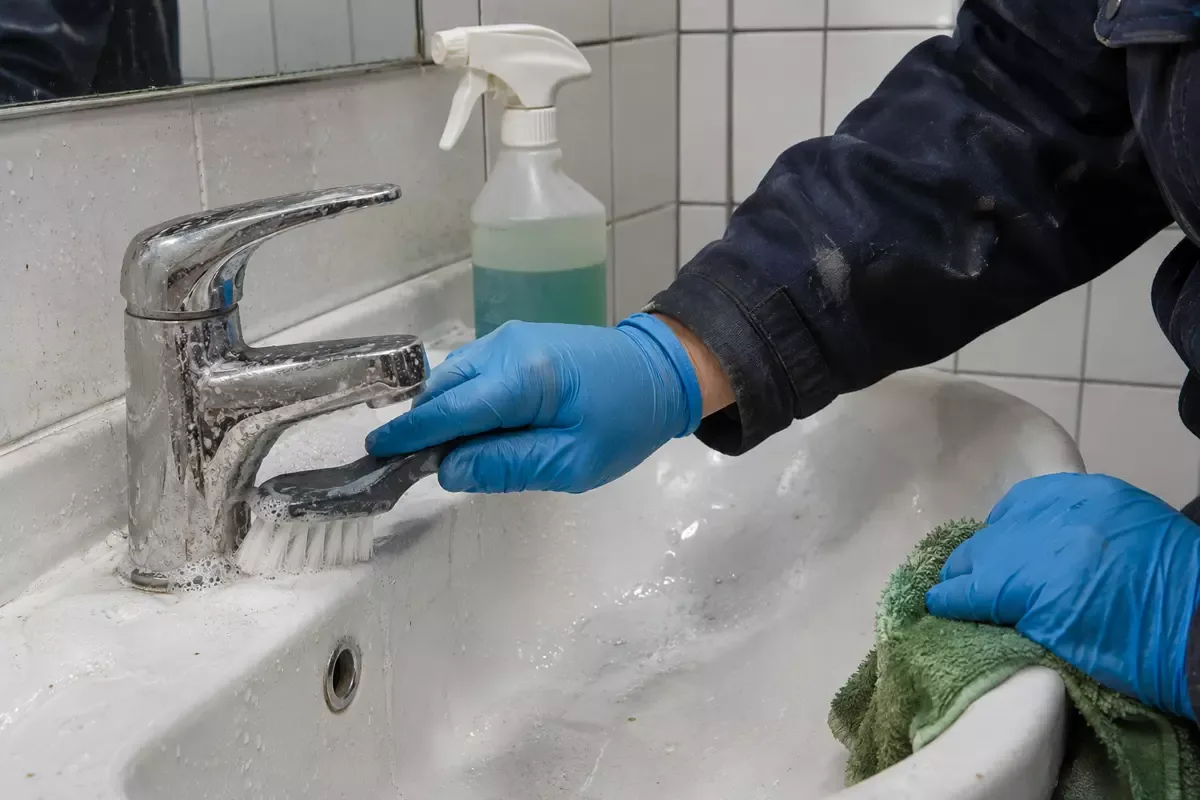
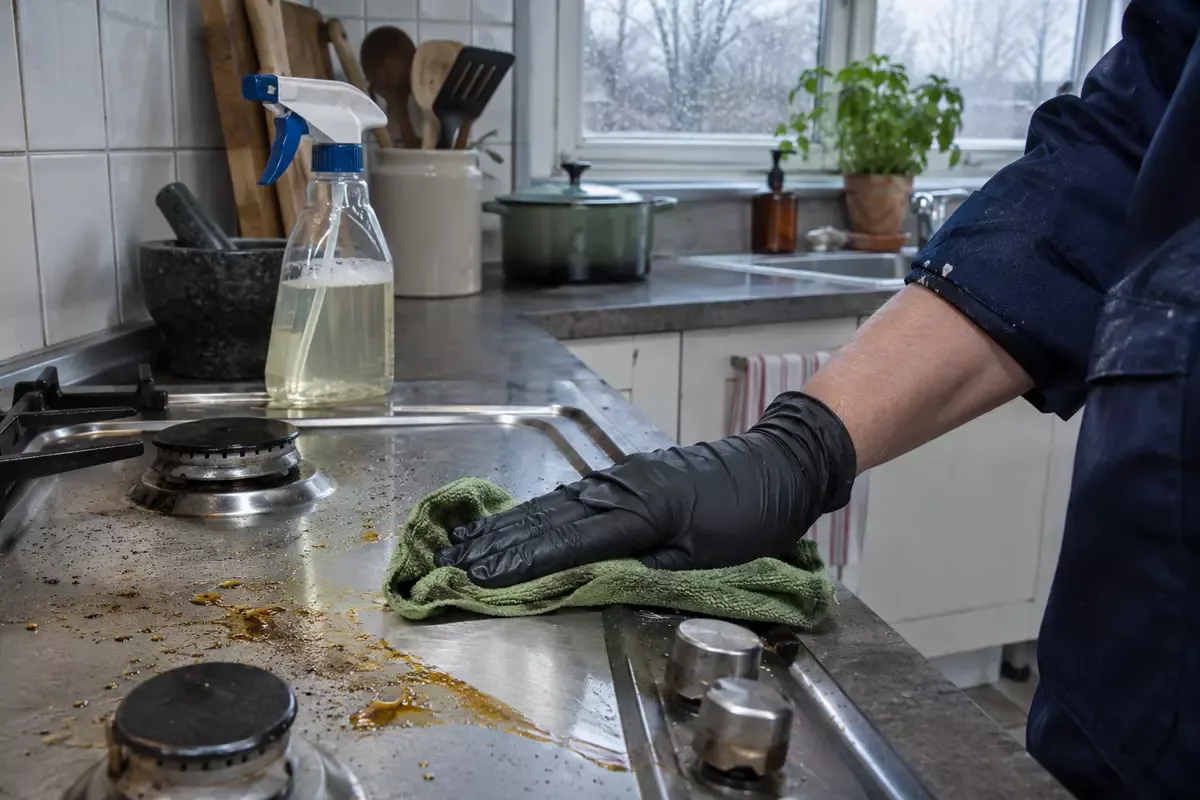
The first clean is your sales pitch for the second. Spend extra time where it shows: the kitchen counters, the stovetop, the bathroom sink, the toilet and the floors. Clients judge the whole clean by those rooms.
At the end of the visit, walk the client through what you did and offer the recurring slot before you leave: "I have Fridays every two weeks open on this street. Want me to put you in?" Most cleaners lose recurring clients by never asking.
How to get your first 10 cleaning clients
- Get the basics in place
Business name, insurance, a price for standard, deep and move-out cleans, and a way to take payment.
- Message 50 people you know
One personal message each, asking who they know that wants a cleaner every two weeks.
- Get into three local groups
Facebook and Nextdoor groups for the neighborhoods you want. Answer cleaner requests within the hour.
- Verify a Google Business Profile
Fill every field, add real photos of your work and ask your first clients for reviews.
- Hang door hangers around each new client
The houses on either side and across the street, on the day you clean there.
- Offer the recurring slot on every first visit
Quote the first visit as a deep clean, then offer a fixed every-two-weeks price before you leave.
- Ask for referrals after the third clean
Give two cards or a link, and reward referrals that book recurring visits.
Keep the clients you win
A notebook and your phone's calendar hold up for five or ten clients. The wall comes after that. You re-type the same prices into every quote at night, forget who is every two weeks and who is monthly, and the review request you meant to send never goes out. Driveway Desk keeps your price book, so a quote for a new client is a few taps from their driveway. Recurring visits go on the schedule with reminders, invoices get paid into your own Stripe or Square account, and review requests go out after the job. If you are comparing the bigger apps first, here is an honest look at Jobber alternatives for a small crew.
Price it once, then start your first quote from the driveway next time.
Mistakes that cost new cleaners clients
- Paying for leads before you have reviews. You pay for every lead and lose most of them to cleaners with more stars.
- Taking every job, anywhere. A client across town eats an hour of unpaid driving every visit.
- Pricing the first clean like a regular one. You either rush it and lose the client, or work two extra hours for free.
- Never asking for the recurring slot. One-time clients do not turn recurring on their own.
- Slow replies. In local groups and on lead sites, the cleaner who answers first usually gets the job.
- No written quote. A vague price leads to "I thought that was included" and a client who does not rebook.
Start with who you know, grow street by street
Your first clients come from people who already trust you and the local groups they read. The next ten come from the streets your first clients live on, through door hangers and referrals. Verify a Google Business Profile early so reviews build while you work, and leave paid lead sites for when your week has gaps to fill. Price every first visit as a deep clean, quote it in writing and ask for the recurring slot before you leave. Price your homes from square footage and clean type with the calculator below.
Put the method to work
House cleaning price calculatorPrice a house clean from floor area, room adjustments, cleaning depth, and the discount you choose.
Frequently asked questions
Multiply the hours by your hourly rate, then check it against what the job costs you. At $40 an hour, 5 hours is $200; at $50 an hour, it is $250. For a five-hour job, quote a fixed price instead of an hourly rate, so the client knows the total and you are paid for the work, not the clock.
Two hours at your hourly rate, plus enough to cover the drive and setup. At $50 an hour that is $100 before travel. Short jobs are where cleaners lose money, so many set a minimum visit price that covers the trip even when the clean is quick.
It depends on what you keep. In the illustrative example above, $50 an hour billed for a three-hour clean with an hour of unpaid driving and $8 of supplies works out to $35.50 an hour. A tight route on one street keeps you close to the full $50; clients scattered across town pull it down.
Cleaners use it two ways. A small share of the home, the kitchen, bathrooms and floors, decides most of how clean it feels, so that is where the first visit should shine. And a small share of your clients, usually the recurring ones, brings in most of your revenue, which is why recurring clients are the ones to chase.
Put the method to work
Labor cost calculatorDivide paid-hour costs by the billable-hours ratio, then allow for your target margin to find a selling rate.
Your prices, remembered.
Build your first quote on your phone in about two minutes, send it, and get paid into your own account.
Start your first quoteShare article
About the author
Field notes team
We write practical guides for home service crews of one to five. Our editorial standard is to show the calculation, state its assumptions, cite primary sources for factual claims and date competitor comparisons. We distinguish worked examples from market prices and correct errors when they are found. We do not claim trade licenses or credentials on behalf of the team.
More articles

Running a small crew · 11 min
Basic House Cleaning Checklist: 12 Tasks, Every Visit
A basic house cleaning checklist of 12 tasks you finish on every visit: kitchen, bathrooms, dusting, beds and floors, in the right order, with real timings for a 3 bed, 2 bath house and how to price it.

Running a small crew · 12 min
House Cleaning Checklist Printable: Free Room-by-Room Sheet
A free printable house cleaning checklist, room by room, with daily, weekly and monthly columns. Plus the supplies you need and how a cleaning business turns the same sheet into a recurring quote.

Running a small crew · 15 min
Deep Cleaning House Checklist: Room by Room, With Times
A room-by-room deep cleaning house checklist: what a deep clean adds to a standard one, the order of work, a one-day plan, how long it takes for a 2,000 sq ft home, and how cleaners can turn the list into a quote.

Running a small crew · 13 min
Spring House Cleaning Checklist: 7 Areas, Plus How to Price It
A spring house cleaning checklist room by room: windows and tracks, fans, baseboards, behind appliances, inside the fridge and oven, entryway salt. Plus how a cleaning business should quote it and turn it into a recurring client.

Running a small crew · 14 min
House Cleaning Business Plan: 7 Parts and the One Number That Matters
A house cleaning business plan in seven short parts, with a worked example: how many recurring clients cover your costs and your pay, plus prices, startup costs, goals and a one-page sample plan.

Running a small crew · 12 min
How to Get Commercial Cleaning Contracts: 7 Steps and the Bid Math
How to get commercial cleaning contracts: start with small local offices, get insured and bonded, win the walkthrough, price the visit from your own timed hours and send a one-page proposal with a 30-day trial the next day.