How to Become an HVAC Technician: 5 Steps and What It Pays
Driveway Desk team Updated 12 November 2026 12 min read
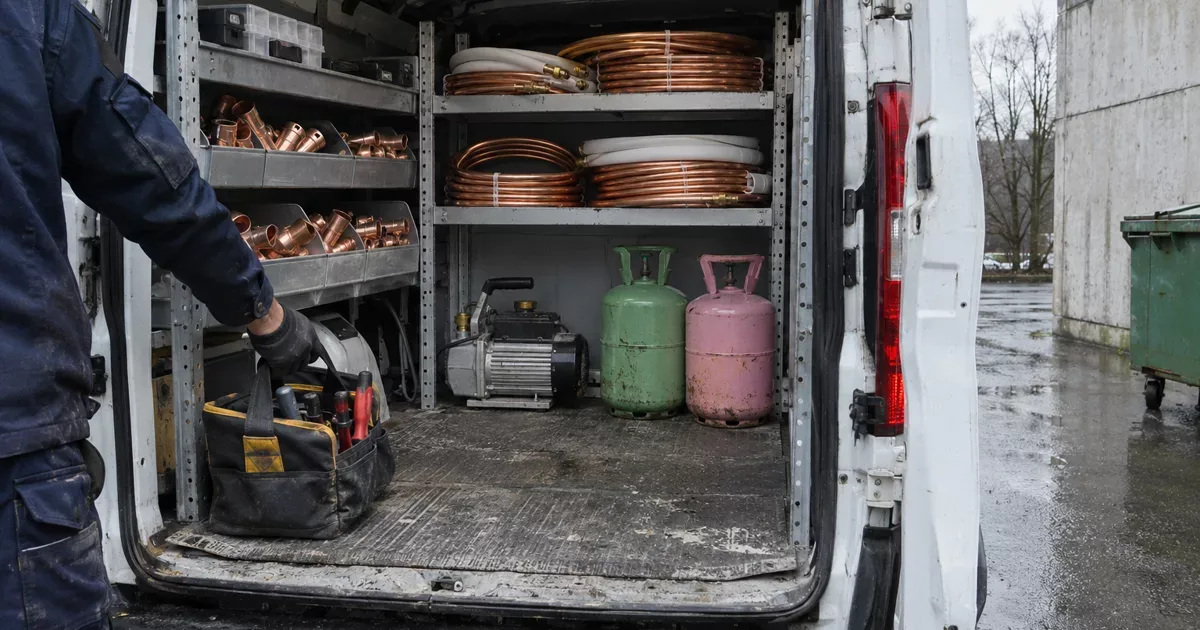
Your next job
Less time at the desk.
Build your price book, schedule the next visit and turn completed work into an invoice.
Start your first quoteIn this article
Short answer
To become an HVAC technician, get a high school diploma or GED, pick a training route (a 6 month to 2 year trade school program, an apprenticeship or a paid helper job), pass the EPA Section 608 refrigerant exam, then learn on the job beside an experienced tech. Most people are working on a service truck within a year. A contractor license comes years later.
Most guides make school the first step. It is not the step that decides how fast you get good. Supervised hours on a real truck are the thing every later step counts: the skills, the raise, and the experience your state asks for before it licenses you. School can shorten that clock. It cannot replace it.
This guide covers the three ways in, which one fits your situation, how long each takes, what the job pays, and the math you will actually use. For the license itself, the step by step HVAC license guide covers the state rules and timelines.
Which route into HVAC fits you?
Pick the route by the one thing you cannot change this year: whether you can go a few months without a paycheck. Everything else follows from that.
| Your situation | Best first move | Why |
|---|---|---|
| Just out of high school, no savings | Paid helper job plus the EPA 608 exam | You earn while you learn, and the card gets you onto refrigerant work |
| Career changer with bills to pay | Apprenticeship or helper job, classes at night | Training is paid, so the rent still gets covered |
| Can afford tuition and want structure | Trade school or community college program | 6 months to 2 years, and the 608 exam is usually part of it |
| Already a plumber or electrician | EPA 608 card, then cross-train on HVAC calls | Your pipe or electrical skills already count on the truck |
| Want your own shop someday | Any route above, keep a log of every job | The log becomes the proof of experience the license asks for |
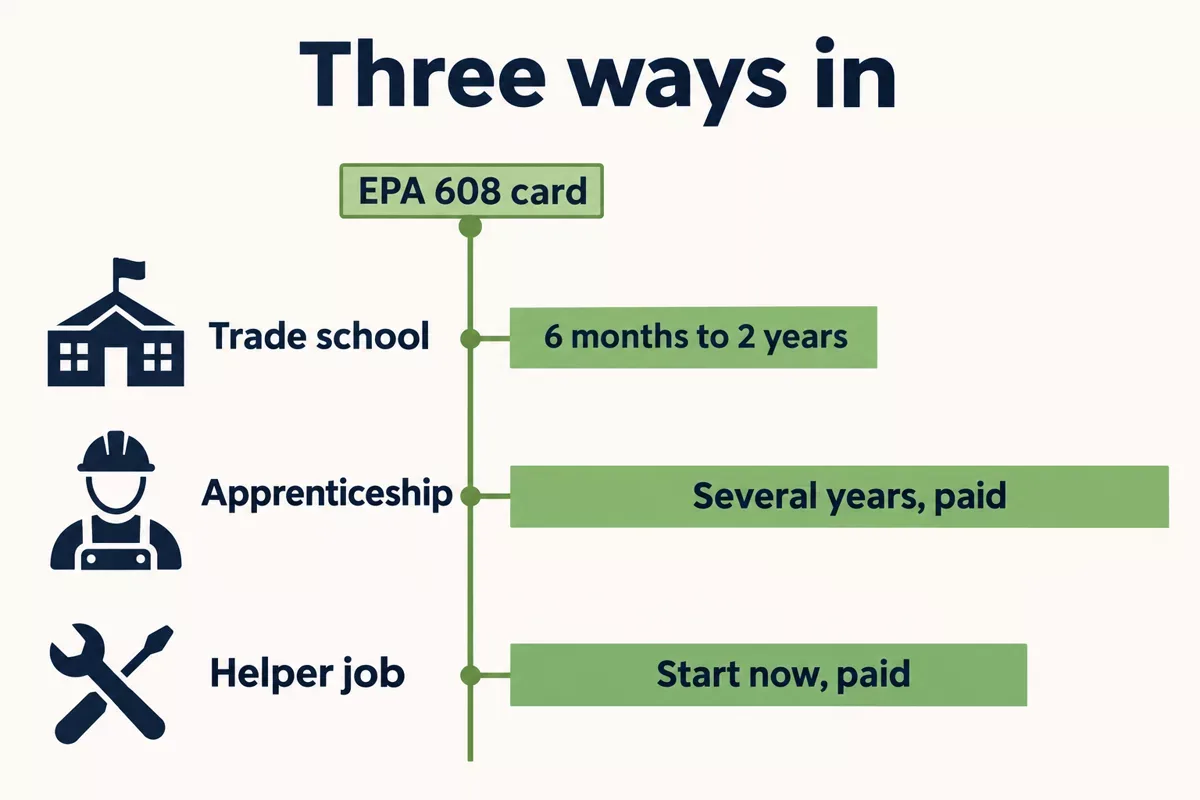
The Bureau of Labor Statistics says HVAC techs typically need a postsecondary nondegree award, but employers sometimes hire people whose highest education is a high school diploma. That second sentence is the door most guides skip.
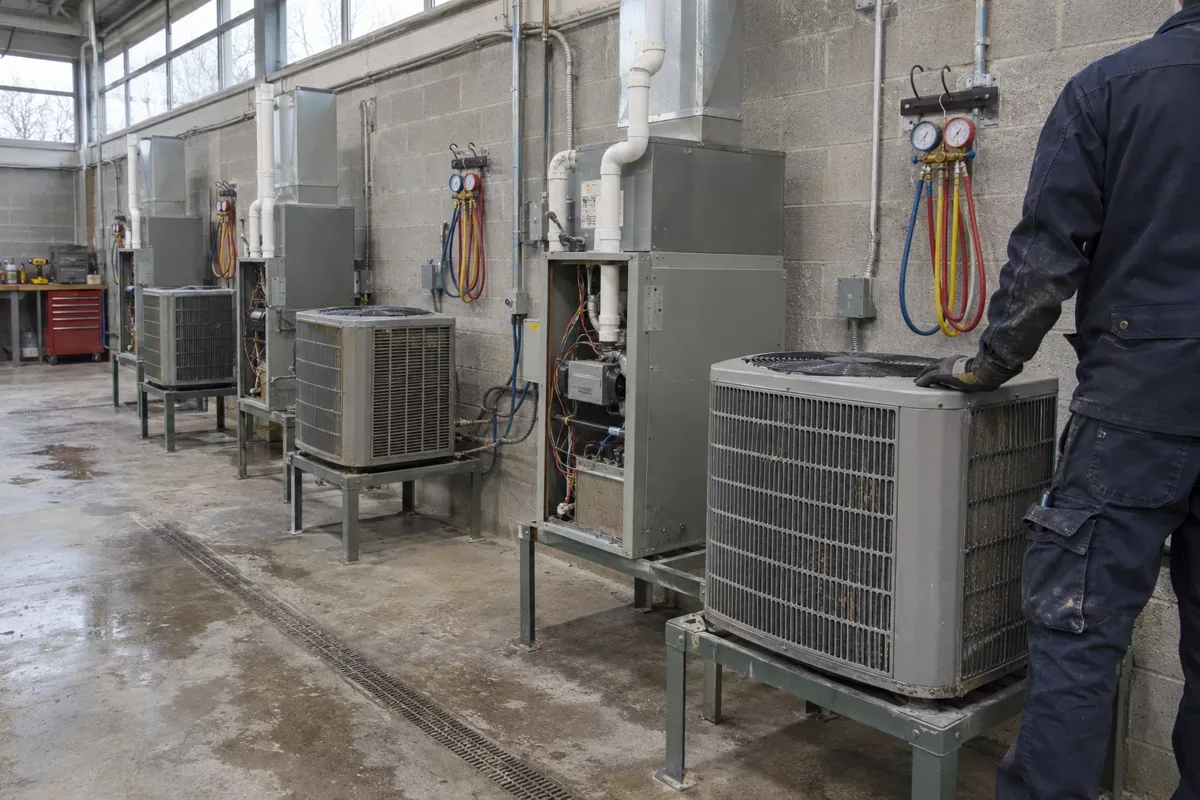
How to become an HVAC technician in 5 steps
How to become an HVAC technician
- Get the basics in place
Finish high school or get a GED. If you are still in school, take shop, math and physics. Get a driver's license, because most HVAC work is service calls and you will drive to every one.
- Pick your training route
Trade school, apprenticeship or a helper job. Use the table above. If money is tight, apply for helper and apprentice jobs at local HVAC contractors first, then add classes.
- Pass the EPA Section 608 exam
Federal rules require certification to handle refrigerant. Study for the Core plus the type you need, or sit Universal and cover everything.
- Learn on the job beside an experienced tech
New hires start with basic tasks and work up to brazing, electrical checks and diagnosis. This is where you become a technician.
- Add certifications and licenses as you go
Manufacturer and industry certifications are optional but some employers prefer them. Some states and cities require a technician or contractor license on top.
Get your EPA 608 card early
The EPA Section 608 rules require technicians who maintain, service, repair or dispose of equipment that could release refrigerant to be certified. Apprentices are exempt only while a certified tech closely and continually supervises them.
That exemption is why you can start as a helper without the card. It is also why you should not wait long. A helper who already holds the card can be handed refrigerant work, and that is worth more to the boss on day one. Type II covers most home split systems and heat pumps. Universal covers all equipment types, and the license guide explains the four EPA 608 types and the proctored Core catch.
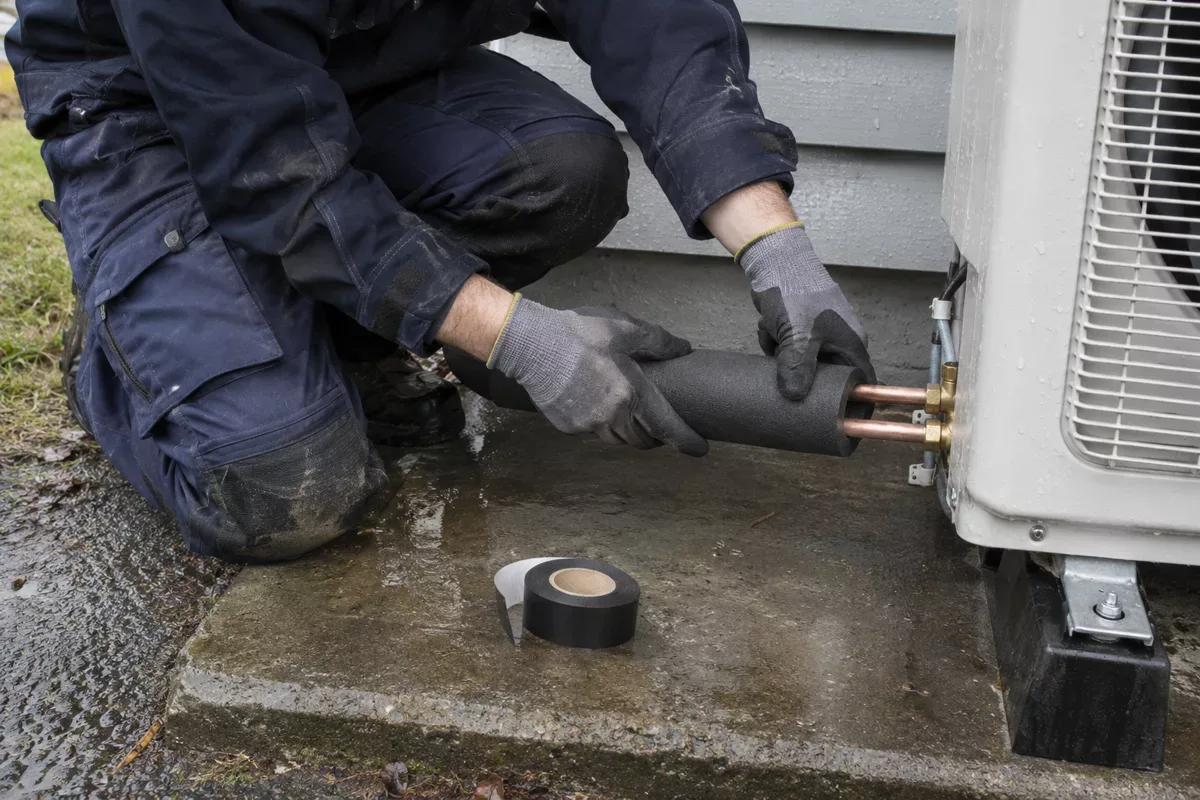
What you do in your first year
You start at the bottom of the job, and that is normal. BLS describes new hires working alongside experienced techs, beginning with tasks like insulating refrigerant lines or cleaning furnaces. In time they move on to cutting and soldering pipe and checking electrical circuits.
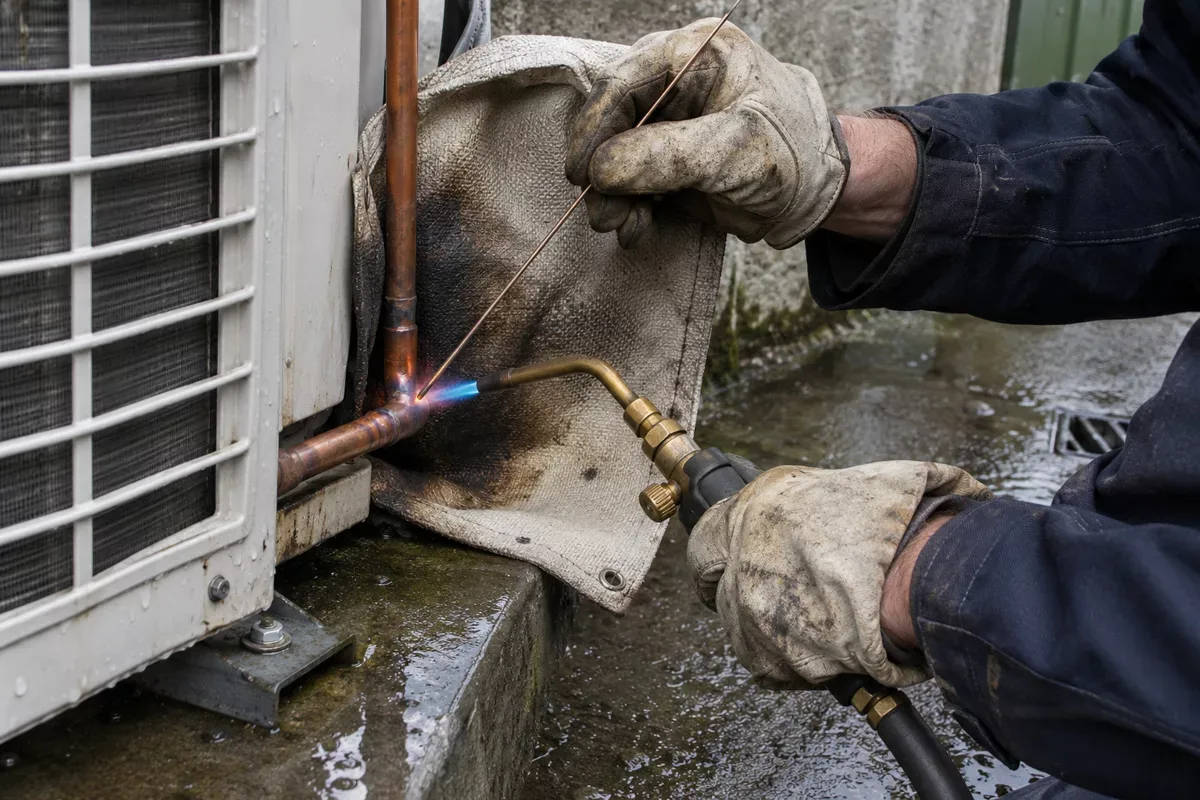
Expect a lot of crawling. Attics, crawl spaces, rooftops and basements in the heat or cold. BLS notes HVAC techs have one of the highest rates of injuries and illnesses of all occupations, mostly burns and strains, so the safety gear is not optional.
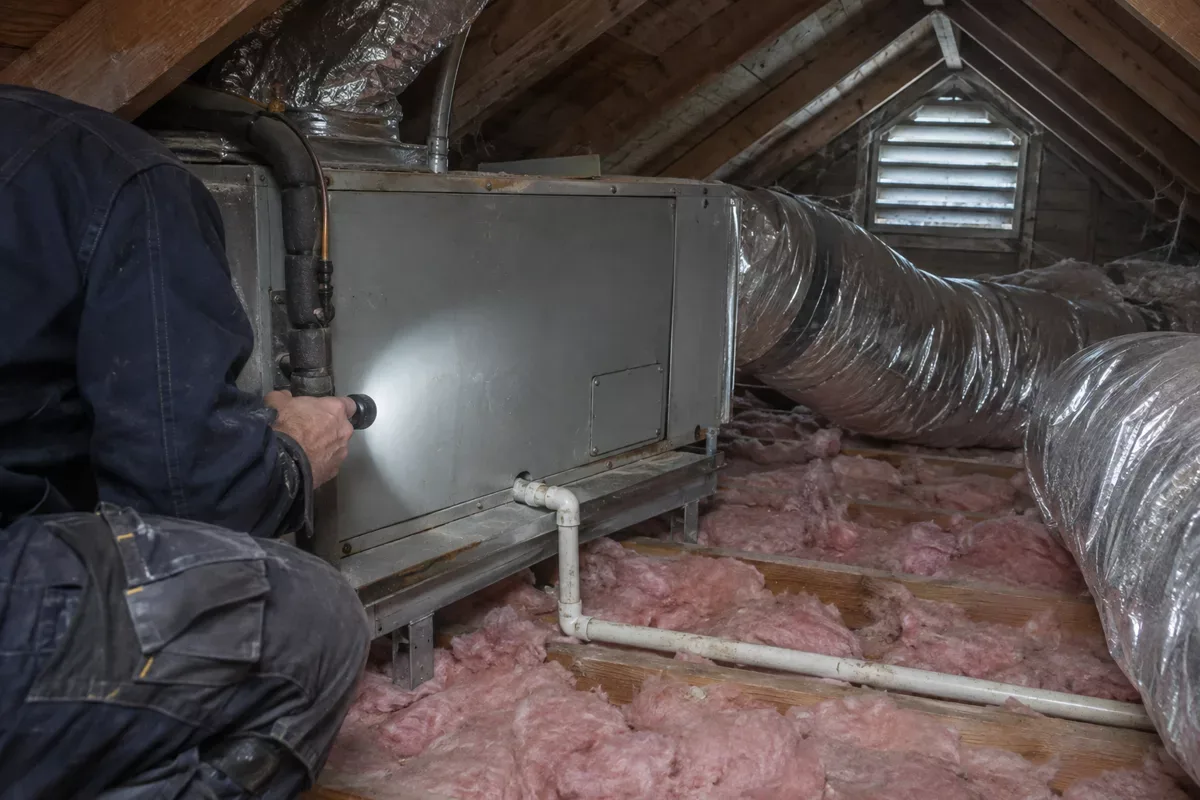
The fastest learners do one thing the others do not: they write down every job. Date, address, equipment, what was wrong, what fixed it. That notebook teaches you the patterns, and later it is the record your supervisor signs when you apply for a license.
How long does it take to become an HVAC technician?
Plan on 6 months to 2 years to be working as an entry-level tech, and several years to be fully competent. School programs run 6 months to 2 years, apprenticeships usually last several years, and a helper job puts you on a truck right away but takes longer to reach full pay.
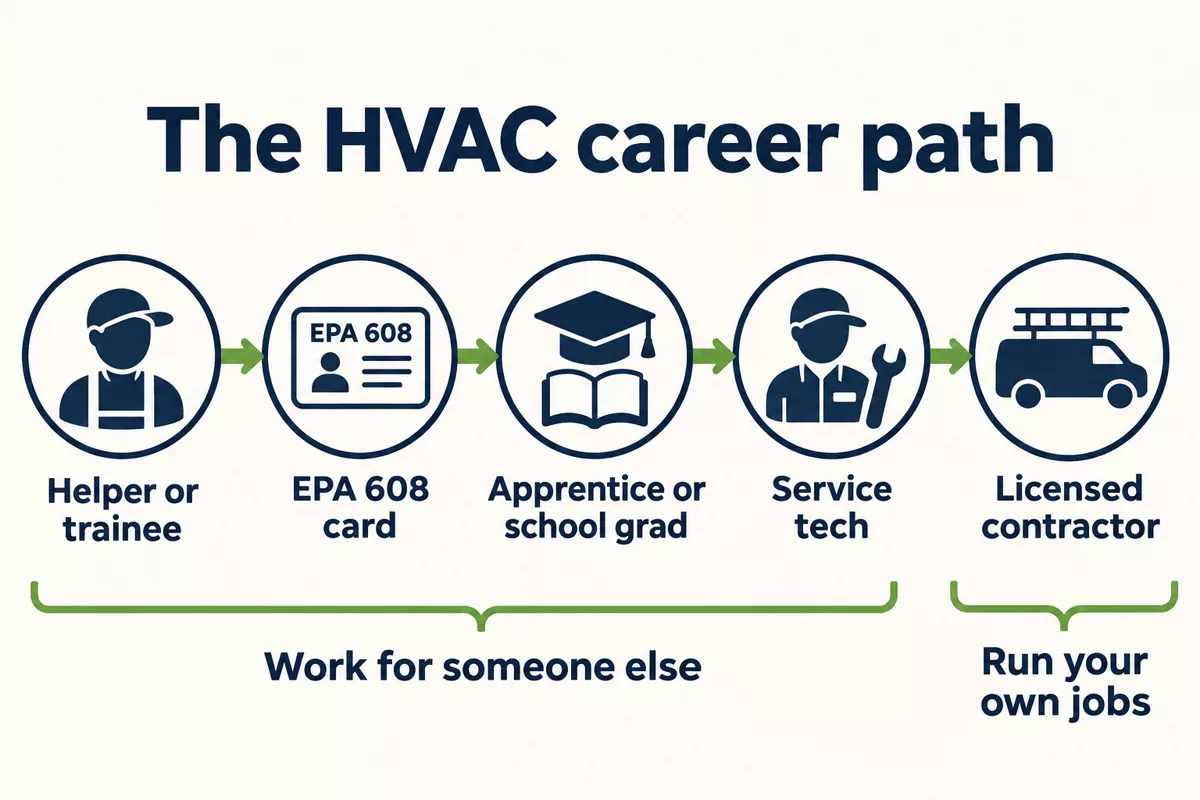
The ladder above is the usual shape inside a company: helper, apprentice or school grad, service tech, then lead tech. The top rung is a state or local contractor license, which lets you sell work under your own name. When you get there, going out on your own as an HVAC contractor is mostly a pricing and cash flow problem, not a technical one.
| Route | Time to start working | Time to full competency | Paid while training? |
|---|---|---|---|
| Trade school or community college | After the 6 month to 2 year program | A further stretch of on-the-job training | No, you pay tuition |
| Apprenticeship | Right away | Several years, ending as a trained tech | Yes |
| Helper job | Right away | Several years, depends on the shop | Yes |
| Contractor license (to run your own jobs) | n/a | Years of supervised work; 48 months in Texas | n/a |
Times are from the BLS Occupational Outlook Handbook and the Texas licensing board. Your state may differ, so check its board before you plan around the last row.
What math do you need for HVAC?
Shop math, not calculus. BLS lists math as a core skill because techs calculate load requirements so the equipment heats or cools the space properly. In practice you use four kinds:
| Math | Where it shows up on the job |
|---|---|
| Fractions and measuring | Cutting line sets, ductwork and pipe to length |
| Subtraction from a chart | Superheat and subcooling: a measured line temperature against the saturation temperature for the pressure |
| Basic algebra | Ohm's law (volts = amps x ohms) when you test motors, capacitors and circuits |
| Area and volume | Square footage and room volume for load calculations and sizing |
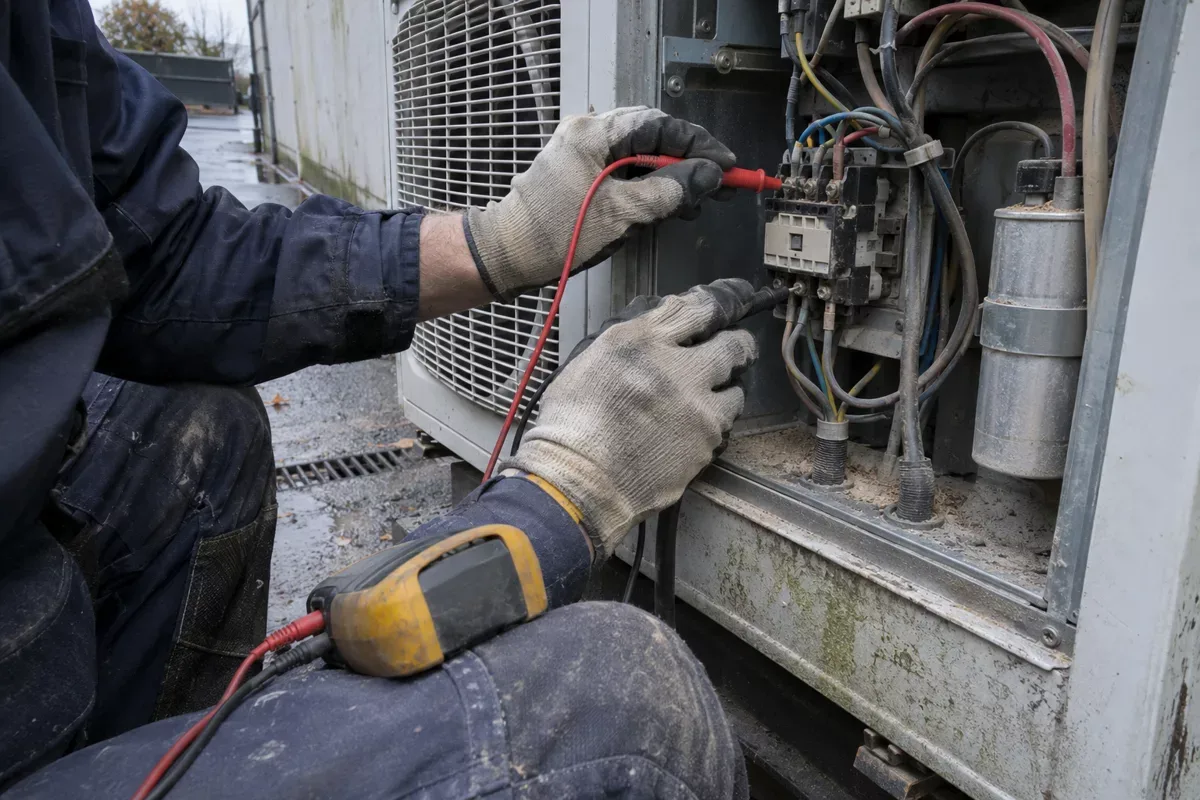
If you can work a tape measure and solve for one unknown, you can learn the rest on the truck. The electrical side is where most new techs struggle, so spend your study time there.
What HVAC technicians earn
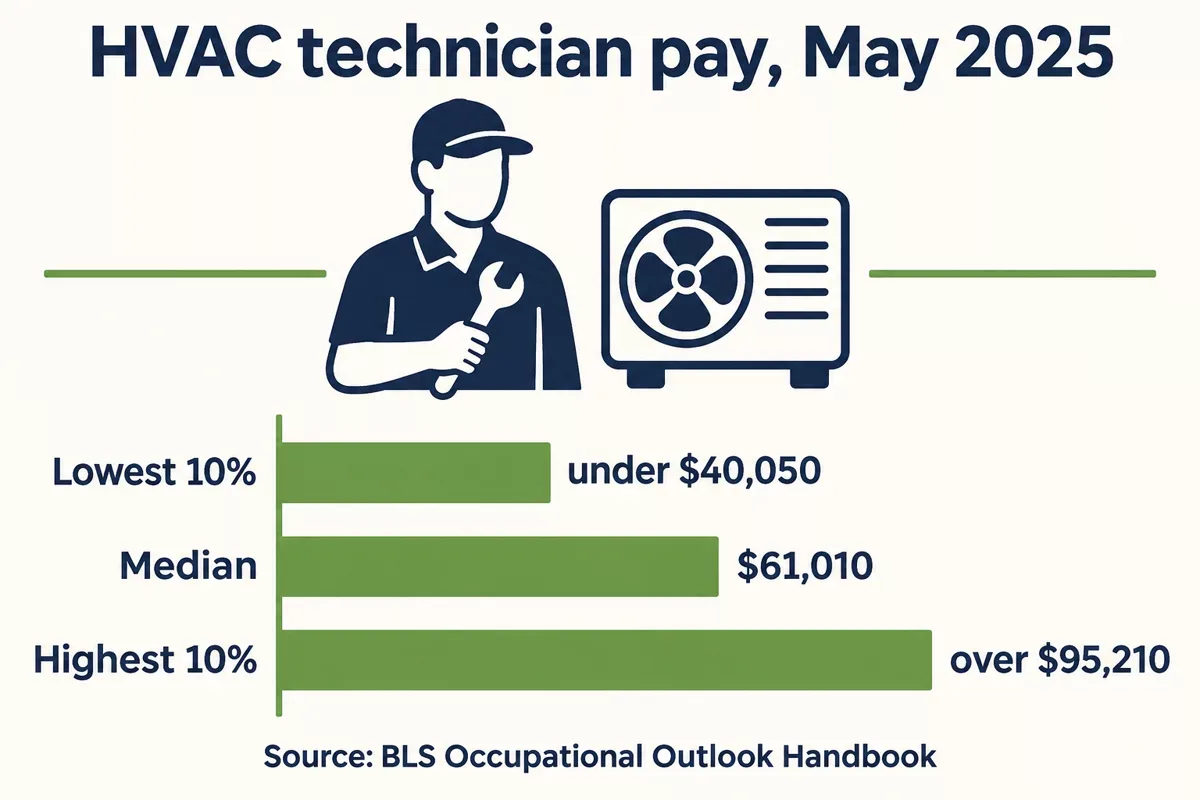
BLS puts the median HVAC technician wage at $61,010 a year in May 2025, or $29.33 an hour. The lowest 10 percent earned less than $40,050 and the highest 10 percent more than $95,210.
Employment is projected to grow 11 percent from 2025 to 2035, much faster than the average for all occupations, with about 40,600 openings a year. Most techs work full time, with on-call shifts and overtime in peak heating and cooling seasons. That overtime is where a lot of the gap between the median and the top 10 percent comes from.
Mistakes that slow new techs down
- Waiting for school to finish before applying anywhere. Helper jobs hire people with no experience. Apply while you study.
- Putting off the EPA 608 exam. Without it you are limited to supervised work and the boss cannot send you alone.
- Not logging your jobs. Experience you cannot prove does not count when the license application comes due.
- Working cash side jobs under nobody. Unsupervised side work usually does not count as qualifying experience, and it carries real liability.
- Skipping the electrical side. Most no-cool and no-heat calls end at a capacitor, contactor or board. The tech who can read a meter gets the good calls.
When you go out on your own
Some techs stay on someone else's truck for a whole career, and that is a fine career. The ones who start their own shop find the hard part is not the HVAC. It is the office work: quoting the condenser swap, remembering what you charged the same customer last spring, chasing the invoice after the last call.
Most start with a spreadsheet, a fill-in quote form and a paper job sheet. That works for the first handful of customers. It breaks when you are standing in a driveway and need your parts and labor prices on your phone, not in a file at home. Price your time properly first with what an hour of your time really costs and check your markup on equipment.
Driveway Desk is built for that wall: your price book remembered, the quote drafted in the driveway, the invoice sent in one tap and paid into your own Stripe or Square account. If you are comparing tools, see the Jobber alternatives priced for small crews.
Price it once, then start your first quote from the driveway next time.
Price it once, then start your first quote from the driveway next time.
Get on a truck, then keep score
Pick the route your bank account allows, pass the EPA 608 exam early, and get hired as a helper or apprentice as soon as you can. Write down every job from week one. The hours you can prove are what turn a helper into a tech, and a tech into a licensed contractor.
Put the method to work
Labor cost calculatorDivide paid-hour costs by the billable-hours ratio, then allow for your target margin to find a selling rate.
Frequently asked questions
Most people take 6 months to 2 years to start working as an entry-level tech, through a trade school program or a paid helper job. Reaching full competency takes several years of on-the-job training, and a contractor license usually takes longer, such as 48 months of supervised work in Texas.
The demand side is strong. BLS projects HVAC technician jobs to grow 11 percent from 2025 to 2035, much faster than average, with about 40,600 openings a year. The median wage was $61,010 in May 2025. The tradeoff is physical work in attics and rooftops, on-call shifts and a high injury rate compared with most jobs.
As an employee it is possible but rare. BLS says the highest-paid 10 percent of HVAC techs earned more than $95,210 in May 2025, so $100k on a wage usually means a senior tech with heavy overtime or commercial work. Owners of their own HVAC business are not on a wage scale at all; what they keep depends on how they price jobs.
Shop math: fractions and measuring, reading pressure and temperature charts for superheat and subcooling, basic algebra for Ohm's law on electrical checks, and area and volume for load calculations. It is not a lot of advanced math, but you use some of it on almost every call.
It is worth it if it gets you hired faster or you cannot find a helper job. BLS says most techs have a postsecondary certificate or degree from a 6 month to 2 year program, and the EPA 608 exam is usually included. It is not required: some employers hire high school graduates and train them on the job.
There is no single national ladder. Inside a company it usually runs helper, apprentice, service tech, then lead or senior tech. In states that license HVAC, the top step is usually a master or contractor license, which lets you sell and permit work under your own name. The HVAC license guide covers that step.
Put the method to work
Labor cost calculatorDivide paid-hour costs by the billable-hours ratio, then allow for your target margin to find a selling rate.
Your prices, remembered.
Build your first quote on your phone in about two minutes, send it, and get paid into your own account.
Start your first quoteShare article
About the author
Field notes team
We write practical guides for home service crews of one to five. Our editorial standard is to show the calculation, state its assumptions, cite primary sources for factual claims and date competitor comparisons. We distinguish worked examples from market prices and correct errors when they are found. We do not claim trade licenses or credentials on behalf of the team.
More articles

Running a small crew · 16 min
How to Start an HVAC Business: 6 Steps and the Math
Start an HVAC business in order: EPA 608 and the contractor license, registration and insurance, one service van, a rate from billable hours, and maintenance agreements that keep spring and fall busy.

Running a small crew · 11 min
How to Get an HVAC License: 6 Steps and Real Timelines
How to get an HVAC license: the EPA 608 card first, then supervised experience, the state or local exam and insurance. Real timelines from Texas, plus how to log your hours so they count.

Running a small crew · 11 min
Basic House Cleaning Checklist: 12 Tasks, Every Visit
A basic house cleaning checklist of 12 tasks you finish on every visit: kitchen, bathrooms, dusting, beds and floors, in the right order, with real timings for a 3 bed, 2 bath house and how to price it.

Running a small crew · 13 min
What Do I Need to Start a Mobile Detailing Business? Full Checklist
The mobile detailing startup checklist: paperwork and insurance, the wash and interior kit for the services you sell first, how many towels to stock, and the quote, work order and payment setup.

Running a small crew · 13 min
Roofing Company Business Plan: 7 Parts + Cash Flow Example
A roofing company business plan in seven short sections, with a worked example: one reroof priced line by line, revenue by month, and how much cash a busy June ties up before homeowners pay.

Running a small crew · 11 min
How to Get Clients as a Realtor: 5 Channels That Work
How to get clients as a realtor: start with your sphere and past clients, build referral partners among the trade pros already inside homes, then add open houses and one farm area. Includes a 90-day plan and the commission math.