How to Get an HVAC License: 6 Steps and Real Timelines
Driveway Desk team Updated 12 November 2026 11 min read
Your next job
Less time at the desk.
Build your price book, schedule the next visit and turn completed work into an invoice.
Start your first quoteIn this article
Short answer
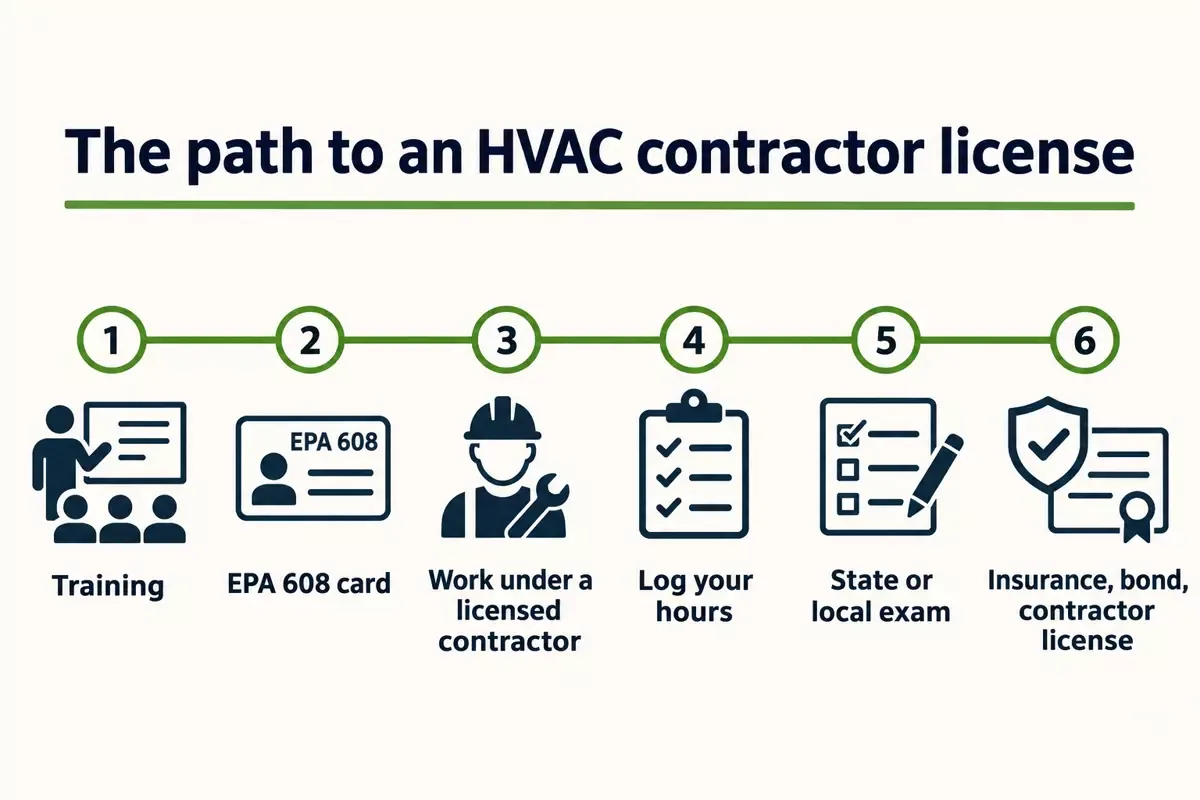
To get an HVAC license, pass the federal EPA Section 608 exam first, then work under a licensed contractor until you meet your state's experience rule, then pass the state or local exam and file proof of insurance. In Texas that means 48 months of supervised work. In Pennsylvania there is no statewide HVAC license at all.
Most guides list the steps and stop. The step that decides how fast you get licensed is the boring one in the middle. Experience you cannot prove does not count, and in Texas you are not even allowed to fill in the experience form yourself. Your supervisor signs it. So the clock that matters starts the day you begin keeping a clean record of every job.
This guide walks the path in order, shows how long each step takes, and covers what changes when you stop being the tech and start being the business.
What license do you need for HVAC work?
You need two different things, and people mix them up. The EPA Section 608 card lets you touch refrigerant. A state or local contractor license lets you sell HVAC work to customers under your own name. A tech on someone else's crew often needs only the first. An owner quoting their own jobs needs both, plus insurance.
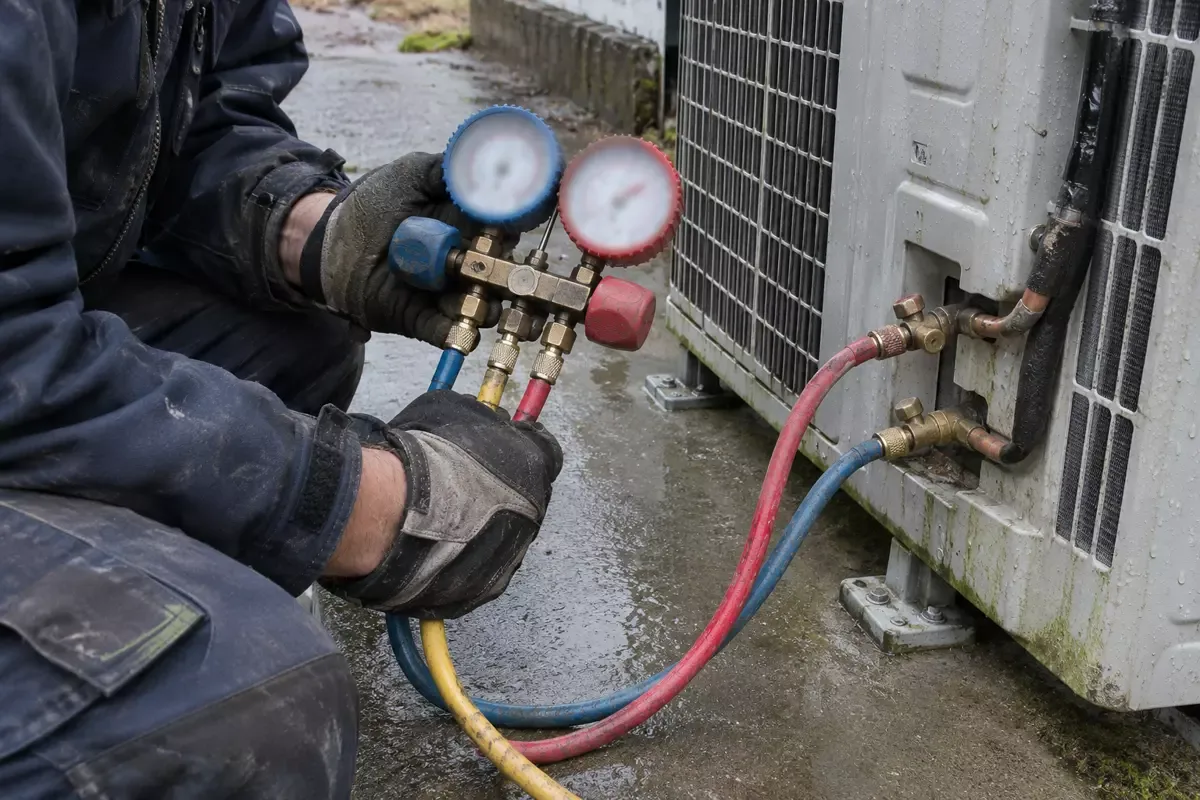
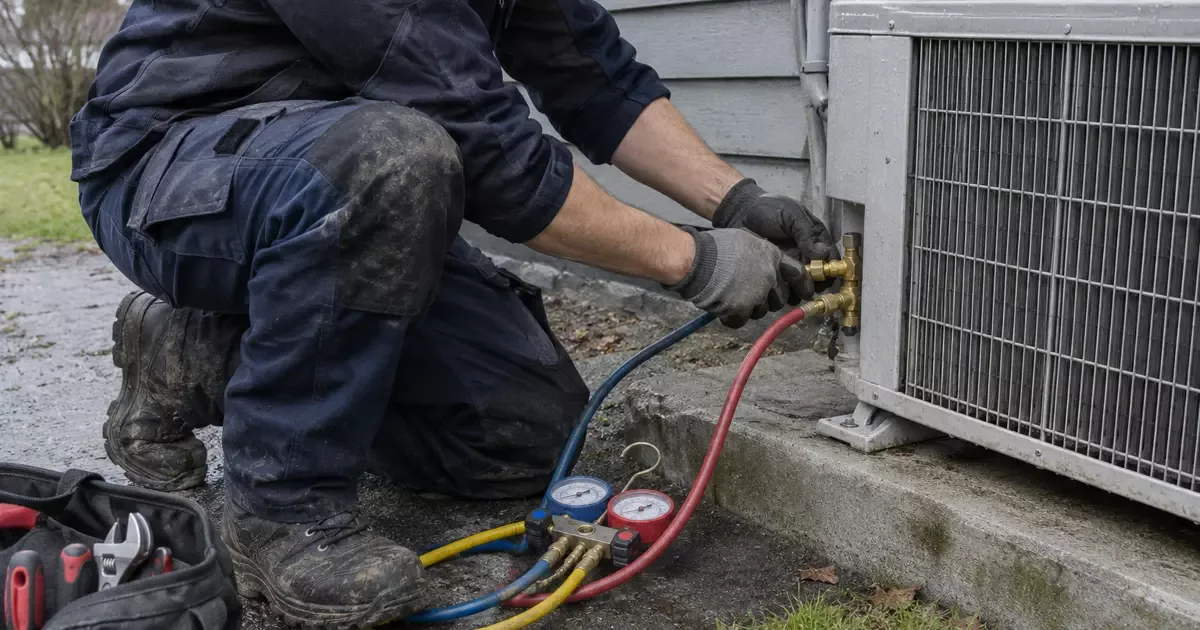
The EPA rule is federal, so it is the same in every state. EPA regulations under Section 608 of the Clean Air Act require technicians who maintain, service, repair or dispose of equipment that could release refrigerant to be certified. Apprentices are exempt only while a certified tech closely and continually supervises them.
The contractor license is where states split. Some run one statewide license. Some leave it to cities and counties. A few, like Pennsylvania, have no state HVAC license at all.
| Situation | What you need | Who issues it |
|---|---|---|
| New tech, working under a licensed company | EPA 608 card (Type II covers most home split systems) | EPA-approved certifying organization |
| Apprentice, fully supervised | Nothing yet for refrigerant while closely supervised; some states want a technician registration | Your state board, if it has one |
| Experienced tech going solo | EPA 608 card, state or local contractor license, liability insurance, bond where required | State board, city or county |
| Owner of a plumbing or electrical crew adding HVAC | A licensed HVAC contractor on staff, or your own HVAC license | State board, city or county |
The EPA 608 card comes first
Get this card before anything else. It is the cheapest step, it does not expire, and almost no HVAC employer will put you on a service van without it.
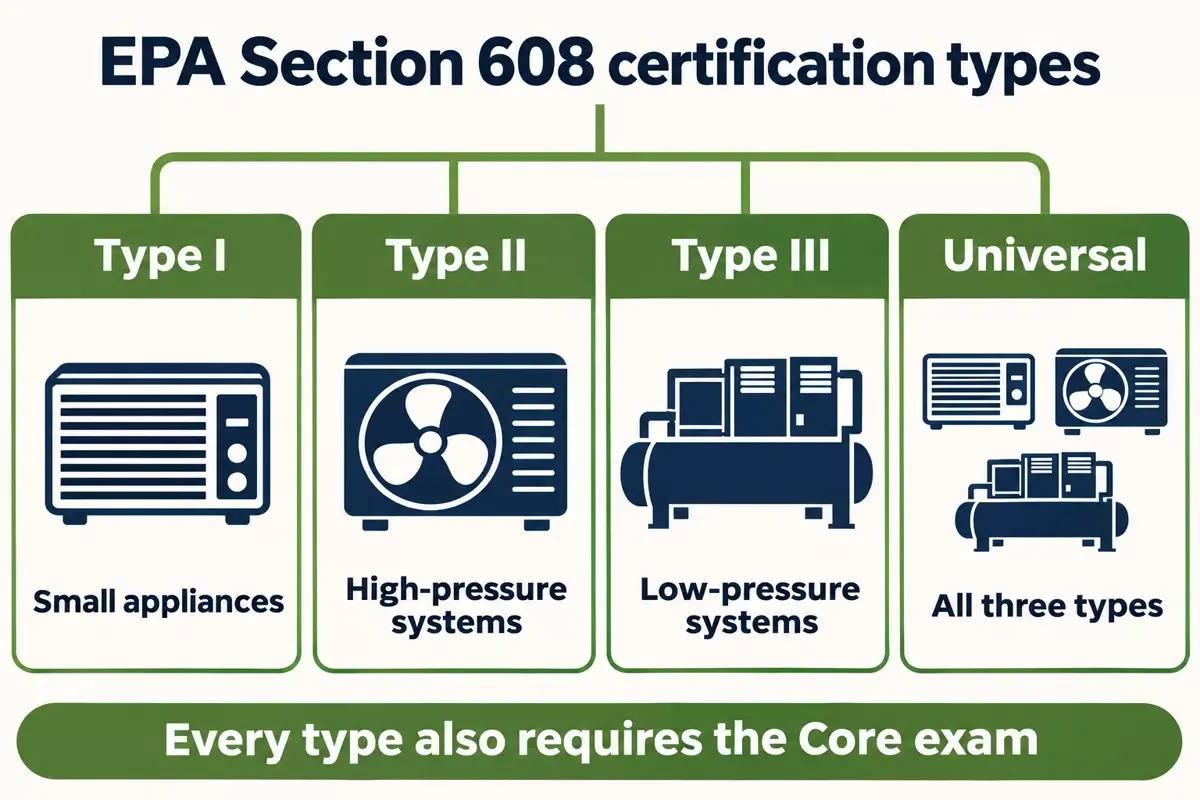
EPA lists four certification types:
- Type I: small appliances, such as window units.
- Type II: high and very high pressure equipment. This is most residential split systems and heat pumps.
- Type III: low-pressure equipment, such as large chillers.
- Universal: all three.
Each type is tested alongside a Core section. One catch: if you take the Core as an open-book exam, it cannot count toward Universal. For Universal, the Core must be proctored. If you plan to run your own shop, sit the proctored Universal and be done with it.
Work under a licensed contractor and log every job
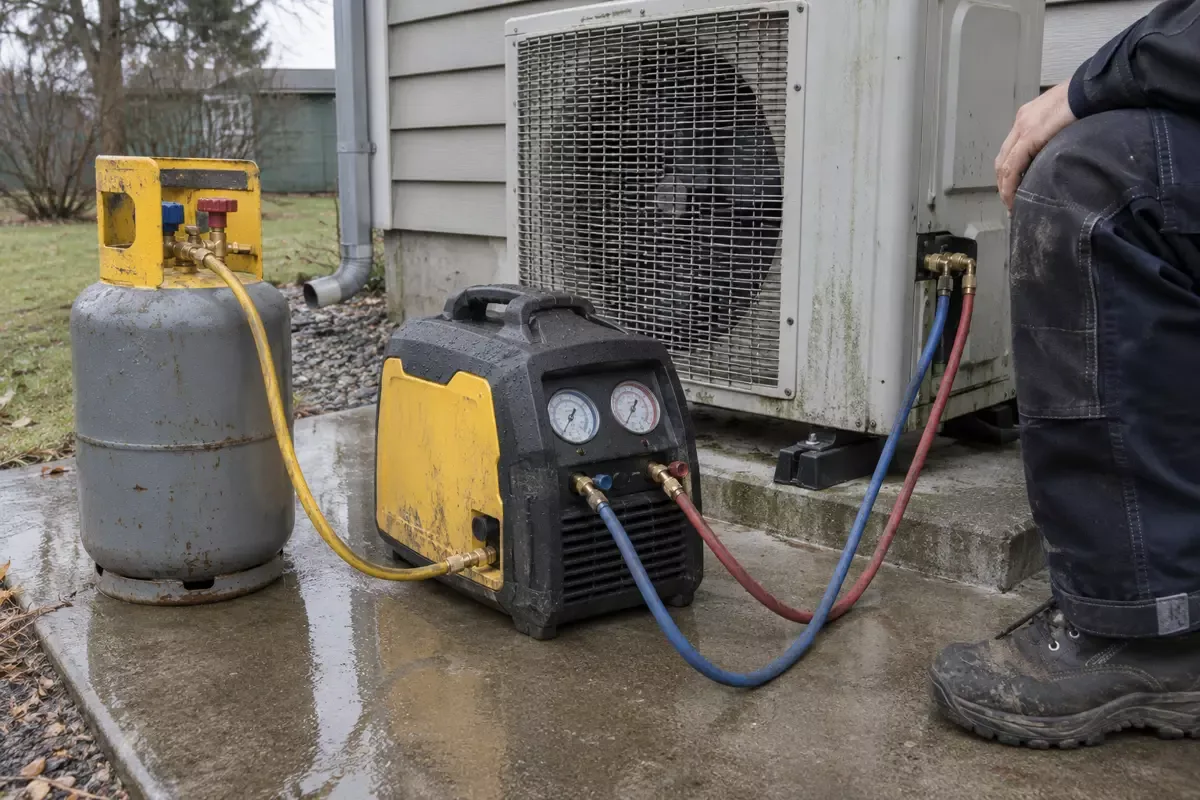
This is the long step, and it is where most people lose time. States that license HVAC contractors usually want years of supervised work, not just a passed exam.
Texas is a clear example. To apply for an air conditioning and refrigeration contractor license, the Texas Department of Licensing and Regulation wants either:
- 48 months of practical experience under a licensed contractor within the past 72 months, or
- 36 months of that experience within the past 48 months, plus 12 months holding a technician certification.
The experience goes on a verification form that the person who supervised you completes, not you. If that boss has retired, moved or fallen out with you, those months are hard to claim. A degree, diploma or certification in air conditioning and refrigeration, or military training in it, can qualify for an exception.
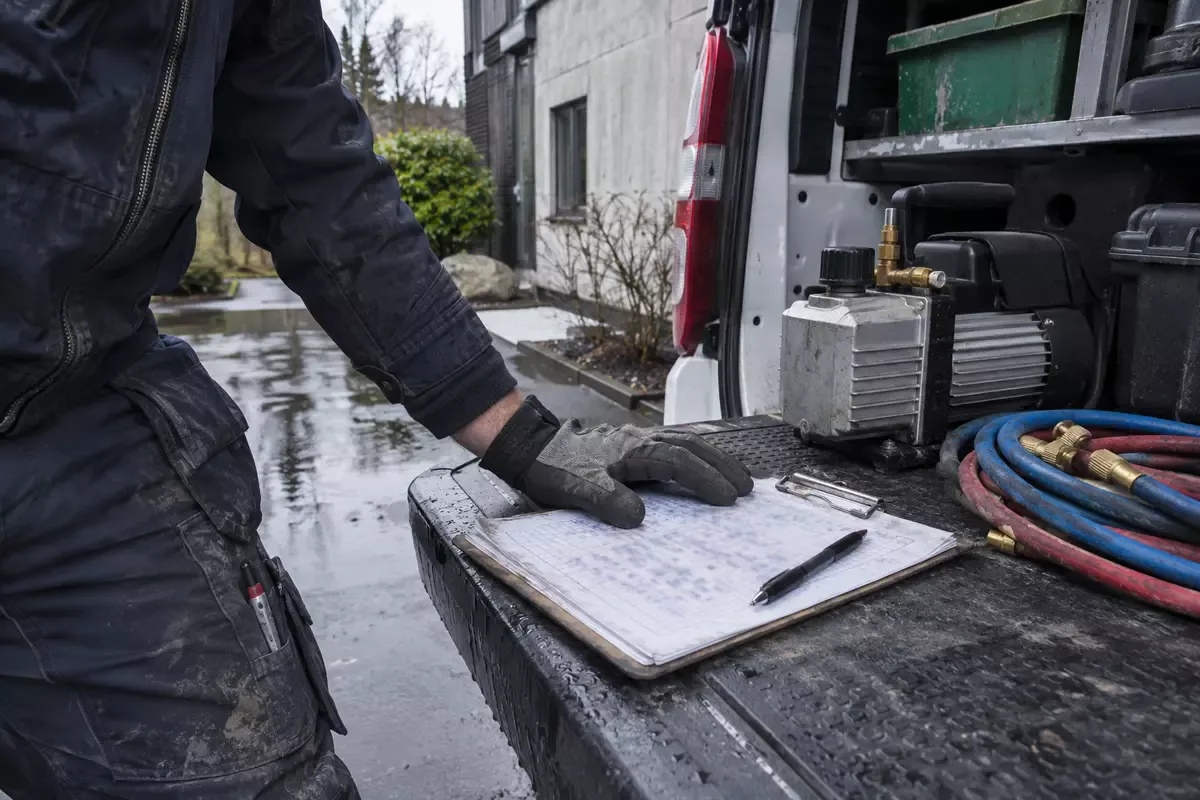
So keep your own record from your first week:
- the date, the address and the job type (install, repair, maintenance)
- the equipment size, so you can show work in the class you apply for
- the licensed contractor you worked under and their license number
When the form comes due, you hand your supervisor a clean list instead of asking them to remember four years. That is the difference between a signature in a week and a stalled application.
How long does it take to get an HVAC license?
From zero to a contractor license, plan on years, not months. Electrical work runs on the same model, with a 4 to 5 year apprenticeship before the journeyman exam, as our guide on how to become an electrician lays out. The EPA card is one exam. The contractor license is usually gated by supervised experience, which is 3 to 4 years in Texas.
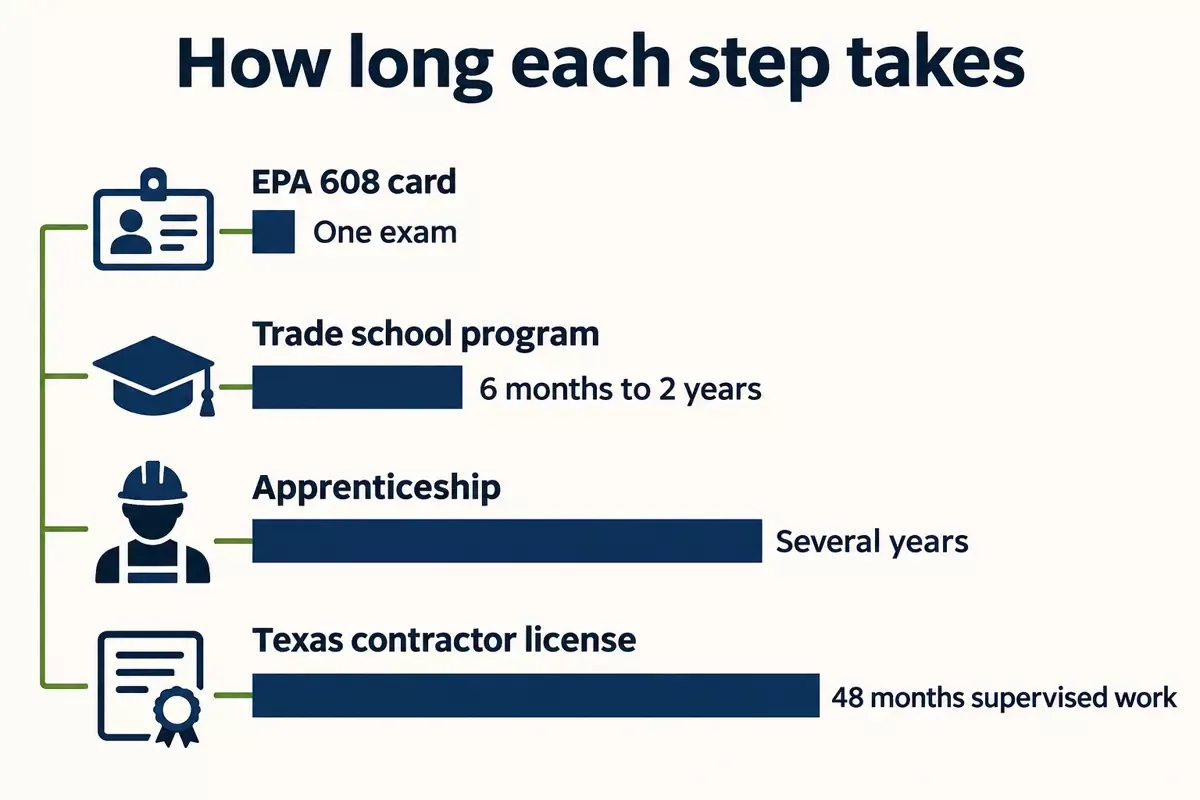
| Step | Typical time | Source |
|---|---|---|
| EPA 608 card | One exam sitting, plus your study time | EPA |
| Trade school program | 6 months to 2 years, ending in a certificate or associate degree | BLS Occupational Outlook Handbook |
| Apprenticeship | Several years of paid on-the-job training | BLS |
| Texas contractor license | 48 months supervised work in the past 72, or 36 months plus 12 months as a certified tech | TDLR |
| Texas exam and paperwork | Everything, including the exam, within 1 year of filing | TDLR |
Every state is different, so read your own board's page before you plan around these numbers. CareerOneStop's license finder, run by the US Department of Labor, lists the licensing office for each state and trade. In California, HVAC contractors hold the C-20 class, and the California contractor license process covers its experience rule, exams and $25,000 bond.
Pass the exam, then insure the business
Once the board approves your experience, you sit the state or local exam. In Texas the class you pick sets the exam and the work you may do. Class A covers any size unit. Class B covers cooling systems of 25 tons and under and heating systems of 1.5 million BTU per hour and under. The application fee is $115 and the license runs for one year, per TDLR.
After the exam, Texas wants a certificate of commercial general liability insurance on file, and you must keep that coverage the whole time the license is active. Other states add a surety bond. Price both before you quit a paying job, because the insurance bill arrives before your first customer does.
Mistakes that cost new HVAC owners months
- Working cash jobs under nobody. Side work with no licensed contractor over you usually does not count as qualifying experience.
- Not keeping your own job log. You end up asking an old boss to reconstruct four years from memory.
- Taking the open-book Core. It cannot count toward Universal, so you sit it again later.
- Assuming the state rule is the only rule. In states without a statewide license, your city or county may still require one, plus permits on every install.
- Pricing jobs like an employee. Your old hourly wage leaves out insurance, the truck, the license renewal and the hours you spend on paperwork. Run your numbers through what an hour of your time really costs before you quote anything.
When the license is in hand: the office work starts
The license lets you sell work. It does not quote the job, chase the invoice or remember what you charged the same customer last spring. Most new owners do that part at the kitchen table after the last call, retyping the same prices into a spreadsheet or a blank estimate template.
That works for the first ten customers. It breaks when you are quoting a condenser swap in the driveway and need your parts and labor prices on your phone, not in a file at home. Driveway Desk is built for that wall: your price book remembered, the quote drafted in the driveway, the invoice sent in one tap and paid into your own Stripe or Square account. If you are comparing tools, start with what Jobber actually charges a one-truck shop.
Price it once, then start your first quote from the driveway next time.
Price it once, then start your first quote from the driveway next time.
If you are setting up the business side from scratch, the paperwork order is the same across trades. For HVAC itself, our guide to starting an HVAC business covers the one-van kit, the rate math and the maintenance agreements that carry the slow months. Our guides on starting a lawn care business and starting a pressure washing business walk the registration, insurance and first price sheet steps, and the cleaning business guide covers bonding. Once jobs come in, put each one on a simple work order and send customers a written quote they can approve. Check your markup and margin on equipment before you quote your first install.
Start the log today, not the day you apply
Get the EPA 608 card first, Universal if you can. Then work under a licensed contractor and keep your own record of every job from week one, because that record is what turns into a signed experience form. Check your state board for the exact rule, price the insurance early, and quote your first jobs from real costs, not your old wage.
Put the method to work
Labor cost calculatorDivide paid-hour costs by the billable-hours ratio, then allow for your target margin to find a selling rate.
Frequently asked questions
You need an EPA Section 608 certification to handle refrigerant anywhere in the US. To sell HVAC work under your own name, most states or cities also require a contractor license, which usually means supervised experience, an exam and proof of insurance. Check your state licensing board for the exact rule.
Pennsylvania has no statewide HVAC license for technicians or contractors. You still need the federal EPA 608 card to work with refrigerant, and cities such as Philadelphia set their own permit and registration rules, so check with the city or county where you will work.
The EPA 608 exam is the certification most techs mean, and it is the easiest step on the path. You pass a Core section plus the type you need, given by an EPA-approved certifying organization. The harder part is the contractor license, which is gated by years of supervised experience.
The EPA 608 card takes one exam. A state contractor license usually takes years: Texas asks for 48 months of supervised experience in the past 72 months, or 36 months plus 12 months as a certified technician. A degree or diploma in air conditioning and refrigeration can qualify for an exception in Texas.
According to the Bureau of Labor Statistics, HVAC programs at technical schools and community colleges generally last 6 months to 2 years and end in a certificate or an associate degree. Some techs skip school and train through an apprenticeship instead, which usually lasts several years.
Plumbing usually takes longer to reach independent work. The Bureau of Labor Statistics says most plumbers train through a 4 or 5 year apprenticeship, and states often require 2 to 5 years of experience plus an exam before a plumber can work alone. If your crew does both trades, plan for two separate licenses, and read our step-by-step guide on how to become a plumber for the plumbing side.
Put the method to work
Labor cost calculatorDivide paid-hour costs by the billable-hours ratio, then allow for your target margin to find a selling rate.
Your prices, remembered.
Build your first quote on your phone in about two minutes, send it, and get paid into your own account.
Start your first quoteShare article
About the author
Field notes team
We write practical guides for home service crews of one to five. Our editorial standard is to show the calculation, state its assumptions, cite primary sources for factual claims and date competitor comparisons. We distinguish worked examples from market prices and correct errors when they are found. We do not claim trade licenses or credentials on behalf of the team.
More articles

Running a small crew · 16 min
How to Start an HVAC Business: 6 Steps and the Math
Start an HVAC business in order: EPA 608 and the contractor license, registration and insurance, one service van, a rate from billable hours, and maintenance agreements that keep spring and fall busy.

Running a small crew · 12 min
How to Become an HVAC Technician: 5 Steps and What It Pays
How to become an HVAC technician: choose trade school, an apprenticeship or a paid helper job, pass the EPA 608 exam and learn on a truck. Real timelines, BLS pay and the math you will use.

Running a small crew · 11 min
Basic House Cleaning Checklist: 12 Tasks, Every Visit
A basic house cleaning checklist of 12 tasks you finish on every visit: kitchen, bathrooms, dusting, beds and floors, in the right order, with real timings for a 3 bed, 2 bath house and how to price it.

Running a small crew · 13 min
What Do I Need to Start a Mobile Detailing Business? Full Checklist
The mobile detailing startup checklist: paperwork and insurance, the wash and interior kit for the services you sell first, how many towels to stock, and the quote, work order and payment setup.

Running a small crew · 13 min
Roofing Company Business Plan: 7 Parts + Cash Flow Example
A roofing company business plan in seven short sections, with a worked example: one reroof priced line by line, revenue by month, and how much cash a busy June ties up before homeowners pay.

Running a small crew · 11 min
How to Get Clients as a Realtor: 5 Channels That Work
How to get clients as a realtor: start with your sphere and past clients, build referral partners among the trade pros already inside homes, then add open houses and one farm area. Includes a 90-day plan and the commission math.