How to Get a California Contractor License: 7 Steps and Fees
Driveway Desk team Updated 14 November 2026 14 min read
Your next job
Less time at the desk.
Build your price book, schedule the next visit and turn completed work into an invoice.
Start your first quoteIn this article
To get a California contractor license, pick the one CSLB class that matches your work, prove four years of journey-level experience in it, apply with the $450 fee, get fingerprinted, pass the Law and Business exam and the trade exam, then file a $25,000 bond and pay the initial license fee. You need it for any job of $1,000 or more in labor and materials, any job that needs a building permit, and any job where you use employees.
Short answer
Pick your CSLB class, document four years of journey-level work in it, apply ($450), Live Scan, pass two exams within 18 months, file a $25,000 bond and workers' comp or the exemption, pay $200 (sole owner) or $350, and you are licensed for two years.
Which California license do you need?
California does not have one "contractor license". The Contractors State License Board (CSLB) issues licenses by classification, and you can only test for one classification at a time. Your four years of experience has to be in the class you apply for. So the first decision is the one that sets everything else. Florida runs it differently, with residential, building and general tiers, as our walkthrough of how Florida licenses contractors shows. Texas sits at the other extreme, licensing only the trades, as our guide to getting a contractor license in Texas explains.
| Your situation | License to get | Why |
|---|---|---|
| Small repairs under $1,000, no permit, working alone | None yet | That work is exempt, but you cannot advertise as licensed |
| One trade: plumbing, electrical, HVAC, painting, landscaping | C specialty class for that trade | C-36 plumbing, C-10 electrical, C-20 HVAC, C-33 painting, C-27 landscaping |
| Remodels in existing homes that touch three or more trades | B-2 Residential Remodeling | Built for kitchen and bath jobs on existing wood-frame homes |
| New homes, additions, whole buildings with two or more unrelated trades | B General Building | The classic general contractor license |
| Grading, paving, utilities, roads | A General Engineering | Infrastructure, not houses |
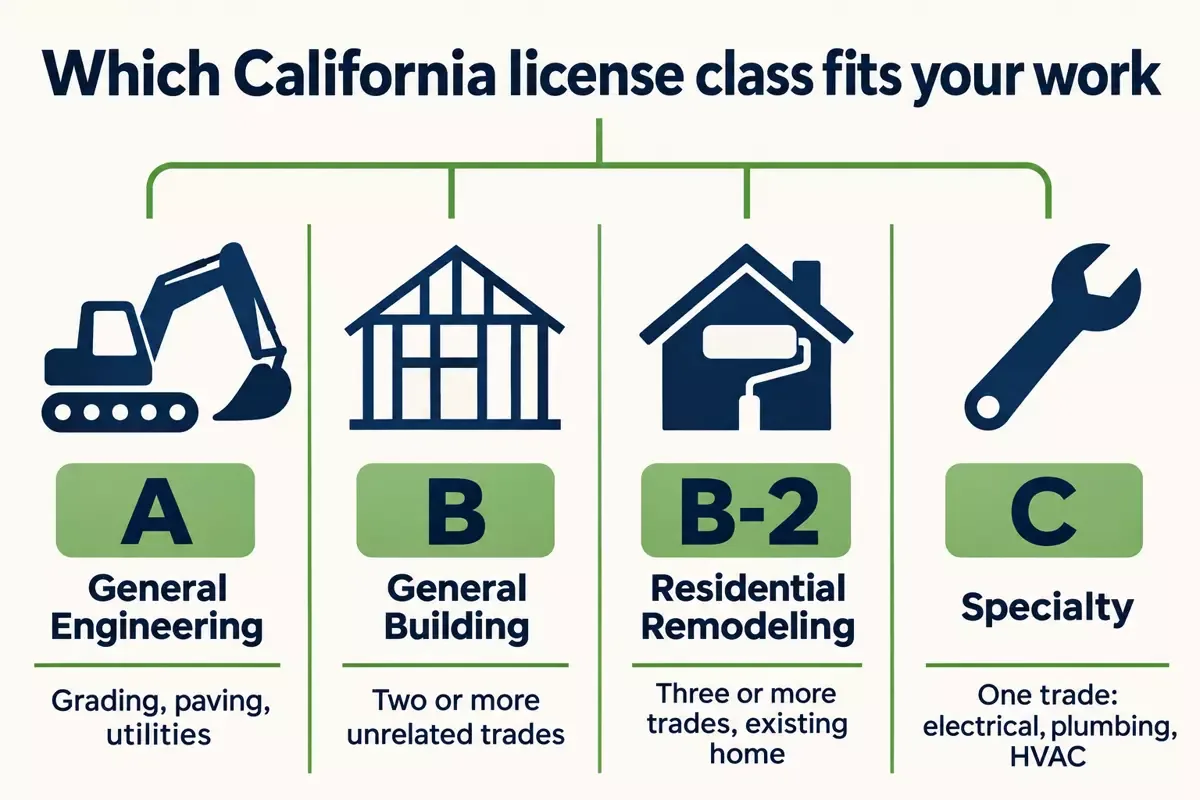
Most owner-operators reading this want a C license in their trade. A plumber who replaces water heaters and repipes houses needs the C-36, not a B. A remodeler who does kitchens with new cabinets, drywall, tile and fixtures fits the B-2. If you plan to run whole builds and hire the subs, read our guide to becoming a general contractor for the B route across states.
Do you need a contractor license in California?
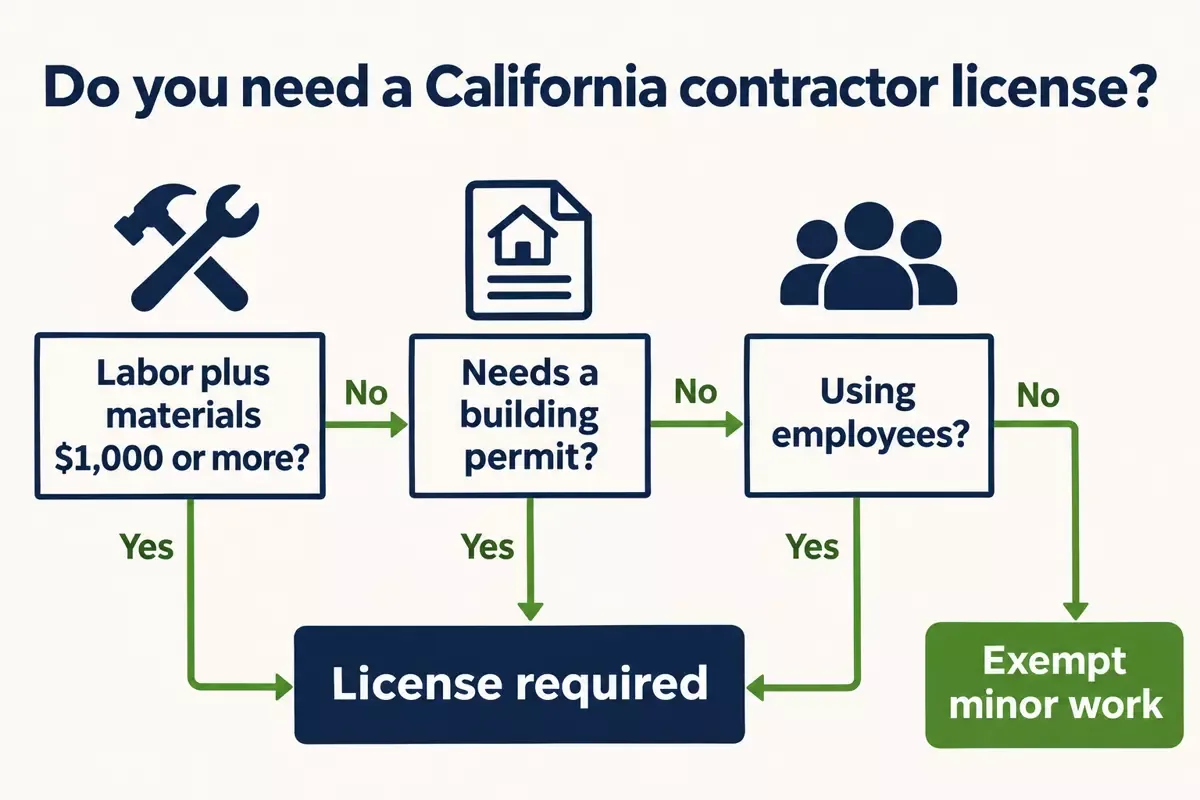
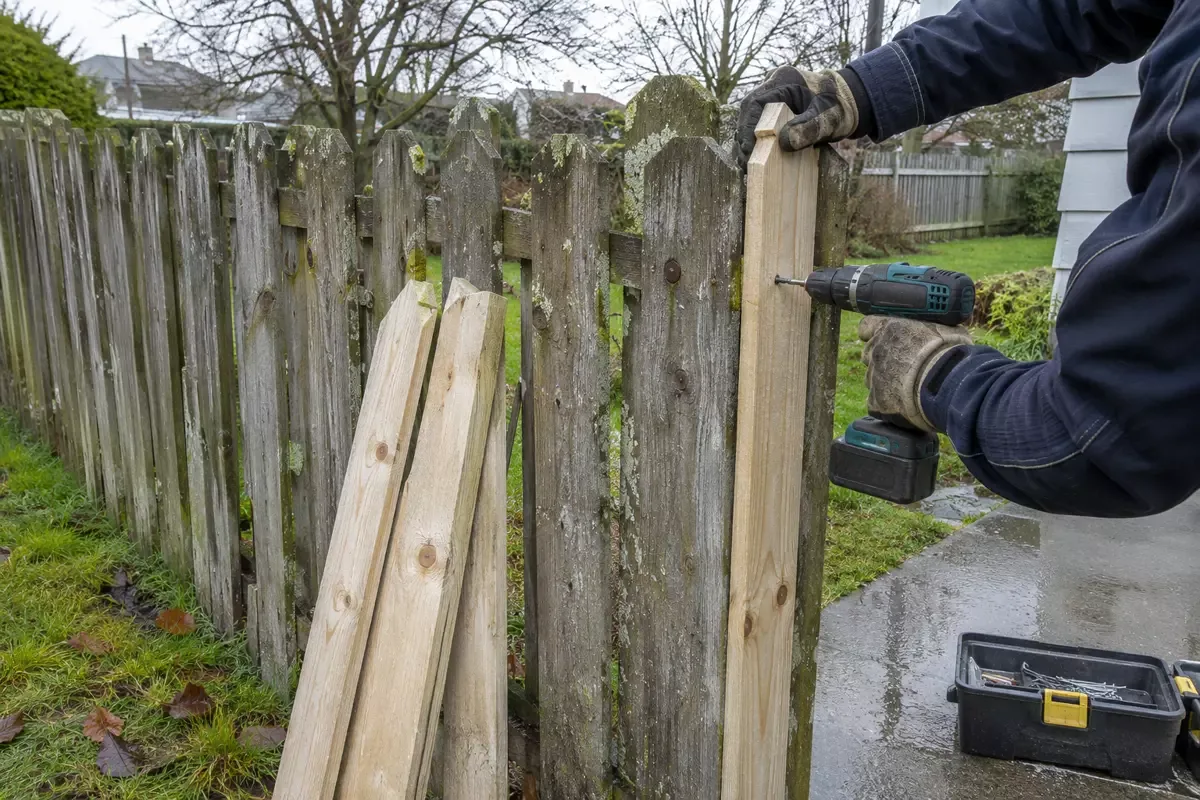
Yes, if any of three things is true. Per CSLB's licensing rules, you need a license when the job's total for labor and materials is $1,000 or more, when it needs a building permit, or when you use any employees. Below all three lines, the work is exempt.
The exemption is narrower than most people think. You cannot split one job into several invoices to stay under $1,000, and you cannot call yourself licensed in an ad. The day you hire a helper, the exemption ends.
The penalty is real. CSLB says a first offense for contracting without a license is usually a misdemeanor, with up to six months in jail and/or a $500 fine, plus an administrative fine of $200 to $15,000. Our guide to the handyman license rules covers where the $1,000 line sits for small repair work in California and other states.
What are the requirements for a California contractor license?
You need four things before CSLB issues a license: qualifying experience, passed exams, a clean background check and the bond and insurance filings. There is no education requirement.
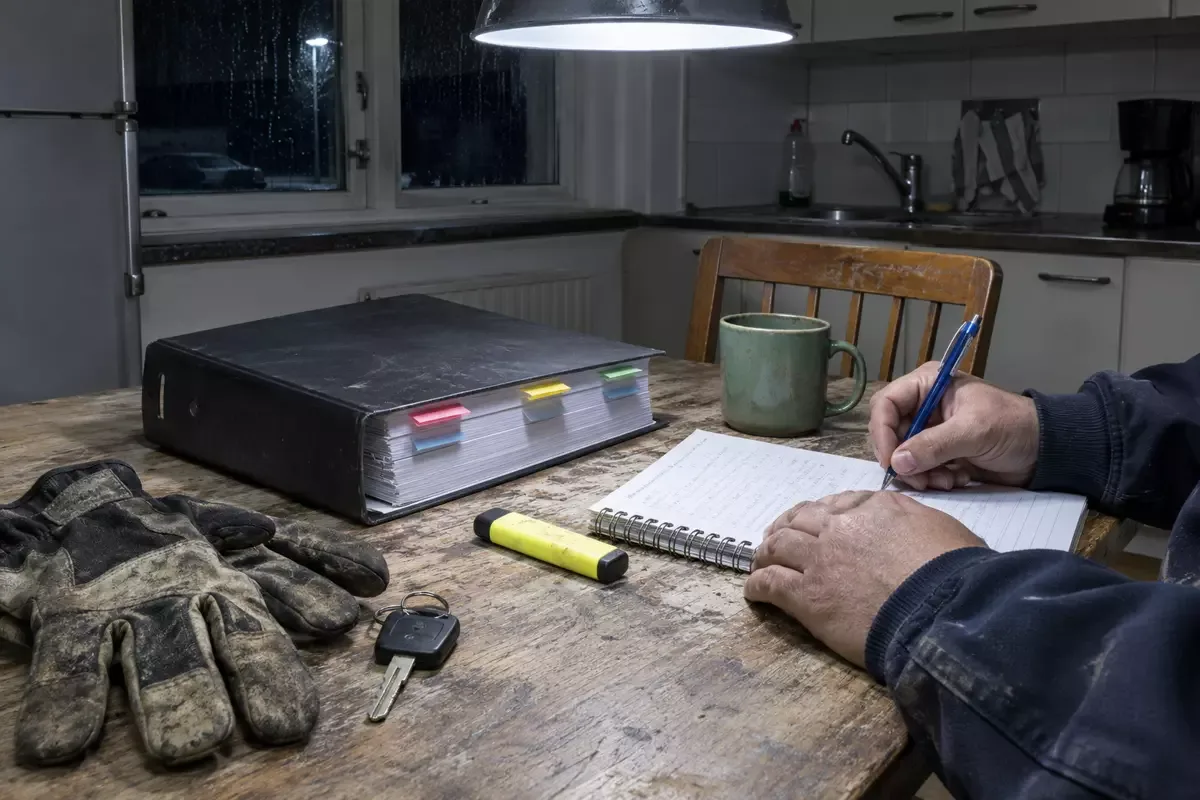
The exam is not what slows most people down. Proving four years of experience in one class, signed by someone who watched you work, is. CSLB only counts time at journey level or above: as a journeyman, a foreman or supervising employee, a contractor, or an owner-builder. Helper, laborer and apprentice time does not count as experience on its own.
- Who signs it. An employer, foreman, fellow journeyman, union rep, building inspector, architect, engineer or homeowner who saw your work firsthand.
- What backs it. Be ready to show pay stubs, tax records or permits if CSLB asks. A claim you cannot document can void the application.
- No second chances on paper. CSLB does not accept more experience verification after the application is accepted, so get it right the first time.
- Credit for training. Up to three of the four years can come from an apprenticeship certificate or a related degree. At least one year has to be hands-on work.
Short on years? A company license can also be qualified by a responsible managing officer or employee who has the experience and passes the exams. That person carries real responsibility for the work, so treat it as a partnership, not a rental.
How much does a California contractor license cost?
The state fees for a sole owner come to $650: the $450 application fee plus the $200 initial license fee. Any other business type pays $350 instead of $200, so $800. Exams, fingerprints and the bond premium come on top. Fees are from CSLB's issuance page, checked November 2026.
| Cost line | Amount | Notes |
|---|---|---|
| Application processing fee | $450 | Paid to CSLB with the application |
| Initial license fee, sole owner | $200 | Covers two years, paid after you pass |
| Initial license fee, any other business type | $350 | Partnership, corporation, LLC |
| Exam fees | Set by PSI | Paid to PSI when you schedule each exam |
| Live Scan fingerprints | Set by the operator | Paid at the Live Scan location |
| Contractor bond | $25,000 bond | You pay a yearly premium to a surety, not $25,000 |
| Bond of Qualifying Individual | $25,000 bond | Only if an RME or RMO qualifies the license |
| Workers' comp | Policy or exemption | Exemption only if you have no employees, and not for every class |
| LLC worker bond and liability insurance | Varies | Only for LLC licenses |
The bond premium is the line that changes most from one person to the next. Sureties price it on your credit and history, so get two or three quotes before you file.
How long does it take to get a California contractor license?
Plan on four years of qualifying work first, then the paperwork. CSLB does not promise a processing time: it changes with workload, and you can check where your application stands each week with the fee number and PIN on your acknowledgment letter.
| Stage | What sets the time |
|---|---|
| Four years of experience | Your work history; up to three years can come from training |
| Application review | CSLB workload, and whether your forms come back for correction |
| Live Scan and background check | Starts after the application is accepted |
| Exams | You self-schedule with PSI; each exam runs 3.5 hours |
| Retakes | 21-day wait after a fail; you have 18 months from acceptance to pass |
| Bond, fee and issuance | Starts when the bond and fee letter arrives after you pass |
| Wall certificate and pocket card | About one week after the license issues |
The fastest way to lose months is a returned application. Fill everything in ink, have every listed person sign, and send the work experience form complete the first time.
How to get a California contractor license, step by step
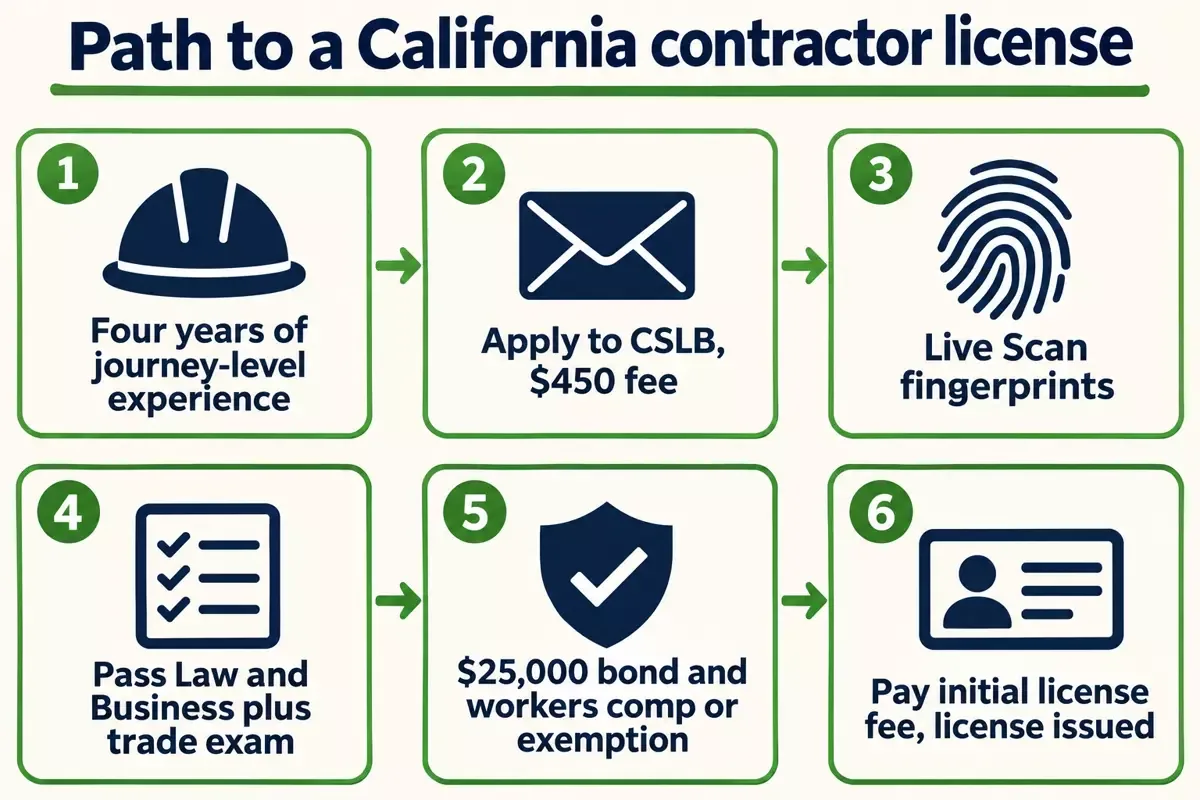
How to get a California contractor license
- Pick one classification
Match the class to the work you will sell: a C class for one trade, B-2 for multi-trade remodels on existing homes, B for whole buildings, A for engineering work. You test for one class at a time and can add more after you are licensed.
- Document four years at journey level
Gather the Certification of Work Experience, signed by someone who saw your work, plus pay stubs, tax records or permits that back it up. Add transcripts or an apprenticeship certificate if you claim training credit.
- Apply to CSLB
Send the Application for Original Contractor's License with the $450 fee. Do not send the bond or license fee yet. Keep the fee number and PIN from the acknowledgment letter.
- Get fingerprinted
After CSLB accepts the application, take the Live Scan form to a Live Scan location for the state and FBI background check.
- Pass the two exams
Schedule the Law and Business exam and the trade exam with PSI. You get 3.5 hours for each and your result before you leave. A passed exam stays good for five years if you fail the other one.
- File the bond and insurance
Buy the $25,000 contractor bond, file workers' comp or the exemption, and complete the asbestos open-book exam. LLCs add their own bond and liability insurance.
- Pay the initial license fee
Pay $200 as a sole owner or $350 for any other business type. The license is good for two years; the wall certificate and pocket card arrive about a week later.
How to pass the Law and Business and trade exams
Most applicants take two exams. The Law and Business exam covers the business and legal side of contracting in California. The trade exam covers the work in your class. CSLB publishes a study guide for each exam, and the score report for a failed exam shows how you did in each section, so you know what to study before the retake.
If you have done the work for four years, the trade exam is usually the easier of the two. The business side is where field people get caught, because it tests the office half of the job that nobody taught you on site. Study that part like it is new, because for most tradespeople it is.
Mistakes that cost California applicants months
- Applying for the wrong class. Your experience has to be in that class, and you can only test for one at a time. Picking B when your work is all plumbing wastes the application.
- Counting helper years. Time as a helper or laborer is not journey-level experience. Count only what you can show at journeyman level or above.
- A signer who did not see the work. CSLB wants firsthand knowledge. A friend who signs for work they never saw can sink the whole claim.
- Sending the application in pencil. CSLB returns forms filled in pencil or missing signatures, and a returned application starts the wait again.
- Letting the 18 months run out. Fail and you wait 21 days to retake. Leave it too late and the application voids, with new fees.
- Bidding before the license is issued. Passing the exams is not a license. Until it issues, the $1,000 line still applies to you.
Is a California contractor license worth it?
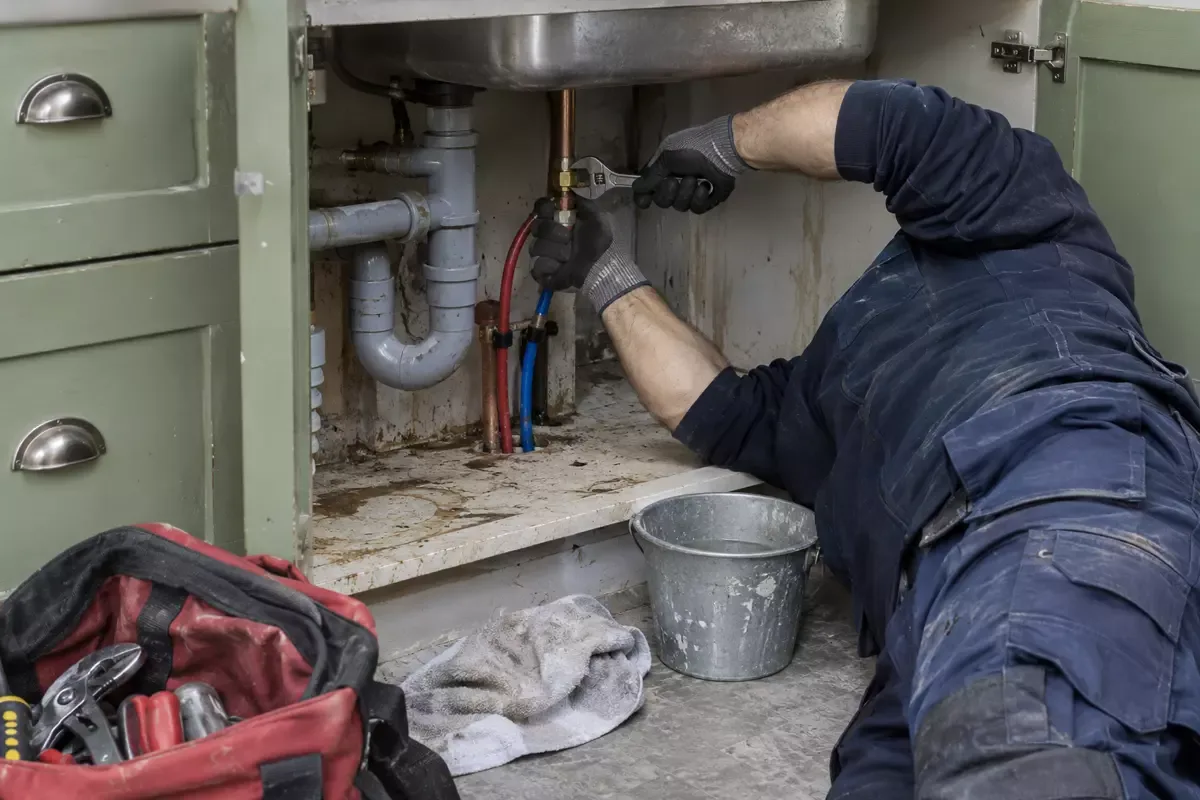
For anyone who wants to sell jobs over $1,000, pull permits or hire a helper, yes: without it you are capped at minor work and exposed to fines. It also changes how customers see you. CSLB tells homeowners to ask to see your pocket license before they hire you. If you only do small repairs alone, you can wait until the work outgrows the $1,000 line.
The license is the start, not the finish. Once it issues, the work that pays the bills is quoting, scheduling and getting paid. Our guides to an HVAC license and how long an electrical license takes cover the trade-specific side, and starting a plumbing business walks the first year after licensing.
Price your first licensed jobs from real costs
New license holders tend to price at the wage they earned working for someone else. That leaves out the bond premium, the license renewal, insurance, the truck and the hours you spend quoting and invoicing. Add those up, divide by the hours you will actually bill, and use that as your rate. What an hour of your time really costs does that math for you.
Then put every job in writing. California sets its own rules for home improvement contracts, and a clear written quote with the scope, price, payment terms and your license number is the habit that keeps you out of disputes.
Price it once, then start your first quote from the driveway next time.
Run the paperwork from the driveway
A notebook and a spreadsheet hold up for the first few customers. The wall comes when you are licensed and the calls start: every job needs a quote typed from prices in your head, a spot on the calendar, a reminder, an invoice and a record of what you did, and it all lands at the kitchen table at night. Driveway Desk keeps your price book, so a quote is drafted from your own prices in the driveway, the job goes on the schedule, the customer gets a reminder, and the invoice goes out in one tap and is paid into your own Stripe or Square account. One flat price covers the whole crew, with no contract. If you are weighing tools, here is how the common Jobber alternatives compare.
Price it once, then start your first quote from the driveway next time.
The short version
Pick the one CSLB class that matches your work, prove four years at journey level in it, apply with $450, get fingerprinted, pass both exams within 18 months, file the $25,000 bond and workers' comp or the exemption, and pay the $200 or $350 license fee. Rules and fees change, so confirm each step with CSLB before you file.
Your prices, remembered. Build your first quote on your phone in about two minutes, send it, and get paid into your own account. Start your first quote, or try it free.
Put the method to work
Labor cost calculatorDivide paid-hour costs by the billable-hours ratio, then allow for your target margin to find a selling rate.
Frequently asked questions
For most applicants the hard part is not the exams. It is proving four years of journey-level experience in one classification, signed by someone who saw the work. The two exams take 3.5 hours each, and the Law and Business exam is the one field people usually need to study for.
You need four years of qualifying experience first, and up to three of those years can come from training or an apprenticeship. After you apply, CSLB processing times change with its workload, so check your status online each week. Once accepted, you have 18 months to pass both exams, and the wall certificate arrives about a week after the license issues.
State fees are $650 for a sole owner: a $450 application fee and a $200 initial license fee. Other business types pay $350 instead of $200. On top of that you pay PSI exam fees, Live Scan fingerprinting and a yearly premium for the $25,000 contractor bond.
Four years of experience at journey level or above in the class you apply for, a completed application with the $450 fee, Live Scan fingerprints, passing scores on the Law and Business and trade exams, a $25,000 contractor bond, workers' comp or an exemption, the asbestos open-book exam and the initial license fee.
A handyman can take jobs under $1,000 in total labor and materials, with no building permit and no employees, without a license. A licensed contractor can take jobs of any size in their classification, pull permits and hire. Above $1,000, a handyman needs a contractor license.
CSLB issues A (General Engineering), B (General Building), B-2 (Residential Remodeling) and C (Specialty) licenses. The C group splits into dozens of single-trade classes, such as C-10 electrical, C-20 HVAC, C-33 painting and C-36 plumbing.
Put the method to work
Labor cost calculatorDivide paid-hour costs by the billable-hours ratio, then allow for your target margin to find a selling rate.
Your prices, remembered.
Build your first quote on your phone in about two minutes, send it, and get paid into your own account.
Start your first quoteShare article
About the author
Field notes team
We write practical guides for home service crews of one to five. Our editorial standard is to show the calculation, state its assumptions, cite primary sources for factual claims and date competitor comparisons. We distinguish worked examples from market prices and correct errors when they are found. We do not claim trade licenses or credentials on behalf of the team.
More articles

Running a small crew · 13 min
What Do I Need to Start a Mobile Detailing Business? Full Checklist
The mobile detailing startup checklist: paperwork and insurance, the wash and interior kit for the services you sell first, how many towels to stock, and the quote, work order and payment setup.

Running a small crew · 13 min
Roofing Company Business Plan: 7 Parts + Cash Flow Example
A roofing company business plan in seven short sections, with a worked example: one reroof priced line by line, revenue by month, and how much cash a busy June ties up before homeowners pay.

Running a small crew · 11 min
How to Get Clients as a Realtor: 5 Channels That Work
How to get clients as a realtor: start with your sphere and past clients, build referral partners among the trade pros already inside homes, then add open houses and one farm area. Includes a 90-day plan and the commission math.

Running a small crew · 14 min
How to Get Bookkeeping Clients: 6 Ways That Actually Work
How to get bookkeeping clients: start with people you know and local tax preparers, sell a fixed-price cleanup first, then pick one niche, such as trade contractors, and become the bookkeeper its owners refer.

Running a small crew · 13 min
How to Start a Mobile Detailing Business: Water, Kit, Prices
Start a mobile detailing business in order: pick your first customers, sort licenses and insurance, solve water before buying a polisher, price by your real hours plus the drive, and book the maintenance wash.

Running a small crew · 13 min
How to Get Clients for Your Home Service Business: 7 Ways
How to get clients for a home service business: tell everyone you know, verify a free Google Business Profile, ask for reviews, work the street around every job, and follow up every quote you already sent before you buy a single lead.