How to Start an Electrical Business: 6 Steps and the Math
Driveway Desk team Updated 13 November 2026 14 min read
Your next job
Less time at the desk.
Build your price book, schedule the next visit and turn completed work into an invoice.
Start your first quoteIn this article
To start an electrical business, first hold the license your state requires to contract electrical work, then register and insure the business, set up one van for service work, and set your rate from the hours you will actually bill. Rules vary by state, so confirm each step with your state electrical board before you take a paid job.
Short answer
Hold the contractor-level electrical license your state requires, register the business and get an EIN, buy liability insurance (and a bond if your state asks for one), set up one van for service and repair, price from billable hours, and start with work that pays at the door.
Which kind of electrical business should you start?
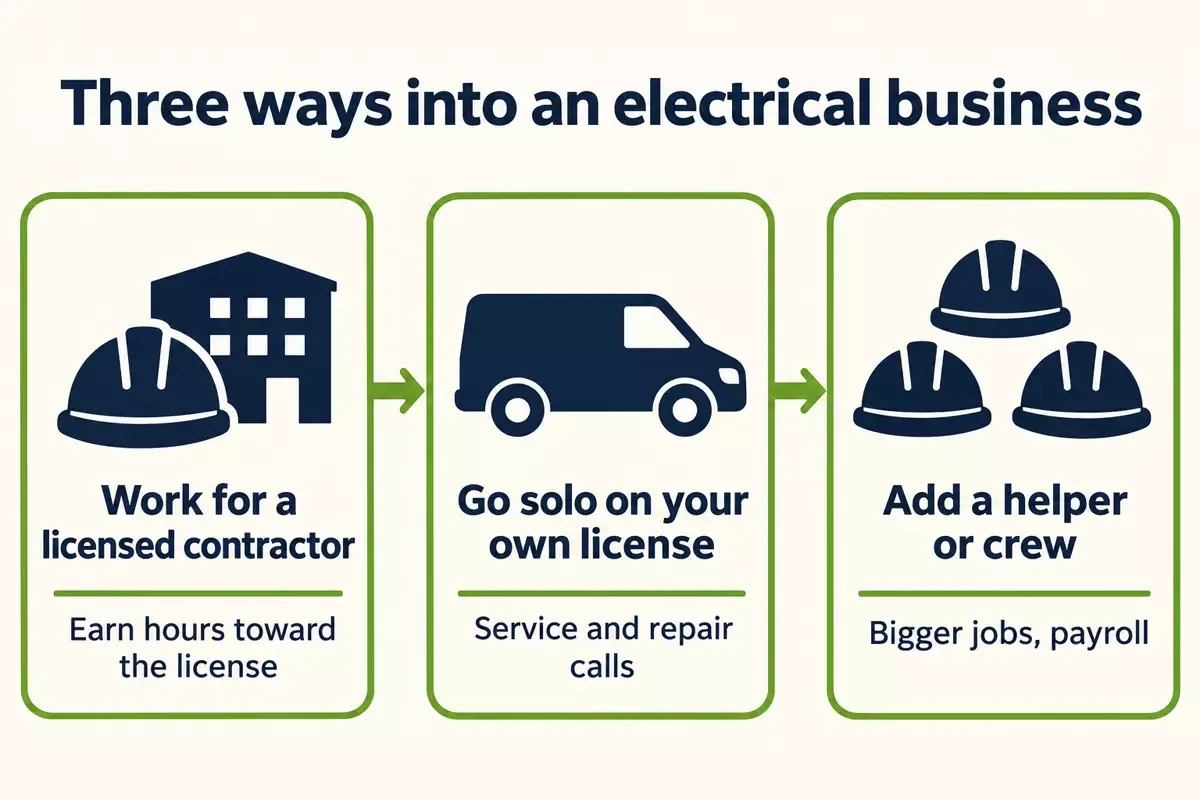
Where you start depends on the license you hold today. A journeyman can do the work, but in most states only a master electrician or licensed electrical contractor can sell it under their own company name.
| Your situation | Start as | Why |
|---|---|---|
| Apprentice or journeyman, no contracting license yet | Keep working for a licensed contractor | You get paid while you earn the hours and the license that lets you contract |
| Licensed to contract, working solo | Residential service and repair, one van | Small kit, paid the day you finish: outlets, circuits, fixtures, panel swaps |
| Licensed, ready to hire one to four people | Add an apprentice, then remodels or new construction | Bigger tickets, but payroll, workers' comp and slower pay |
Still on the first row? Our guide to becoming an electrician walks the apprentice, journeyman and master steps, and how long an electrical license takes covers the hours and exams. This post starts once the license is in hand and you want your own name on the invoice.
Do you need a license to start an electrical business?
Yes, almost everywhere. Electrical work is a fire and shock risk, so states and many cities license both the electrician and, often, the business. The details differ a lot from state to state, so treat this as a checklist to confirm with your state board, not a ruling.
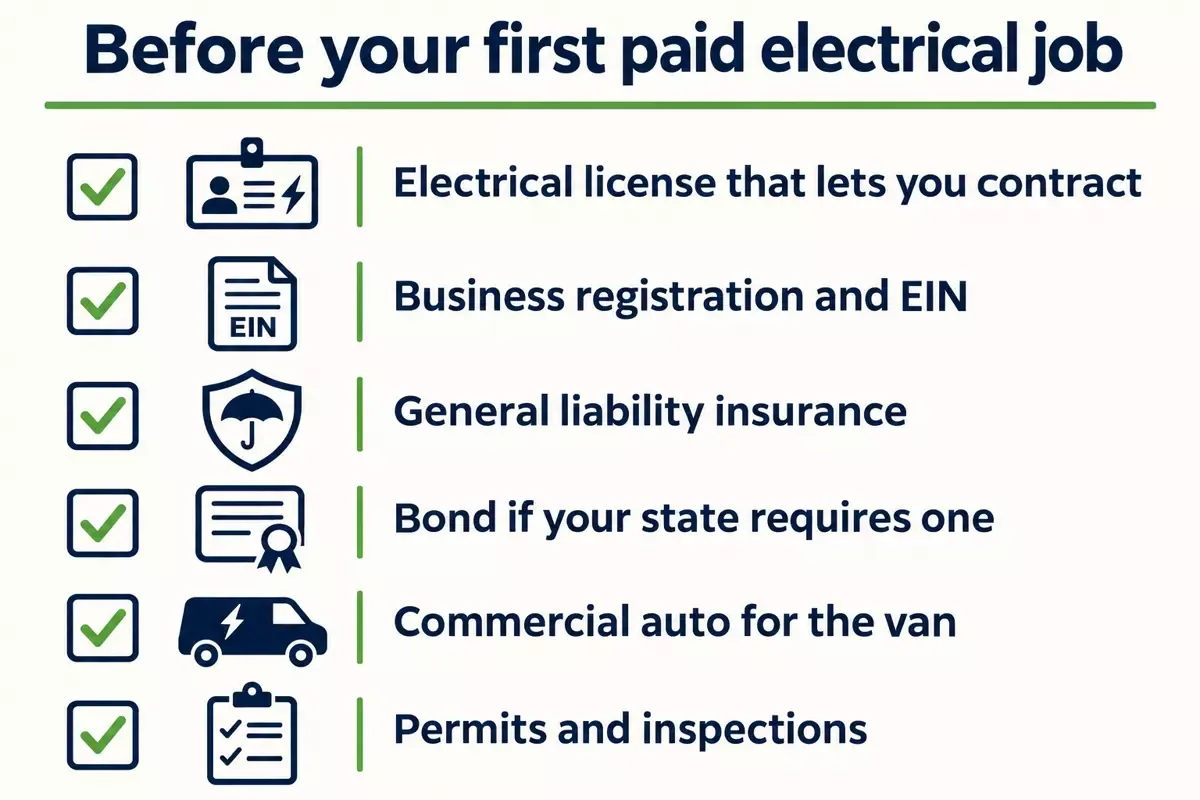
- A license that lets you contract. Usually a master electrician or electrical contractor license. Many states also want the company to name a licensed master as its qualifier.
- Local registration. Some cities and counties register electrical contractors separately before they issue you a permit.
- Business registration and EIN. Pick a structure (many owner-operators start as a sole proprietor or single-member LLC), register it, and get an EIN from the IRS before you hire or open a business bank account.
- Insurance and a bond. General liability is the floor, and many states set a minimum for licensed contractors. Some also want a surety bond. Add commercial auto for the van and workers' comp the day you hire.
- Permits. Panel changes, new circuits and most wiring beyond a like-for-like swap need a permit pulled by the license holder and a passed inspection.
The SBA's guide to licenses and permits explains how federal, state and local licenses stack. Your state board sets the exams, insurance minimums and fees.
What equipment does an electrical business need?
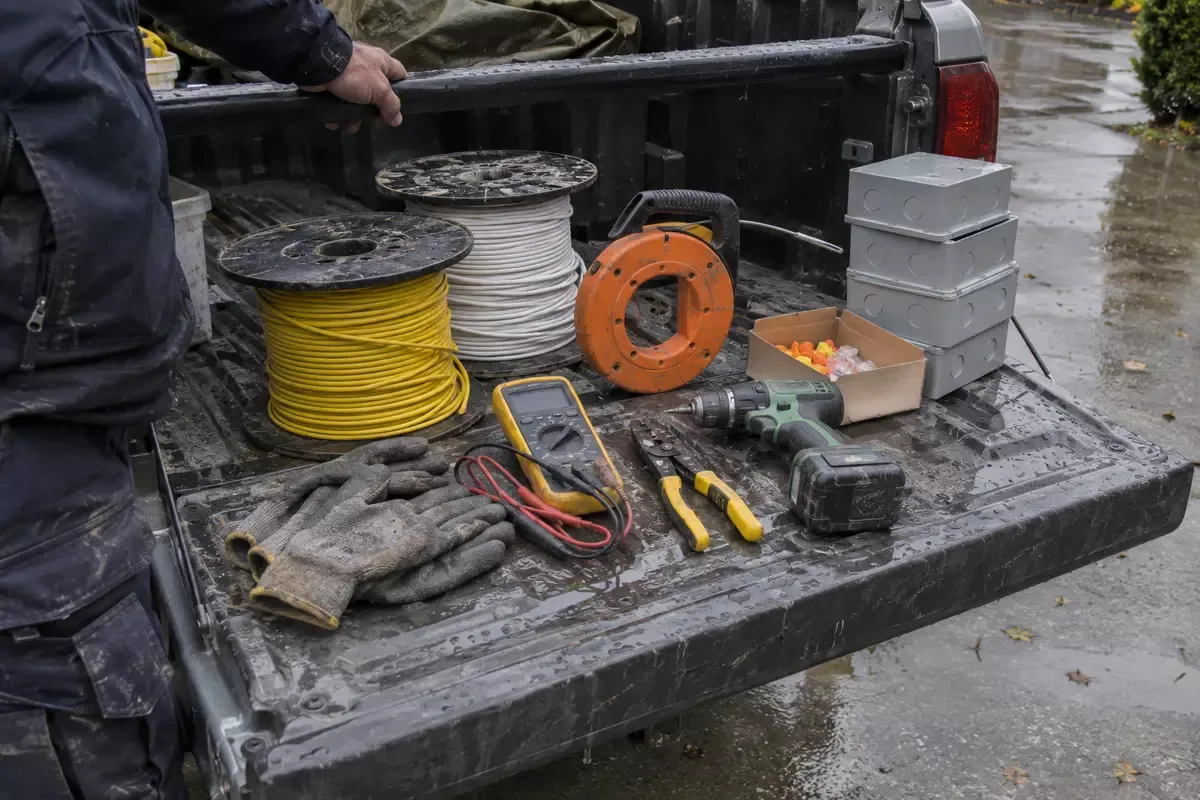
A one-person electrical service business runs out of one van or truck. You likely own most of the hand tools. What the business adds is stock, so you finish the job on the first visit instead of driving to the supply house.
- Hand tools: strippers, lineman's pliers, screwdrivers, a fish tape, a conduit bender, a cordless drill and a hole saw kit
- Test gear: a multimeter, a non-contact tester, a two-probe voltage tester and an outlet tester
- Common stock: outlets and GFCI outlets, switches, breakers for the panels you see most, wire connectors, boxes, cable in the common gauges
- A ladder or two, drop cloths and a shop vac for the drywall dust
- Shelving and bins so you can find a breaker in under a minute
What it costs depends on what you already own. Price each line locally before you spend, and the total is your startup budget.
| Startup cost line | What sets the number |
|---|---|
| Contracting license, local registrations | Your state and city fee schedules |
| Insurance and bond | Your state's minimums and the work you do |
| Van or truck | One you already own costs far less than a new upfitted van |
| Tools and test gear | New or used, and what you already carry |
| First parts stock | How many service calls you expect in the first month |
| Business registration, phone, bank account | Your state and structure |
Service work or new construction first?
Most new electrical owners chase new construction because the tickets are big. For a one-van shop that is usually the wrong first move, for one reason.
Cash flow kills a new electrical business before price does. A service call is paid the day you finish. A new-construction job is paid on the general contractor's schedule, often weeks after you bill each stage, and part of every invoice can be held back as retainage until the whole building is done. Meanwhile you have already paid for the wire, the panel and your own time.
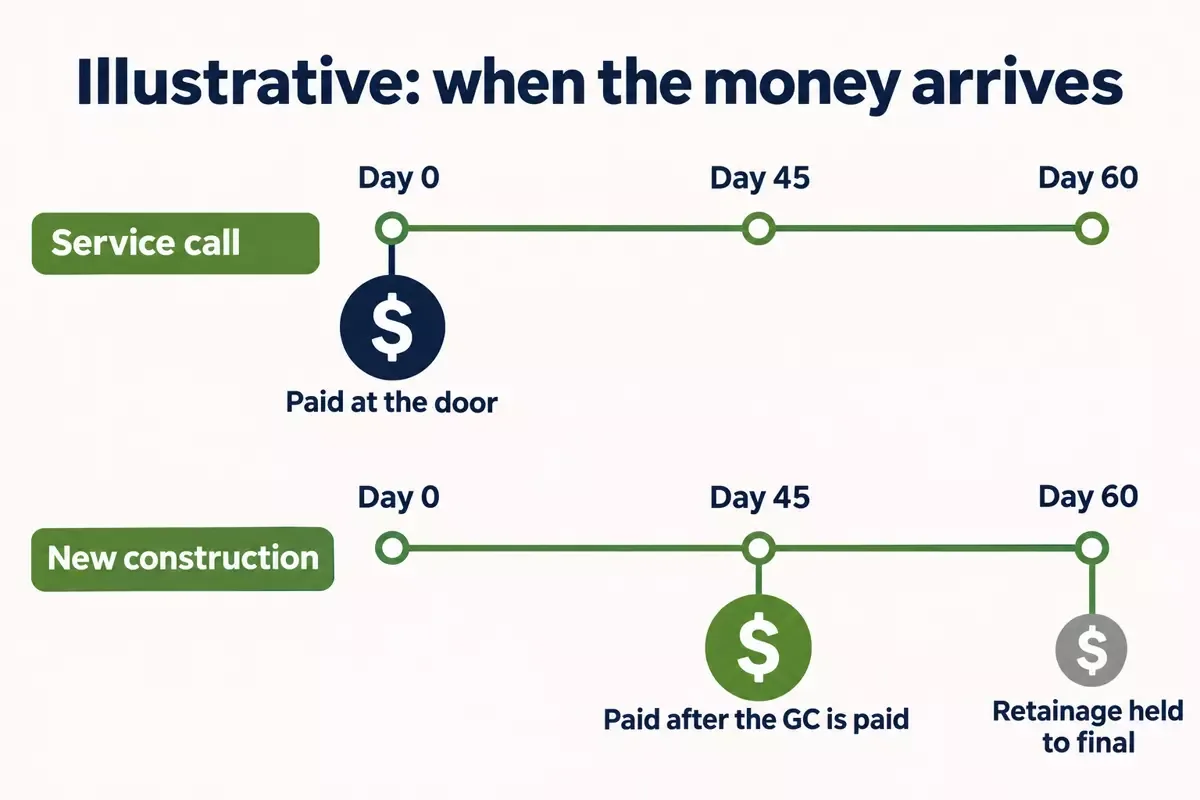
Here is the same month of work two ways, with illustrative numbers. They are not market prices: they show the timing, not what you will earn.
| Illustrative month | Service and repair | One new-construction house |
|---|---|---|
| Work done | 30 calls averaging $350 | Rough-in and trim on one house |
| Billed | $10,500 | $12,000 |
| Material you paid for up front | $2,000 | $5,000 |
| In the bank by month end | About $10,500 | $0 to a few thousand, depending on the GC |
| Held back until final | Nothing | Retainage, if the contract has it |
New construction is good work once you have a cash cushion and a GC who pays on time. Start with service and repair, and add it when your bank balance can carry 60 days of material and payroll. Read the payment terms before you sign, every time.
How to price electrical work: start from billable hours
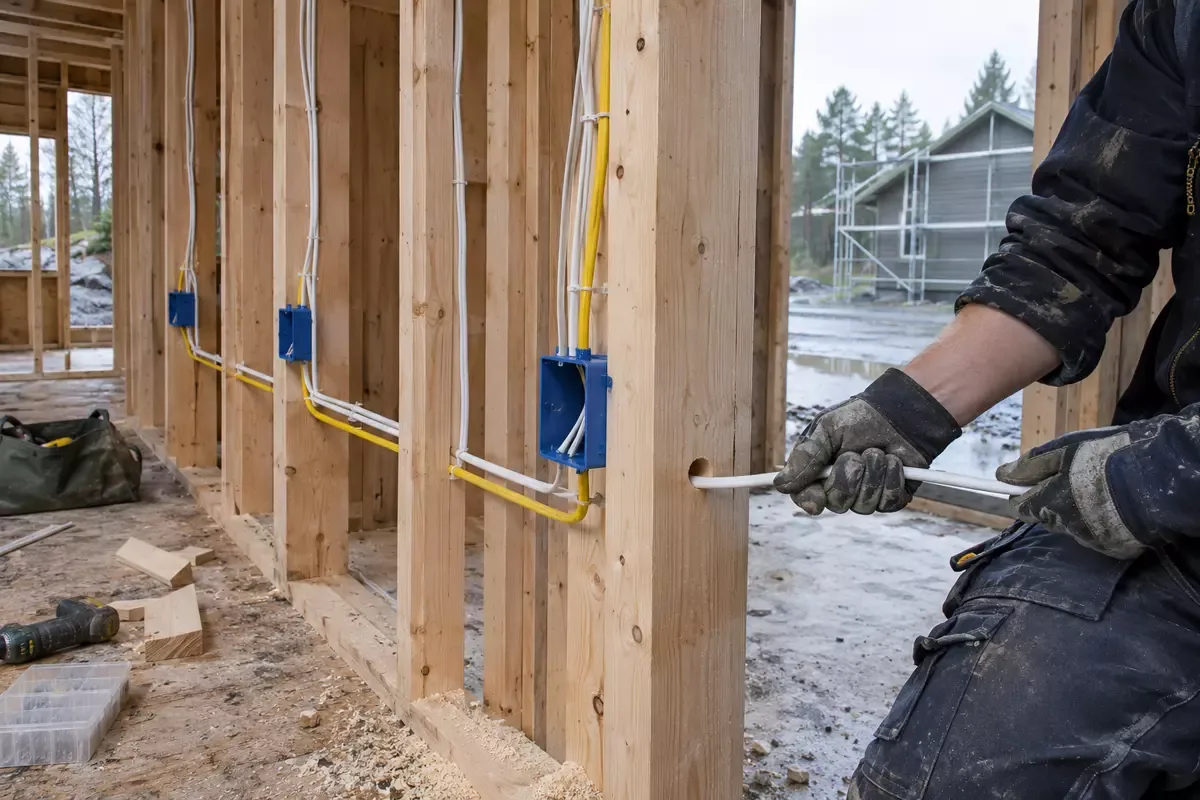
Most new owners take the hourly wage they earned for a contractor, add a bit and call it their rate. That is almost always too low. A 10-hour day for a solo electrician includes driving, the supply house, walking jobs to quote them, and the calls and invoices at night. Only the time doing the paid work is billable, and on a typical service day that is about half.
Here is the math with illustrative inputs. Swap in your own numbers.
| Line | Illustrative input | Per year |
|---|---|---|
| Owner pay | What you want to take home before tax | $75,000 |
| Van | Payment, fuel, maintenance | $14,000 |
| Insurance and bond | Liability, commercial auto | $6,000 |
| Tools and test gear | Replacement and repairs | $3,000 |
| License, permits, renewals | State and local fees, continuing education | $2,000 |
| Phone, software, marketing, accounting | The office side | $8,000 |
| Total to cover | $108,000 | |
| Billable hours | 230 working days x 4.5 hours | 1,035 |
| Hourly rate you need | $108,000 / 1,035 | about $104 |
| Same costs, if you assume 8 billable hours | $108,000 / 1,840 | about $59 |
At $59 an hour the calendar looks full and the bank account looks empty. Check your own number with the real cost of an hour of your time, because your days and overhead will differ from these. To see where it lands against the market, compare it with the $50-$130 an hour most electricians bill by license level.
Flat rate for the jobs you do every month
Customers want the price before you start. Once your hourly rate is real, turn your common jobs into flat prices: hours at your rate, plus parts at your markup, plus the permit. An illustrative 200 amp panel replacement:
| Line | Illustrative input | Amount |
|---|---|---|
| Labor | 8 hours at $104 | $832 |
| Panel, breakers and install parts | $900 at cost, 30% markup | $1,170 |
| Permit | Passed through at cost | $150 |
| Haul away the old panel | Disposal | $25 |
| Flat price you quote | $2,177 |
The parts markup is not padding: it pays for the trip to buy them, the stock in the van and the callback if a breaker fails. Selling the panel at cost means you install it for free. Run it through the markup and margin calculator before you print a price, and check with the utility whether the job needs a disconnect appointment, which can add a day.
Price it once, then start your first quote from the driveway next time.
How do electricians find their first customers?
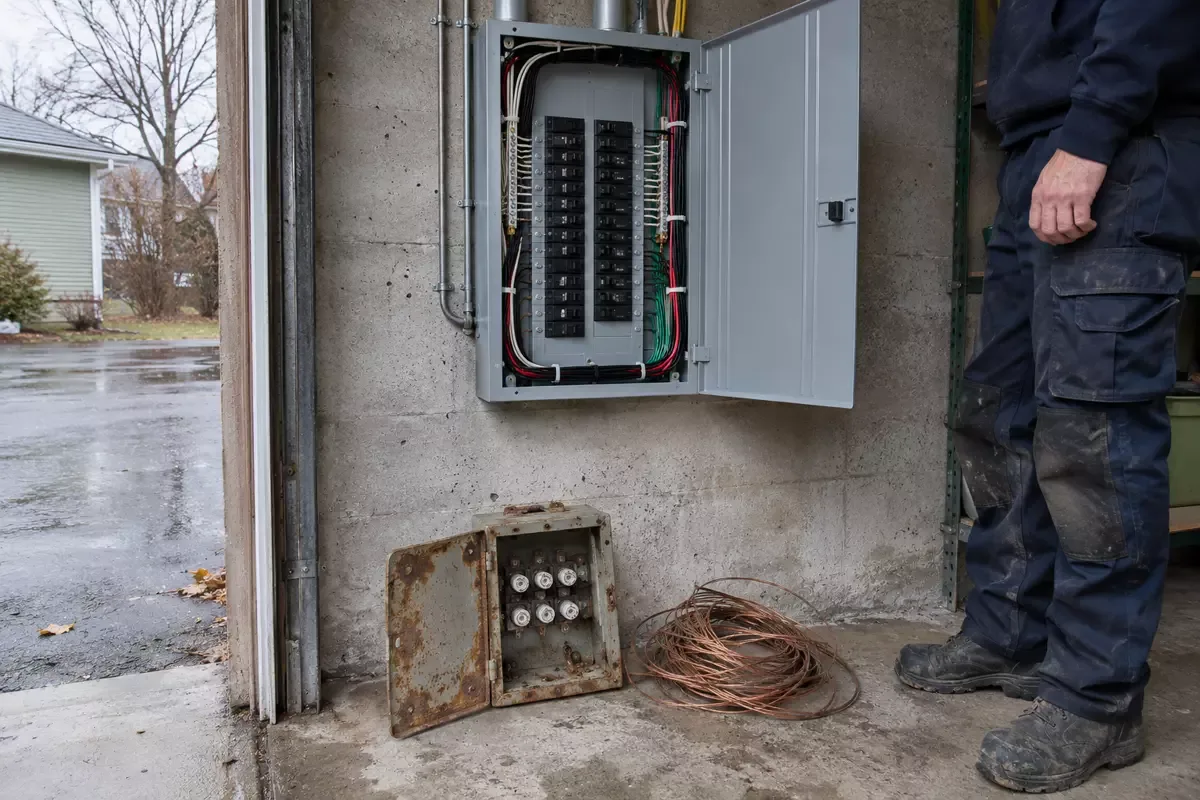
Most new electrical businesses get their first customers from people who already know them, then from search. Do it in this order:
- Tell every past customer, builder and property manager you worked with that you are on your own now, as far as your old employer agreement allows.
- Set up a free Google Business Profile with your service area and hours, and ask every happy customer for a review the same day.
- Introduce yourself to real estate agents, home inspectors and property managers. Inspection reports turn up electrical fixes every week, and the agent needs someone who answers the phone.
- Ask plumbers, HVAC techs and handymen you know to send you the electrical side of their jobs, and send them yours.
- Keep the service area to what you can cross in 30 minutes. Every call outside it adds drive time you cannot bill.
Quote in writing, every time
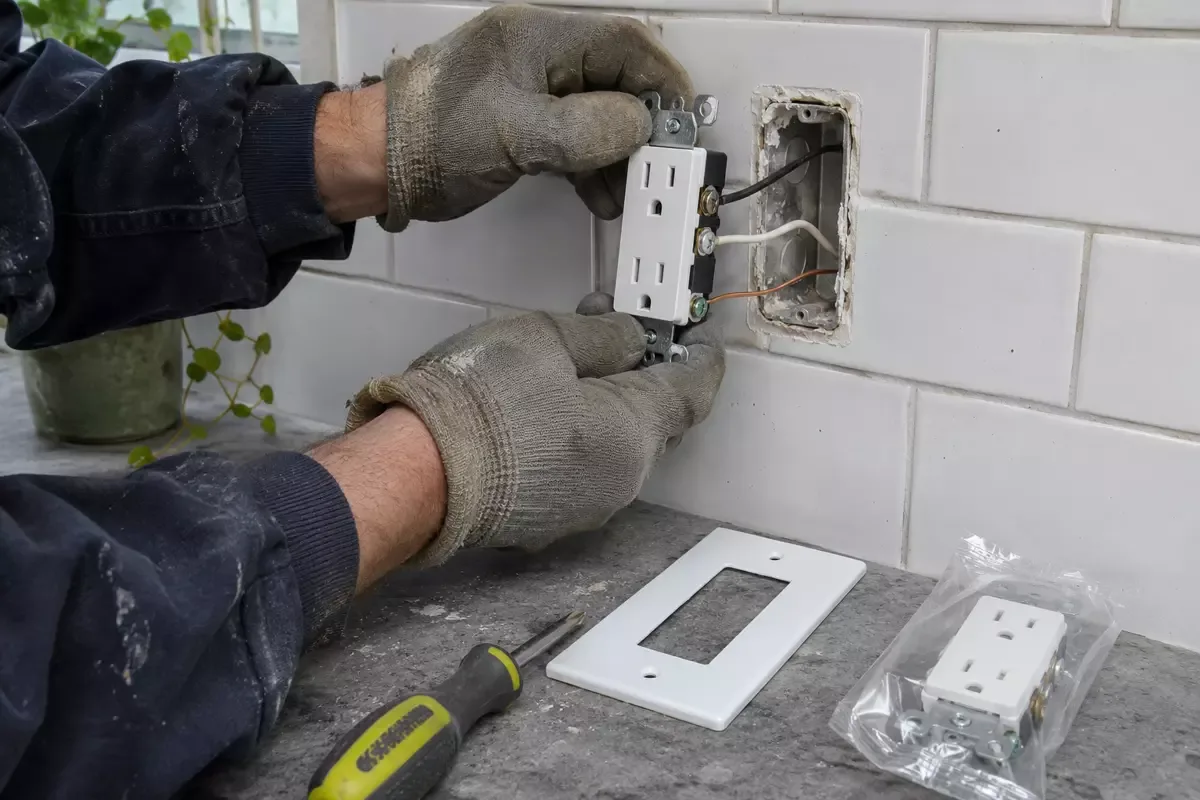
Walk the job before you quote it. Then send a written quote with a fixed price when you can see the whole job, or an estimate when you cannot (an old house with unknown wiring behind the plaster). Put on it:
- What you will do and which devices or parts are included
- The price, and what changes it (aluminum wiring, a code upgrade the inspector requires)
- Whether the permit and inspection are included
- Your warranty on labor and the manufacturer's on parts
- Payment terms, and the deposit on larger jobs
Copy the details onto a work order so the job and the invoice match.
Start your electrical business in order
How to start an electrical business
- Hold the license that lets you contract
Earn the master or contractor license your state requires, and any local registration your city wants before it issues permits.
- Register and insure the business
Pick a structure, register it, get an EIN, open a business bank account, and buy liability insurance, commercial auto and any bond your state requires.
- Set up one van for service work
Hand tools, test gear and enough common parts to finish most service calls on the first visit.
- Set your rate from billable hours
Add up a year of owner pay and overhead and divide by the hours you will really bill, then build flat prices for your common jobs. Outlet work is the easiest place to start, with a first-outlet and per-extra price list that covers most small service calls.
- Start with work that pays at the door
Take service and repair calls first, and add new construction once you can carry 60 days of material and payroll.
- Quote, do the work, invoice and ask for a review
Send a written quote, pull the permit when the job needs one, invoice before you leave and ask for a review that evening.
Run the office from the driveway, not the kitchen table
A notebook, a spreadsheet and a template hold up for the first twenty customers. The wall comes when the phone starts ringing: every call needs a quote typed from prices you keep in your head, a time on the calendar, a reminder, an invoice and a note on what you found behind the panel cover, and you end up doing it at the kitchen table at night. Driveway Desk keeps your price book, so the panel replacement above becomes a quote in a few taps in the customer's garage. It schedules the job and sends the reminder (with the customer's consent to texts, which TCPA rules require), the invoice goes out when you finish and gets paid into your own Stripe or Square account, and each customer's history sits on their record for the next call. If you are weighing the bigger apps, see what to use instead of Jobber as a small crew.
Price it once, then start your first quote from the driveway next time.
Mistakes that cost new electrical businesses money
- Pricing at your old wage. It leaves out the van, insurance, licenses and the half of the day you cannot bill.
- New construction before you can float it. Big invoices paid late, minus retainage, can empty the account while the calendar is full.
- Parts at cost. You pay for the stock, the trip and the callback, and earn nothing on it.
- Working beyond your license. Contracting under someone else's license or skipping a permit can cost you the license and the job.
- Quoting by phone. A price given before you open the panel becomes the price, whatever you find inside.
- Invoicing at the end of the week. Every day between the job and the invoice is a day the customer forgets how fast you came.
Is starting an electrical business worth it?
For a licensed electrician, it is one of the steadier trades to go out on your own in: panels age, houses add chargers, heat pumps and new circuits, and the work has to be done on site by someone licensed. The catch is the license, the cash cushion and the discipline to price from real costs. The setup is close to the same across the trades: our guides on starting a plumbing business and starting a painting business work through the same registration, insurance and first price sheet for those trades, and opening your own HVAC shop adds EPA 608 and a seasonal swing to plan around.
The short version
Hold the license that lets you contract, register and insure the business, set up one van, and set your rate from the hours you will bill, not the hours you work. Start with service work that pays at the door, turn your common jobs into flat prices and put every quote in writing.
Your prices, remembered. Build your first quote on your phone in about two minutes, send it, and get paid into your own account. Start your first quote, or try it free.
Put the method to work
Labor cost calculatorDivide paid-hour costs by the billable-hours ratio, then allow for your target margin to find a selling rate.
Frequently asked questions
It depends on your rate, your billable hours and your overhead, not on the trade itself. You keep what is left after the van, insurance, licenses, tools and the office side are paid. Work it backwards: pick the pay you want, add a year of overhead, divide by the hours you will really bill, and that is the rate you need to charge.
It is possible, but the number comes from the math above, not from the license. Using the same illustrative overhead of $33,000, taking home $200,000 means covering $233,000 a year: about $225 an hour on 1,035 billable hours solo, or a lower rate with an apprentice or a second van adding billable hours. Most owners who get there do it by adding billable hours, not by working longer days alone.
For a licensed electrician who can price from real costs, usually yes: the work is local, steady and has to be done by someone licensed. It is not worth it if you price at your old wage or take on new construction before you have the cash to wait for payment.
Put the method to work
Labor cost calculatorDivide paid-hour costs by the billable-hours ratio, then allow for your target margin to find a selling rate.
Your prices, remembered.
Build your first quote on your phone in about two minutes, send it, and get paid into your own account.
Start your first quoteShare article
About the author
Field notes team
We write practical guides for home service crews of one to five. Our editorial standard is to show the calculation, state its assumptions, cite primary sources for factual claims and date competitor comparisons. We distinguish worked examples from market prices and correct errors when they are found. We do not claim trade licenses or credentials on behalf of the team.
More articles

Running a small crew · 13 min
How to Become an Apprentice Electrician: Union vs Non-Union, Pay, Hours
How to become an apprentice electrician: apply to a union JATC or get hired by a non-union shop, meet the age, diploma and algebra basics, then train paid for 4 to 5 years. Requirements, pay steps, hours and how to apply.

Running a small crew · 12 min
How Long Does It Take to Get an Electrical License? About 4 Years
How long does it take to get an electrical license? About 4 years to journeyman and 6 to master, because states count signed hours. Texas and California numbers, the 7,000 hour exam rule and how to log hours so they count.

Running a small crew · 12 min
How to Become an Electrician: 5 Steps and Real Timelines
How to become an electrician: a high school diploma, a 4 to 5 year paid apprenticeship, about 8,000 logged hours and the license exam. Routes by situation, NJ, WA and Illinois rules, and BLS pay.

Running a small crew · 11 min
Basic House Cleaning Checklist: 12 Tasks, Every Visit
A basic house cleaning checklist of 12 tasks you finish on every visit: kitchen, bathrooms, dusting, beds and floors, in the right order, with real timings for a 3 bed, 2 bath house and how to price it.

Running a small crew · 13 min
What Do I Need to Start a Mobile Detailing Business? Full Checklist
The mobile detailing startup checklist: paperwork and insurance, the wash and interior kit for the services you sell first, how many towels to stock, and the quote, work order and payment setup.

Running a small crew · 13 min
Roofing Company Business Plan: 7 Parts + Cash Flow Example
A roofing company business plan in seven short sections, with a worked example: one reroof priced line by line, revenue by month, and how much cash a busy June ties up before homeowners pay.