How to Start a Plumbing Business: 6 Steps and the Math
Driveway Desk team Updated 19 November 2026 13 min read
Your next job
Less time at the desk.
Build your price book, schedule the next visit and turn completed work into an invoice.
Start your first quoteIn this article
To start a plumbing business, first hold the license your state requires to contract plumbing work, then register and insure the business, stock one truck, and set an hourly rate from the hours you will actually bill. Rules vary by state, so the license that lets you run a company comes before the van lettering, not after.
Short answer
Get the contracting-level plumbing license your state requires, register the business and get an EIN, buy liability insurance (and a bond if your state asks for one), stock one truck for service and repair, and price every job from billable hours, not hours worked.
Which kind of plumbing business should you start?
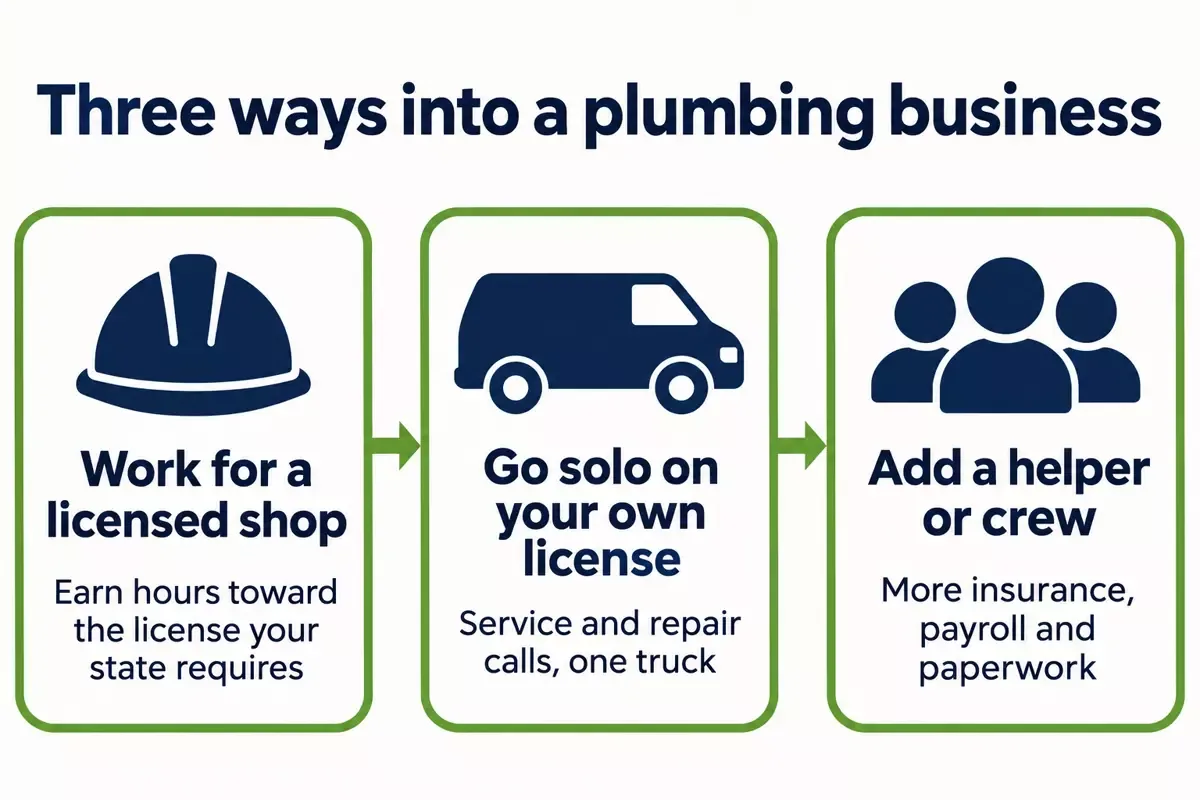
Where you start depends on one thing: which license you hold today. A journeyman can do the work, but in most states only a master or licensed contractor can sell it under their own company name.
| Your situation | Start as | Why |
|---|---|---|
| Apprentice or journeyman, no contracting license yet | Keep working for a licensed shop | You get paid while you earn the hours and the license that lets you contract |
| Licensed to contract, working solo | Residential service and repair, one truck | Small kit, fast cash: leaks, drains, fixtures, water heaters |
| Licensed, ready to hire one to four people | Add a helper or apprentice, then remodels or new construction | Bigger tickets, but payroll, workers' comp and more paperwork |
If you are still on the first row, our guide to becoming a plumber covers the apprentice, journeyman and master steps and the hours each one takes. This post starts where that one ends: the license is in hand and you want your own name on the invoice.
Do you need a license to start a plumbing business?
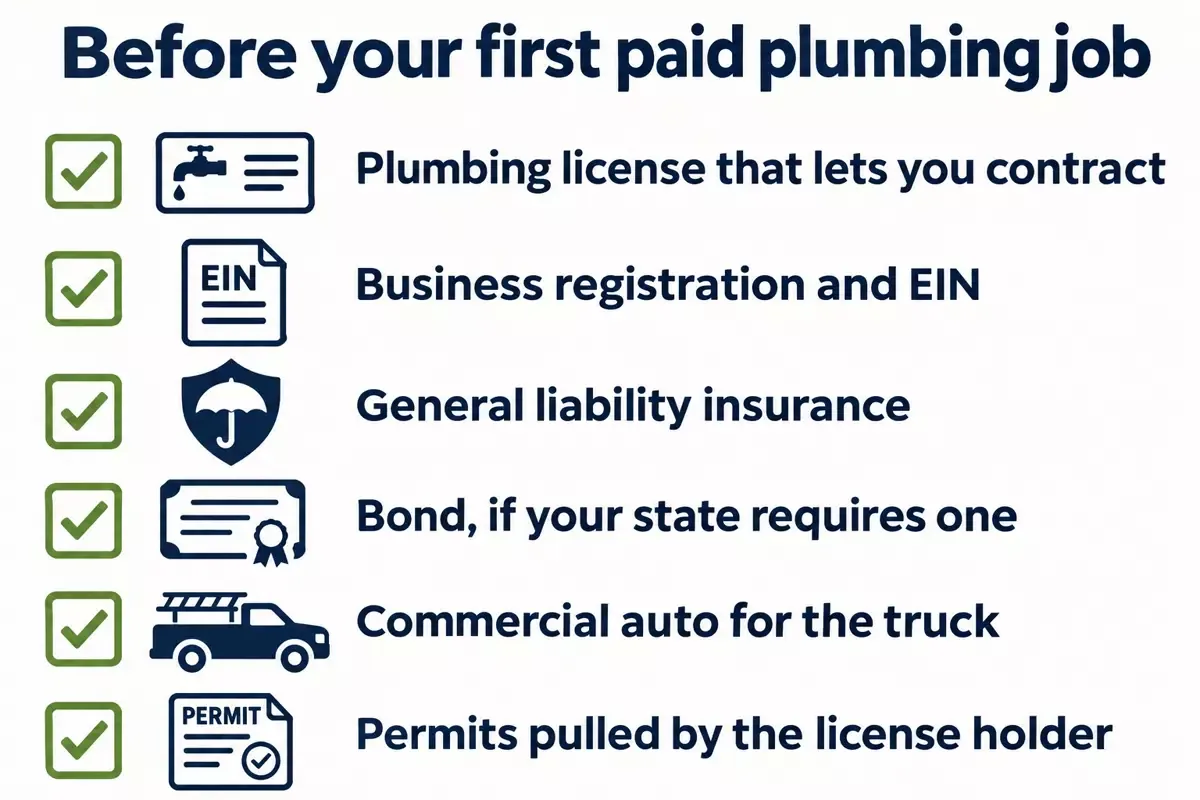
Yes, in practice everywhere. Plumbing touches drinking water and gas lines, so states and many cities license both the plumber and, often, the business. The details differ a lot, so treat this as a checklist to confirm with your state plumbing board, not a ruling.
- A license that lets you contract. Usually a master plumber or plumbing contractor license. In Texas, for example, running a plumbing company takes a master plumber who is registered as the company's Responsible Master Plumber.
- Local registration. Some cities and counties register plumbing contractors separately before they will issue you a permit.
- Business registration and EIN. Pick a structure (many owner-operators start as a sole proprietor or single-member LLC), register it, and get an EIN from the IRS before you hire anyone or open a business bank account. Keep business money in that account from day one, and if the books are not your thing, a bookkeeper who specializes in trade contractors can set up job costing before the receipts pile up.
- Insurance and a bond. General liability is the floor, and many states set a minimum for licensed contractors. Some also want a surety bond. Add commercial auto for the truck and workers' comp the day you hire.
- Permits. Water heaters, repipes and gas work usually need a permit pulled by the license holder and a passed inspection.
The SBA's licenses and permits guide explains how federal, state and local licenses stack. Your state plumbing board sets the exams, insurance minimums and fees.
What equipment does a plumbing business need?
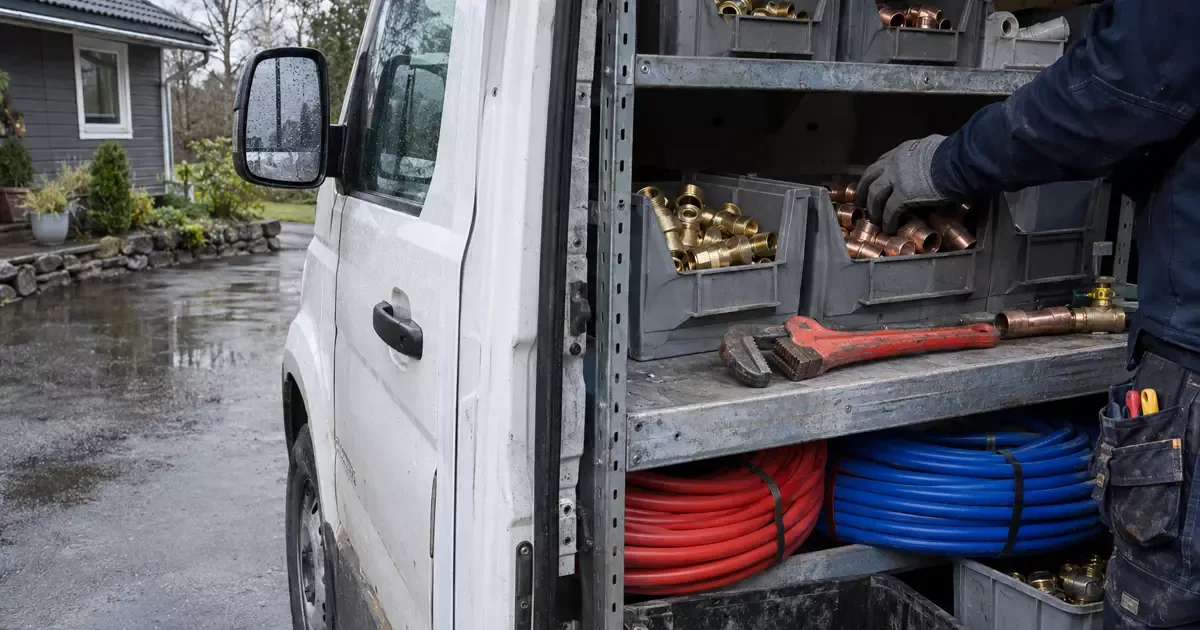
A one-person service plumbing business runs out of one truck or van. You probably own most of the hand tools already. What a business adds is stock, so you fix the job on the first visit instead of driving to the supply house.
- Hand tools: pipe wrenches, a tubing cutter, a basin wrench, a torch and solder kit or a press tool
- A drain machine for sinks and tubs, and a larger one or a rental plan for main lines
- Common stock: shutoff valves, supply lines, P-traps, wax rings, fill valves, flappers, PEX and fittings, thread tape
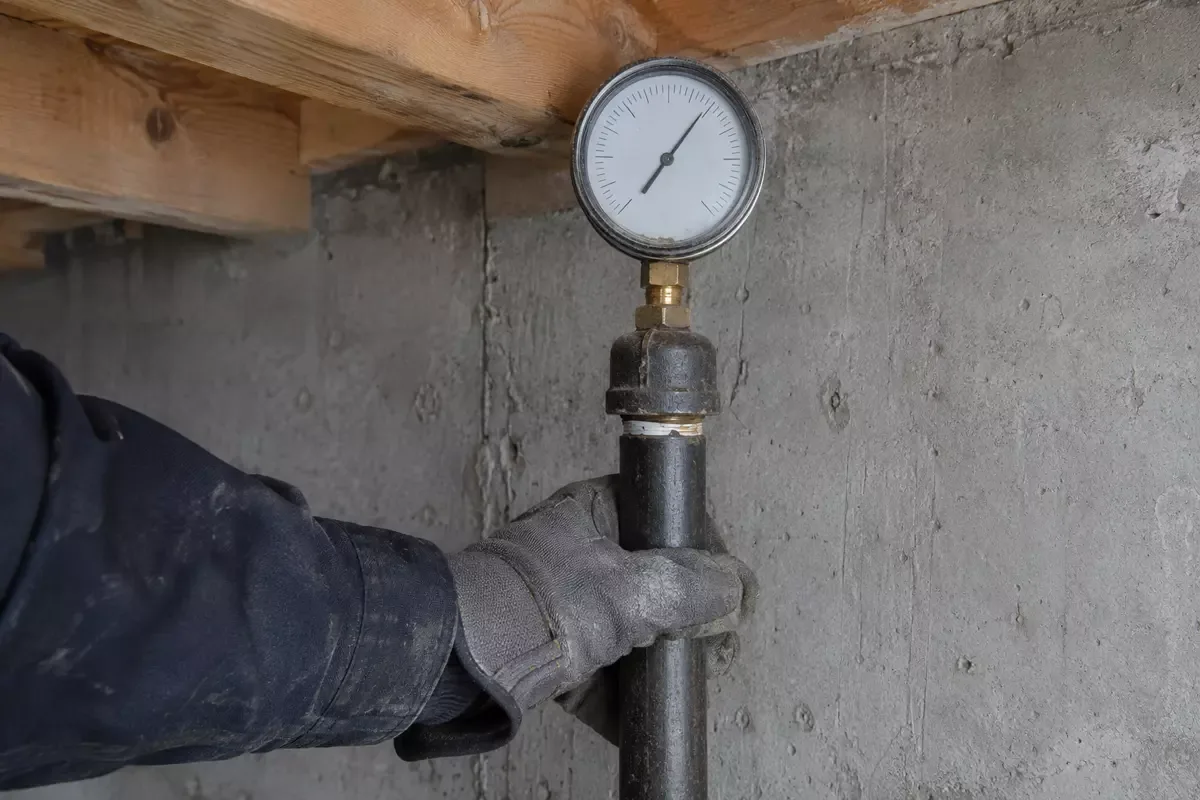
- Test gear: a pressure gauge for gas tests and a multimeter for water heater controls
- Shelving and bins so you can find a part in under a minute
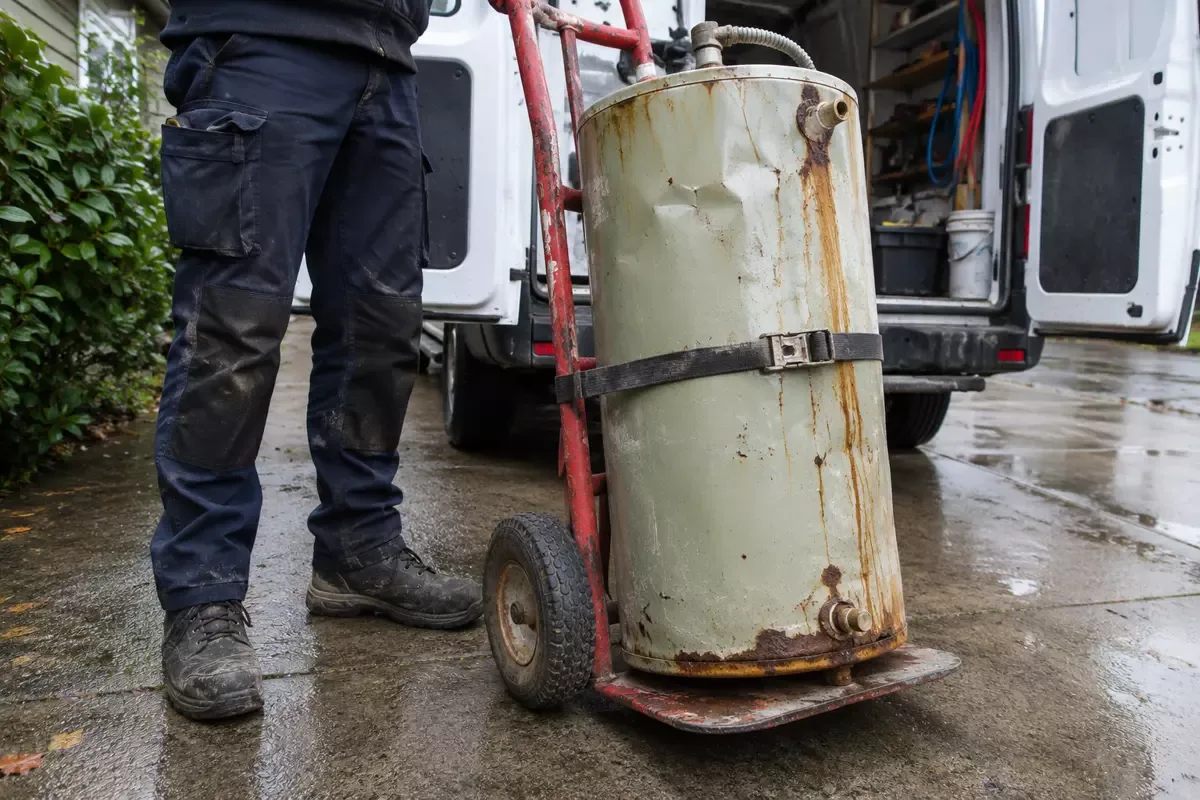
- A hand truck and straps for water heaters
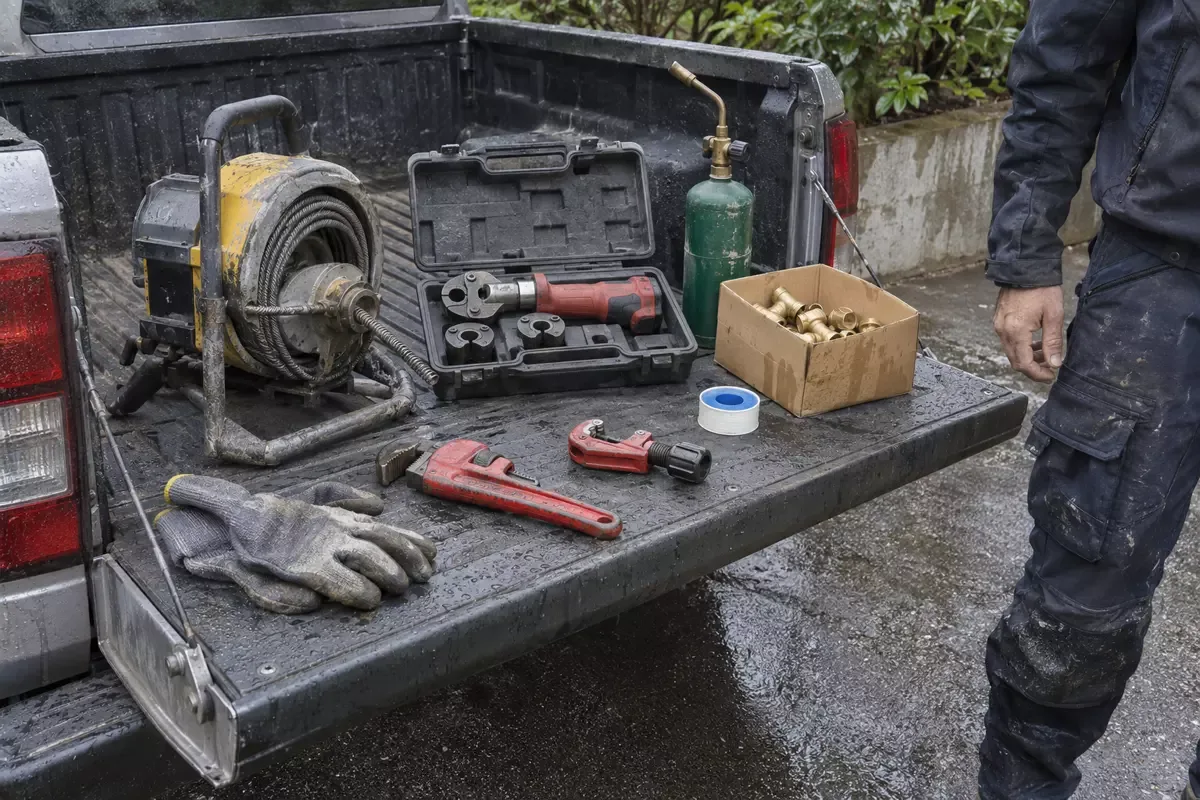
What it costs depends on what you already have. Price each line locally before you spend, and the total is your startup budget.
| Startup cost line | What sets the number |
|---|---|
| Contracting license, local registrations | Your state and city fee schedules |
| Insurance and bond | Your state's minimums, your services, whether you do gas work |
| Truck or van | One you already own costs far less than a new upfitted van |
| Tools and drain machines | New or used, and whether you rent the big sewer machine |
| First parts stock | How many service calls you expect in the first month |
| Business registration, phone, bank account | Your state and structure |
How to price plumbing work: start from billable hours
Most new owners take the hourly wage they earned at the shop, add a bit, and call it their rate. That rate is almost always too low, for one reason.
You will bill about half the hours you work. A 10-hour day for a solo plumber includes driving, the supply house, walking jobs to quote them, and the calls and invoices at night. Only the time on site doing the paid work is billable. Price as if every hour is billable and you work the last half of every day for free.
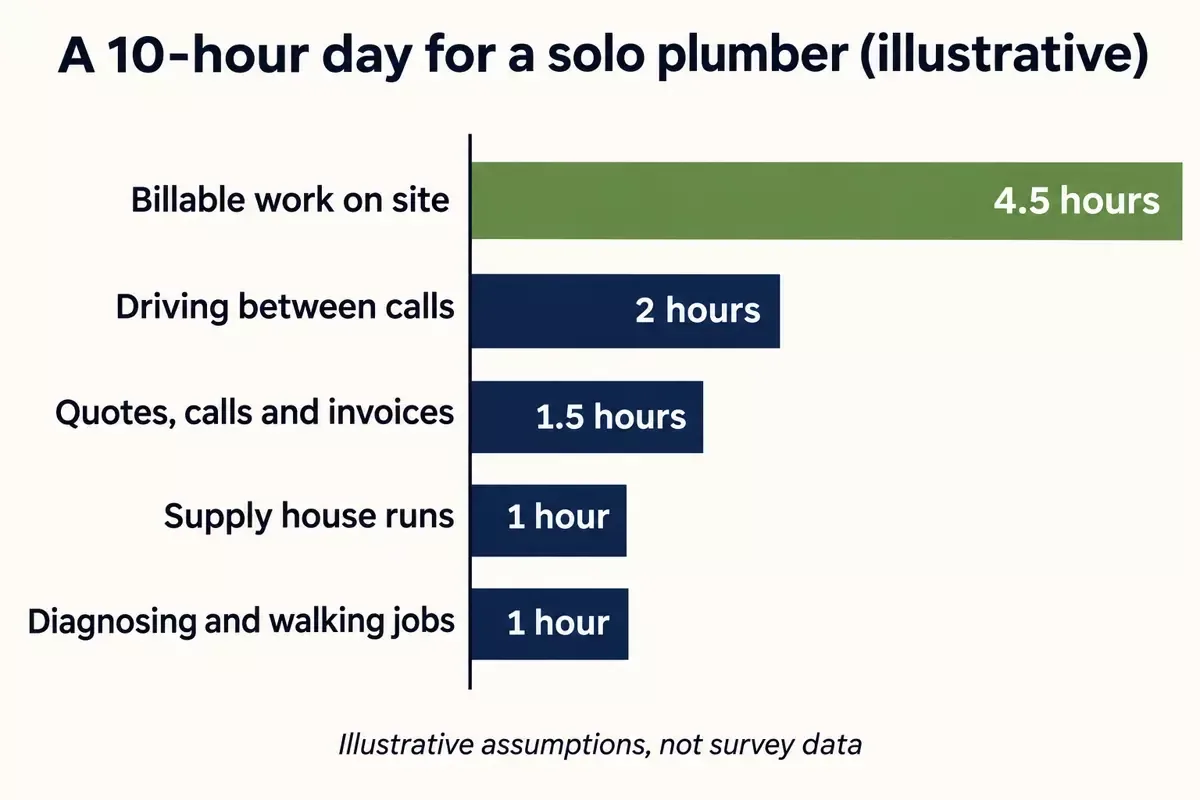
Here is the math with illustrative inputs. They are not market prices: swap in your own numbers.
| Line | Illustrative input | Per year |
|---|---|---|
| Owner pay | What you want to take home before tax | $70,000 |
| Truck | Payment, fuel, maintenance | $14,000 |
| Insurance and bond | Liability, commercial auto | $6,000 |
| Tools | Replacement and repairs | $4,000 |
| License, permits, renewals | State and local fees, continuing education | $2,000 |
| Phone, software, marketing, accounting | The office side | $8,000 |
| Total to cover | $104,000 | |
| Billable hours | 230 working days x 4.5 hours | 1,035 |
| Hourly rate you need | $104,000 / 1,035 | about $100 |
| Same costs, if you assume 8 billable hours | $104,000 / 1,840 | about $57 |
That gap is the whole business. At $57 an hour the year looks full and the bank account looks empty. Check your own number with what an hour of your time really costs, because your days and overhead will differ from these.
Flat rate for the jobs you do every week
Customers want to know the price before you start. Once your hourly rate is real, turn your common jobs into flat prices: hours at your rate, plus parts at your markup, plus any permit. An illustrative 50-gallon gas water heater swap:
| Line | Illustrative input | Amount |
|---|---|---|
| Labor | 4 hours at $100 | $400 |
| Heater and install parts | $780 at cost, 35% markup | $1,053 |
| Permit | Passed through at cost | $75 |
| Haul away the old tank | Disposal | $25 |
| Flat price you quote | $1,553 |
The markup on parts is not padding: it pays for the trip to buy them, the stock on the truck and the callback if one fails. Selling the heater at cost means you install it for free. Test it on the markup and margin calculator before you print a price. Small calls need the same treatment: here is how much to charge to unclog a toilet when the clog turns out to be deeper than the bowl.
Price it once, then start your first quote from the driveway next time.
How do plumbers find clients?
Most new plumbing businesses get their first customers from people who already know them, then from search. Do it in this order:
- Tell every past customer, contractor and property manager you worked for at the shop that you are on your own now, as far as your old employer agreement allows.
- Set up a free Google Business Profile with your service area and hours, and ask every happy customer for a review the same day.
- Introduce yourself to local real estate agents, property managers and general contractors. They need a plumber who answers the phone.
- Pick a service area you can cross in 30 minutes. Every call outside it adds drive time you cannot bill.
Answer the phone and show up on time. In plumbing, that alone wins a lot of second calls. Then follow up every quote that goes quiet: the guide to getting clients across the home service trades shows why old quotes are the cheapest jobs you will win.
Quote in writing, every time
Walk the job before you quote it. Then send a written quote with a fixed price when you can see the whole job, or an estimate when you cannot (a slab leak, a main line you have not scoped yet). Put on it:
- What you will do and which fixtures or parts are included
- The price, and what changes it (a rotten floor under the toilet, a code upgrade)
- Whether the permit and inspection are included
- Your warranty on labor and the manufacturer's on parts
- Payment terms
Copy the details onto a work order so the job and the invoice match.
Start your plumbing business in order
How to start a plumbing business
- Hold the license that lets you contract
Earn the master or contractor license your state requires, and any local registration your city wants before it issues permits.
- Register and insure the business
Pick a structure, register it, get an EIN, open a business bank account, and buy liability insurance, commercial auto and any bond your state requires.
- Stock one truck
Hand tools, a drain machine, test gear and enough common parts to fix most service calls on the first visit.
- Set your rate from billable hours
Add up a year of owner pay and overhead and divide by the hours you will actually bill, then build flat prices for your common jobs.
- Find the first customers close to home
Tell everyone you have worked for, set up your Google Business Profile, meet agents and property managers, and keep the service area tight.
- Quote, do the work, invoice and ask for a review
Send a written quote, pull the permit when the job needs one, invoice before you leave and ask for a review that evening.
Run the office from the driveway, not the kitchen table
A notebook, a spreadsheet and a template hold up for the first twenty customers. The wall comes when the phone starts ringing: every call needs a quote typed from prices you keep in your head, a time on the calendar, a reminder, an invoice and a note on what you found, and you end up doing it at the kitchen table at night. Driveway Desk keeps your price book, so the water heater swap above becomes a quote in a few taps in the customer's garage. It schedules the job and sends the reminder (with the customer's consent to texts, which TCPA rules require), the invoice goes out when you finish and gets paid into your own Stripe or Square account, and each customer's history sits on their record for the next call. If you are comparing the bigger apps, see how Jobber and Housecall Pro compare for a small crew.
Price it once, then start your first quote from the driveway next time.
Mistakes that cost new plumbing businesses money
- Pricing at your old shop wage. It leaves out the truck, insurance, licenses and the half of the day you cannot bill.
- Parts at cost. You pay for the stock, the trip and the callback, and earn nothing on it.
- Contracting before your license allows it. Working under someone else's license or without a permit can cost you the license and the job.
- Quoting by phone. A price given before you see the job becomes the price, whatever you find under the sink.
- A service area that is too wide. An hour on the highway for a $200 call is a loss.
- Invoicing at the end of the week. Every day between the job and the invoice is a day the customer forgets how fast you came.
Is a plumbing business a good business to start?
For a licensed plumber, it is one of the steadier trades to go out on your own in: people cannot put off a burst pipe or a dead water heater, and the work cannot move overseas. The catch is the license and the discipline to price from real costs. The setup is close to the same across the trades (an electrician going out alone follows nearly the same path, with more cash tied up in new construction): our guides on starting a cleaning business and starting a painting business work through the same registration, insurance and first price sheet for those trades.
The short version
Hold the license that lets you contract, register and insure the business, stock one truck, and set your rate from the hours you will bill, not the hours you work. Then turn your common jobs into flat prices and put every quote in writing.
Your prices, remembered. Build your first quote on your phone in about two minutes, send it, and get paid into your own account. Start your first quote, or try it free.
Put the method to work
Labor cost calculatorDivide paid-hour costs by the billable-hours ratio, then allow for your target margin to find a selling rate.
Frequently asked questions
Most new plumbing businesses find their first clients through people they already know: past customers, contractors and property managers from their shop years. After that, a Google Business Profile with steady reviews, relationships with real estate agents and property managers, and a tight service area bring in the repeat calls.
It depends on your rate, your billable hours and your overhead, not on the trade itself. An owner keeps what is left after the truck, insurance, licenses, tools and the office side are paid. Work it the other way round: decide the pay you want, add a year of overhead, divide by the hours you will really bill, and that is the rate you need to charge.
Put the method to work
Labor cost calculatorDivide paid-hour costs by the billable-hours ratio, then allow for your target margin to find a selling rate.
Your prices, remembered.
Build your first quote on your phone in about two minutes, send it, and get paid into your own account.
Start your first quoteShare article
About the author
Field notes team
We write practical guides for home service crews of one to five. Our editorial standard is to show the calculation, state its assumptions, cite primary sources for factual claims and date competitor comparisons. We distinguish worked examples from market prices and correct errors when they are found. We do not claim trade licenses or credentials on behalf of the team.
More articles

Running a small crew · 12 min
How to Become a Plumber: 5 Steps and Real Timelines
How to become a plumber: get hired as an apprentice, register the same week, log 4 to 5 years of hours, pass the journeyman exam, then go for master. Real Texas hours and fees, and why unregistered hours do not count.

Running a small crew · 11 min
Basic House Cleaning Checklist: 12 Tasks, Every Visit
A basic house cleaning checklist of 12 tasks you finish on every visit: kitchen, bathrooms, dusting, beds and floors, in the right order, with real timings for a 3 bed, 2 bath house and how to price it.

Running a small crew · 13 min
What Do I Need to Start a Mobile Detailing Business? Full Checklist
The mobile detailing startup checklist: paperwork and insurance, the wash and interior kit for the services you sell first, how many towels to stock, and the quote, work order and payment setup.

Running a small crew · 13 min
Roofing Company Business Plan: 7 Parts + Cash Flow Example
A roofing company business plan in seven short sections, with a worked example: one reroof priced line by line, revenue by month, and how much cash a busy June ties up before homeowners pay.

Running a small crew · 11 min
How to Get Clients as a Realtor: 5 Channels That Work
How to get clients as a realtor: start with your sphere and past clients, build referral partners among the trade pros already inside homes, then add open houses and one farm area. Includes a 90-day plan and the commission math.

Running a small crew · 14 min
How to Get Bookkeeping Clients: 6 Ways That Actually Work
How to get bookkeeping clients: start with people you know and local tax preparers, sell a fixed-price cleanup first, then pick one niche, such as trade contractors, and become the bookkeeper its owners refer.