How to Start a Mobile Detailing Business: Water, Kit, Prices
Driveway Desk team Updated 23 November 2026 13 min read
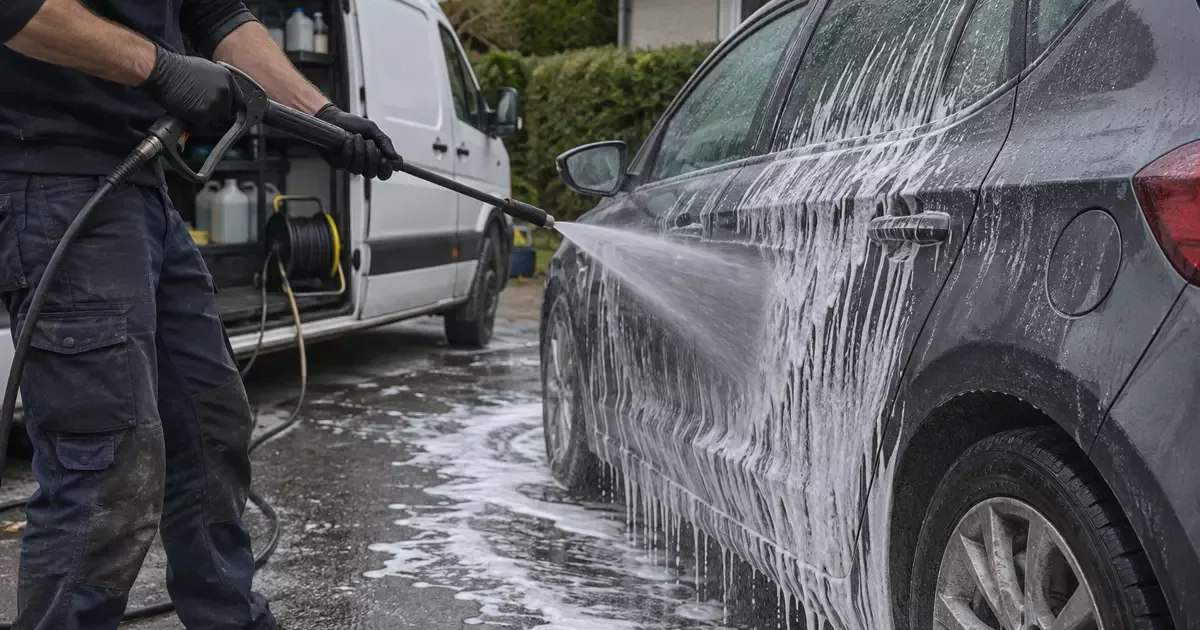
Your next job
Less time at the desk.
Build your price book, schedule the next visit and turn completed work into an invoice.
Start your first quoteIn this article
To start a mobile detailing business, decide where you will work and who you will work for, register and insure the business for your state, buy a water setup and a starter kit sized to those jobs, and write a price sheet built on your real hours before you book a single car. Then sell every full detail with a maintenance wash on the calendar, because a clean car stays clean for weeks, not months.
Short answer
Choose your first customers and where you will park, then solve water before you buy a polisher. Price by the hours you spend at the car plus drive and setup, with a minimum, and book the next wash before you leave.
How hard is it to start a mobile detailing business?
The detailing itself is learnable in a few months of practice on your own and friends' cars. The hard part is the business around it: getting the first ten paying customers, pricing so the drive and setup are covered, and showing up at the same quality every time. Most new detailers underprice the first year, not because the work is poor, but because they quote the time on the car and forget the 30 to 60 minutes of driving, unloading and packing up around it.
Your starting point changes what you buy first:
| Your situation | Start with | Why |
|---|---|---|
| One person, part-time, own car or SUV | Driveway jobs, customer's water and power | Smallest kit; evenings and weekends at houses |
| One person, full-time | Van with a water tank and generator | Work anywhere you can park, five or six days a week |
| Two to five people | One van per pair, maintenance routes | Two people finish a full detail much faster than one |
| Mostly apartments, offices and garages | Rinseless wash kit first | No hose, no runoff, no permission needed for a spigot |
If you also want house and driveway work, starting a pressure washing business uses much of the same water and van setup.
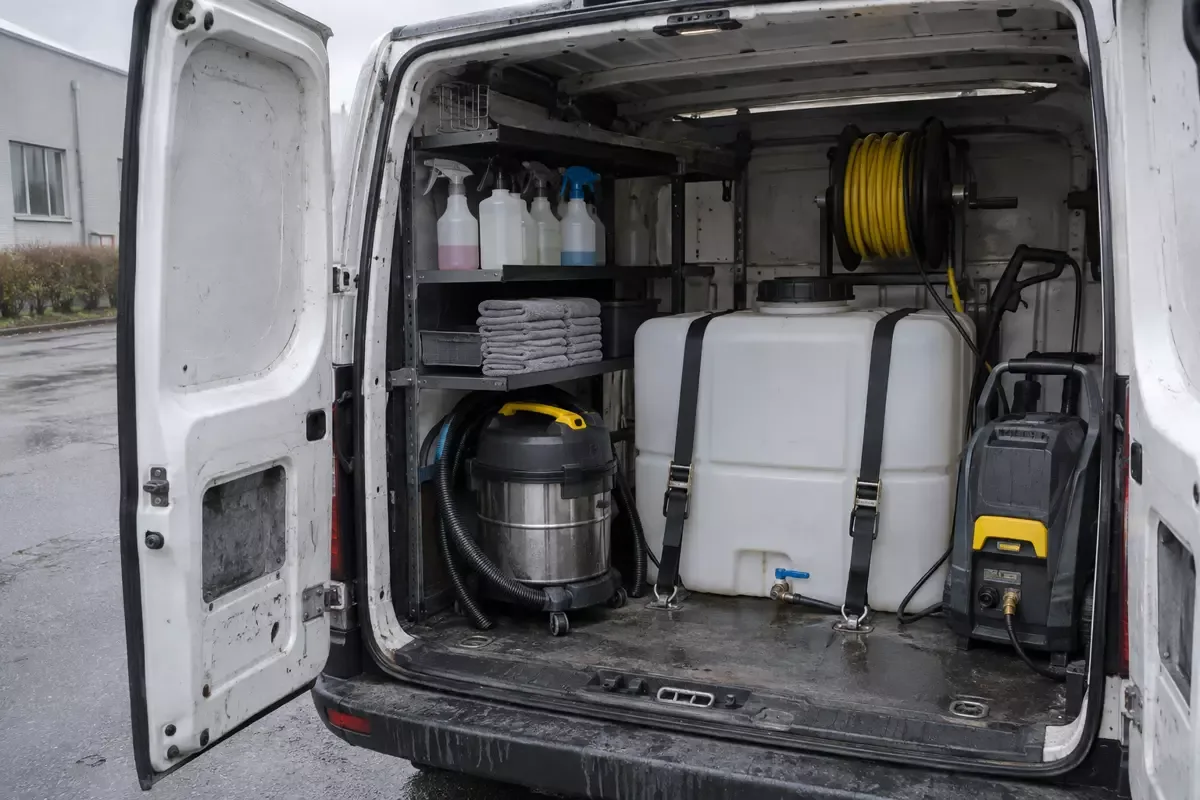
Set up the business basics
Rules vary by state, county and city, so check yours rather than trusting a national checklist:
- Structure and tax ID. Many owner-operators start as a sole proprietor or a single-member LLC. You will want an EIN to open a business bank account or hire.
- Business license. Most cities and counties want a general business license, and some need a separate permit for mobile vendors. Ask your city clerk which applies.
- Insurance. Get general liability quoted before your first paid job, and ask about garagekeepers coverage, which protects the customer's car while it is in your care. A scratched door or a cracked windshield is your bill otherwise.
- Water rules. Ask your city's stormwater office what you may let run into the street. This one decides your kit, so it gets its own section below.
The SBA's 10 steps to start your business walk through the paperwork in order.
Solve water before you buy a polisher
Here is the part most startup guides bury in the equipment list. Mobile means you bring the car wash to the car, and a car wash needs water, power and somewhere for the dirty water to go. Your first big purchase should be the water setup, not the polisher, because water and runoff decide where you are allowed to work. The best polisher you can buy is useless in an office garage that bans hoses.
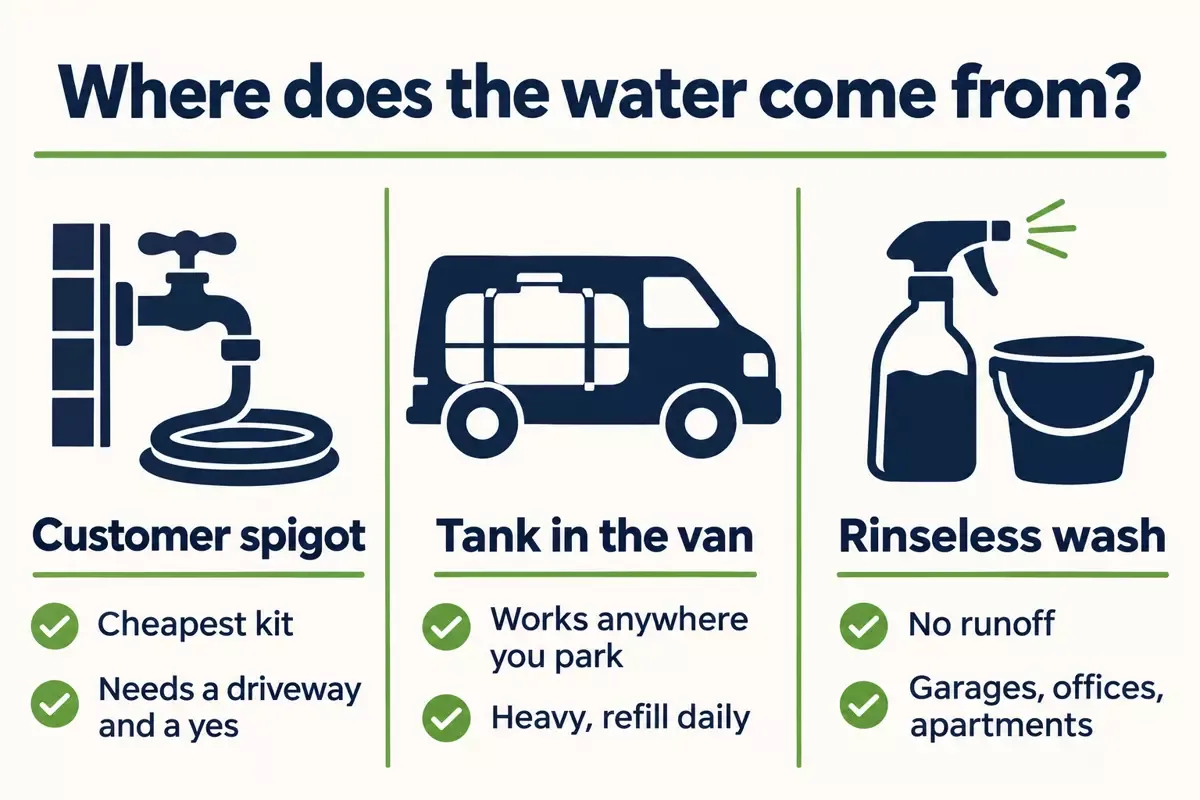
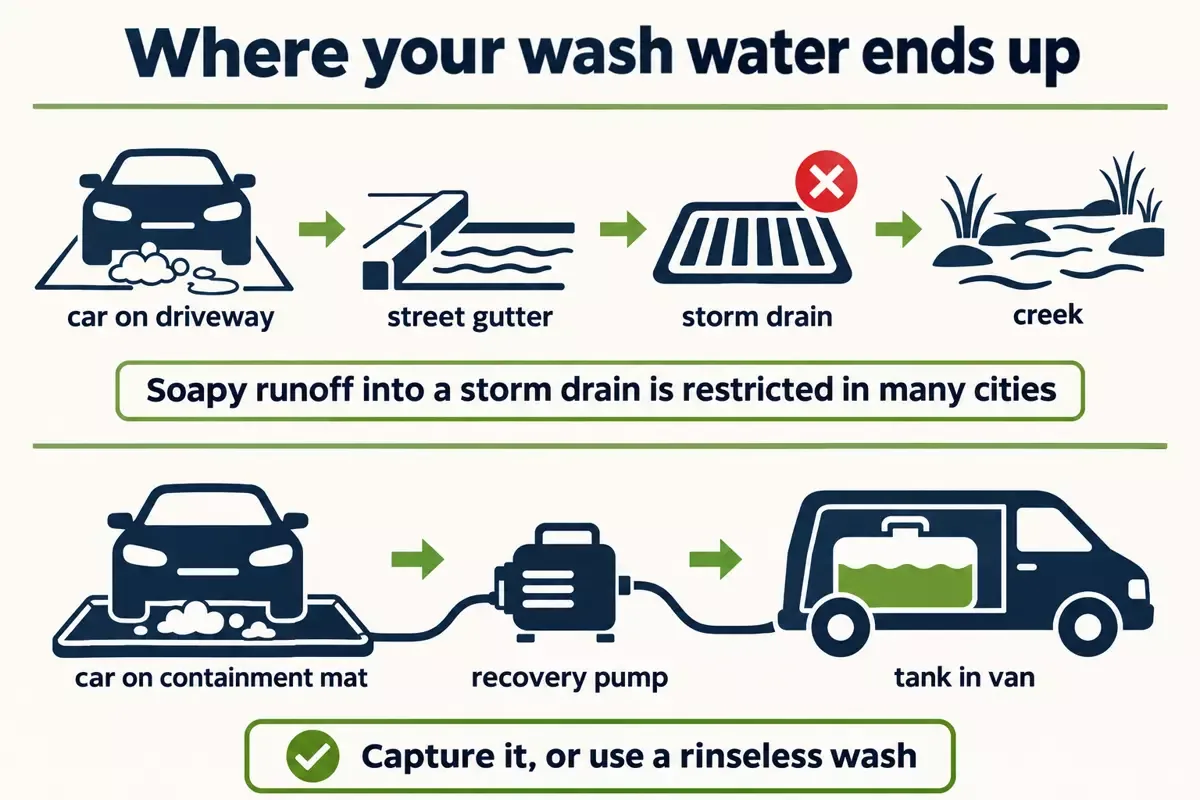
Storm drains usually carry water untreated to local streams, and cities that run permitted storm sewer systems have to keep pollutants out of them (EPA). That is why many cities restrict soapy wash water running down the gutter. You have three ways around it:
- Use the customer's spigot. The cheapest start. It only works at houses with a driveway, and you still need to keep soap out of the street.
- Carry a tank in the van. Works anywhere you can park, but water is heavy: plan the van's payload and refill it every day. Add a containment mat and a recovery pump if your city requires capture.
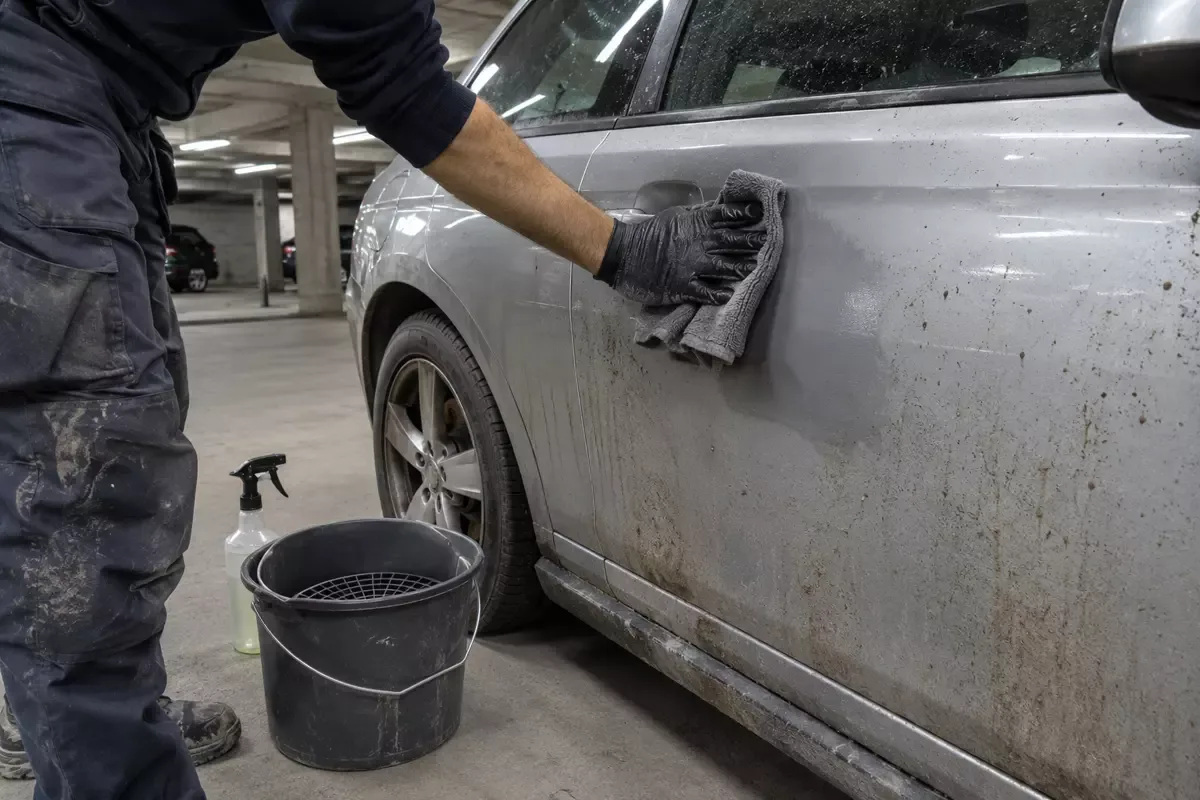
- Rinseless wash. A bucket, a dilution of rinseless wash solution and a stack of microfiber towels. No runoff, so you can work in parking garages, office lots and apartment complexes that would never let you run a hose.
What equipment do you need?
Buy for the jobs you will actually book in the first month, not the detail you saw on video. This is a starter list, split by what you need on day one and what can wait until the work pays for it.
| Item | Day one? | Why |
|---|---|---|
| Two buckets with grit guards, wash mitts, pH-neutral soap | Yes | The basic wash without scratching |
| Microfiber towels (drying, glass, interior) | Yes | You will go through dozens a week; wash them nightly |
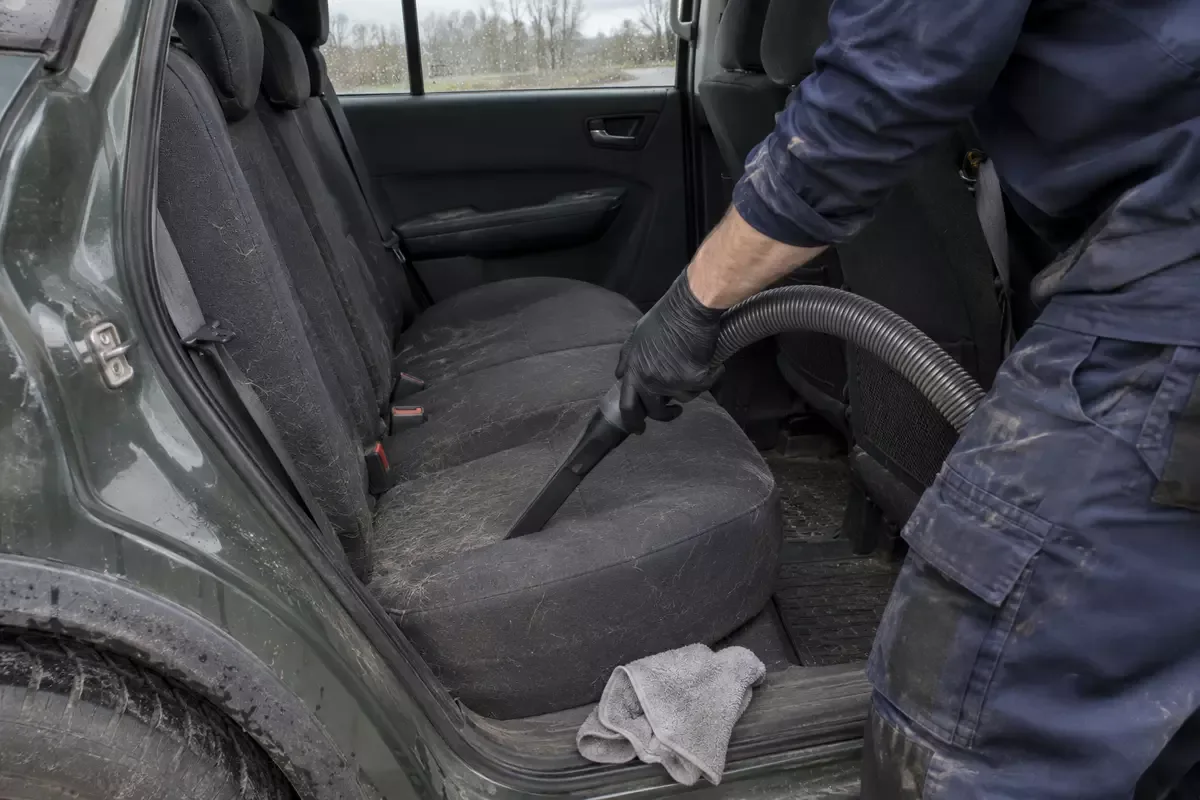
| Wet-dry vacuum with crevice tools | Yes | Every interior job starts here |
| All-purpose cleaner, glass cleaner, wheel cleaner, brushes | Yes | Covers most maintenance washes |
| Rinseless wash solution | Yes | Your fallback wherever a hose is not allowed |
| Water tank, pump and hose reel | When you leave driveways | Frees you from the customer's spigot |
| Generator or power station | When you leave driveways | Powers the vacuum and extractor away from an outlet |
| Hot water extractor for seats and carpets | After the first paid interiors | Turns stained interiors into a priced add-on |
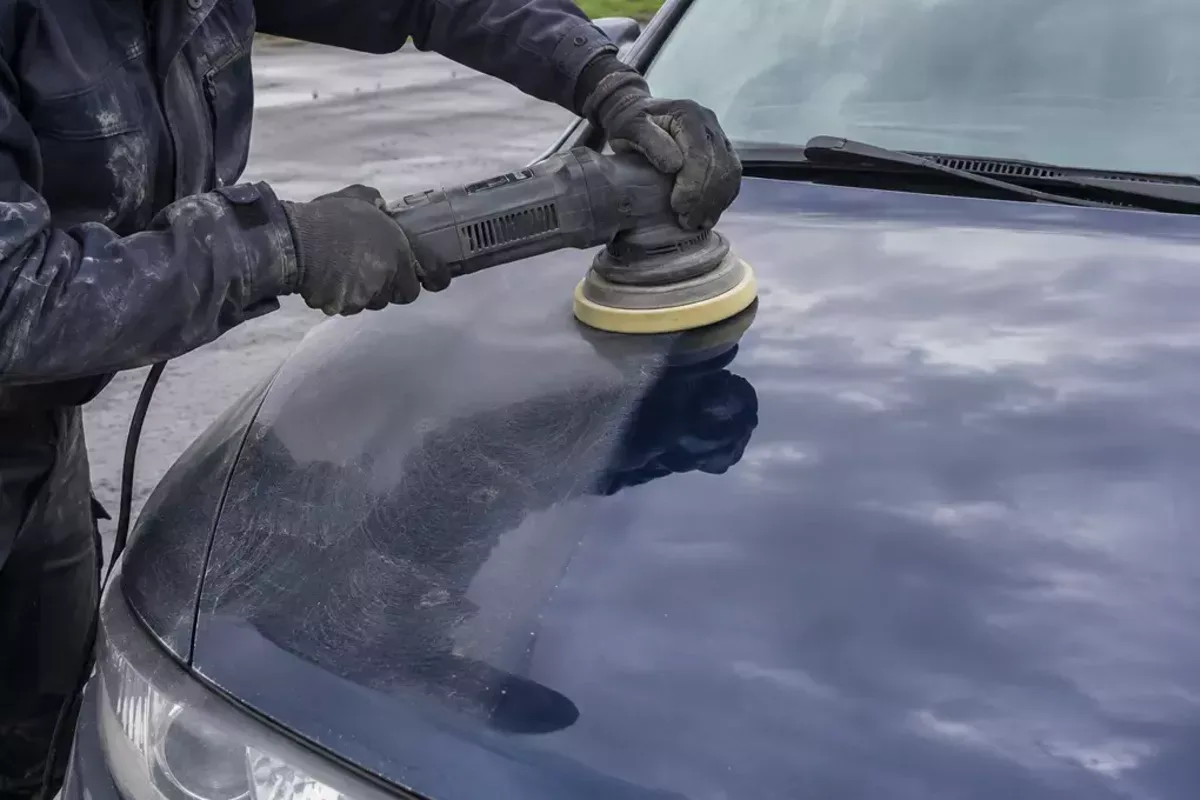
| Dual-action polisher, pads, compounds | After practice on your own cars | Paint correction pays well but punishes beginners |
| Clay bar and tar or sap remover | Early | The add-on that fixes what washing will not lift |
Get three quotes for the big items (van, tank, generator, extractor), add insurance and two months of chemicals and fuel, and that total is your startup budget. Divide it by your average job to see how many cars it takes to pay it back. For the full list by category, from permits and garagekeepers coverage to how many towels to stock, see what you need to start a mobile detailing business.
Price the job by the hour, then add the drive
Most new detailers copy a competitor's menu and wonder why they are busy and broke. Build your prices from time instead. Pick the hourly figure you need (our labor cost calculator works it out from your costs and the hours you can really bill), time each package on your own car, then add the drive and setup that every stop costs you.
The example below uses illustrative inputs, not market prices: $60 an hour and 45 minutes of drive and setup per stop.
| Job | Hours at the car | Plus drive and setup | You quote |
|---|---|---|---|
| Maintenance wash, sedan | 1.0 | 0.75 | $105 |
| Full detail, sedan | 3.0 | 0.75 | $225 |
| Full detail, SUV or truck | 4.0 | 0.75 | $285 |
| Second car, same driveway, maintenance | 1.0 | 0 | $60 |
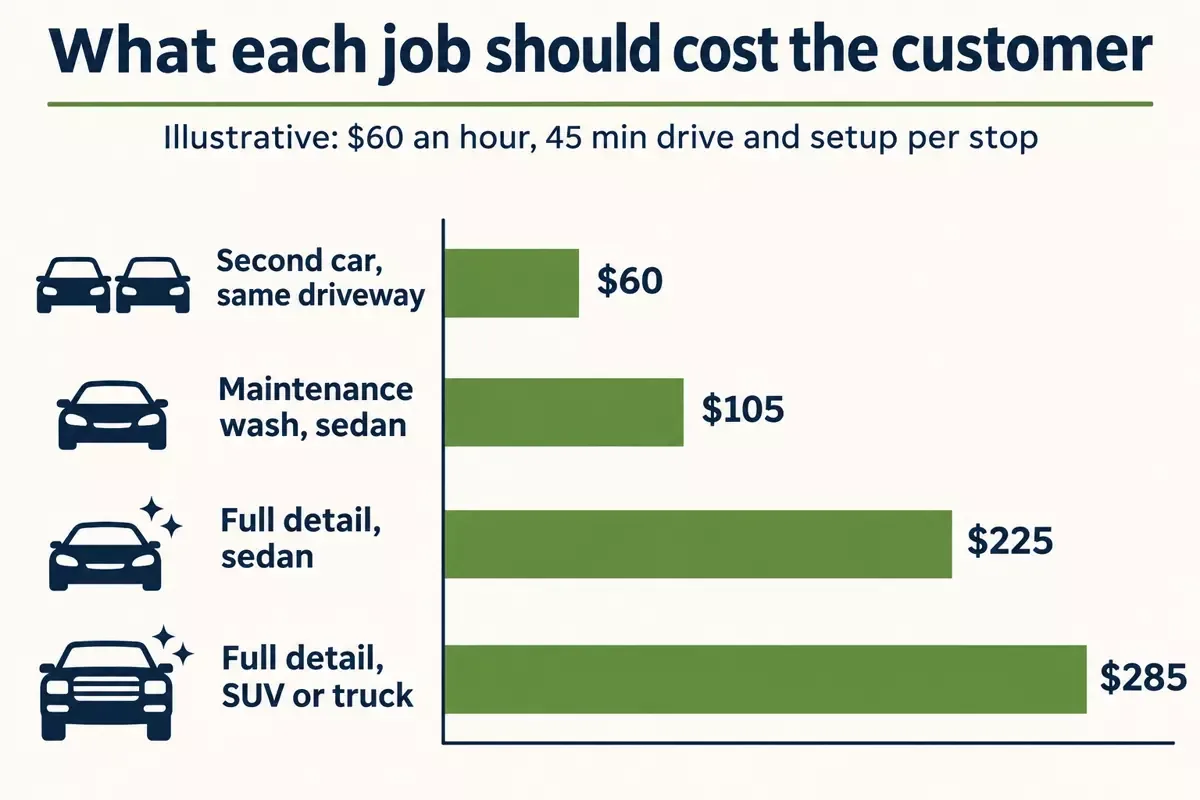
Look at the last row. The second car at the same house carries no drive and no setup, so you can discount it and still earn your full hourly figure. Offer it every time. The same logic sets a minimum charge: a 30-minute job across town costs you the same drive as a full detail.
Then price the hard stuff as add-ons, never inside the package: pet hair, tar and tree sap, baked-on bird droppings, heavy stains, odor treatment. Put each one on a quote template as its own line so the customer sees what they are paying for. Check your package margin with the markup and margin math before you print the menu.
Price it once, then start your first quote from the driveway next time.
Where the money is: the maintenance wash
A full detail wins the customer. The maintenance wash keeps them. A car that was fully detailed only needs a wash and a quick interior every two to four weeks to stay that way, and that visit is short, easy and booked without a sales pitch. Sell it at the end of the first full detail while the customer is looking at the car, and put the next date on your calendar before you pack up.
If you text reminders, get the customer's consent first (the TCPA applies to marketing texts). For finding the first customers in the first place, the playbook in how to get cleaning business clients works the same way for cars: neighbors, local groups, and asking every happy customer for a review.
Start your business in order
How to start a mobile detailing business
- Choose your first customers and where you will park
Houses with driveways, apartment complexes, or offices. Pick one group first; it decides your water setup.
- Register and insure the business
Structure, EIN, local business license, general liability and garagekeepers coverage. Check your state and city rules.
- Solve water and power
Customer's spigot, a tank in the van, or rinseless. Ask your city what you may let run into the street.
- Buy the day-one kit
Buckets, towels, vacuum, cleaners and rinseless solution. Add the tank, generator, extractor and polisher as the work pays for them.
- Write the price sheet
Hours at the car plus drive and setup, a minimum charge, a second-car discount and add-on lines.
- Book, detail and invoice on the spot
List the packages and add-ons on a work order, do the job, and send the invoice before you drive off. Then book the maintenance wash.
Run it from your phone, not the kitchen table
A notebook and a spreadsheet work for the first dozen cars. The wall comes after that: you re-type the same package prices into every quote at night, invoices go out days late, and the maintenance washes never get booked because nobody remembers whose car is due. Driveway Desk keeps your price book, so a quote is a few taps in the customer's driveway, the invoice goes out when the car is done and gets paid into your own Stripe or Square account, and every customer's cars and visit history sit on their record for the next booking. If you are comparing the bigger apps, here is what Jobber costs a small crew.
Price it once, then start your first quote from the driveway next time.
Mistakes that cost new detailers money
- Pricing the car, not the stop. A one-hour wash across town with 45 minutes of driving and setup pays you for a little over half the time you spent.
- Buying the polisher before the water. The garage, office or apartment job you cannot do is the one you will lose most often.
- Letting soap run down the street. A complaint to the city can cost more than a containment mat. Ask your stormwater office first.
- Promising every stain or scratch comes out. Note existing damage and photos before you start, and quote correction as an attempt in writing. An estimate is the honest format when the result is uncertain.
- No customer list. Every car without a name, address, package and date on record is a maintenance wash you will never get.
Start with where you can work, not the biggest rig
Pick your first customers, find out where your water is allowed to go, buy the kit that suits those jobs and price every stop from your real hours with a minimum. Then book the maintenance wash before you leave every full detail. The kit makes the car look good; the calendar builds the business. If you add seat and carpet extraction, starting a carpet cleaning business covers the same machine, and you can check your package prices against what an hour of your time really costs.
Put the method to work
Labor cost calculatorDivide paid-hour costs by the billable-hours ratio, then allow for your target margin to find a selling rate.
Frequently asked questions
The detailing is learnable with a few months of practice; the business is the harder part. New detailers usually struggle with finding the first customers and with pricing, because they quote the time at the car and forget the drive and setup around it. Start small, time every job and raise prices once your calendar fills.
It depends mostly on water and power. A driveway-only kit that uses the customer's spigot and outlet is the cheapest start; a van with a water tank, pump, generator and extractor costs far more. Get three local quotes for each big item, add insurance and two months of supplies, then divide by your average job to see how many cars pay it back.
Two buckets with grit guards, wash mitts, pH-neutral soap, plenty of microfiber towels, a wet-dry vacuum, all-purpose, glass and wheel cleaners, brushes and a rinseless wash solution. Add a water tank, generator, hot water extractor and dual-action polisher as paying work justifies them.
Most places require a general business license, and some cities add a mobile vendor permit or rules about wash water entering storm drains. Requirements vary by state and city, so check with your city clerk and stormwater office. There is no national detailing license.
Tar, tree sap, baked-on bird droppings and embedded pet hair are the usual problems, along with old stains in cloth seats. None of them come off with a normal wash, so price each one as its own add-on line using a clay bar, a sap or tar remover or an extractor, and quote it as an attempt when the damage is old.
Start with neighbors, friends and local community groups, and do a few cars at a fair price in exchange for honest reviews and photos. Offer a discount on a second car at the same house, and book every full-detail customer into a maintenance wash before you leave so your first customers keep coming back.
Put the method to work
Labor cost calculatorDivide paid-hour costs by the billable-hours ratio, then allow for your target margin to find a selling rate.
Your prices, remembered.
Build your first quote on your phone in about two minutes, send it, and get paid into your own account.
Start your first quoteShare article
About the author
Field notes team
We write practical guides for home service crews of one to five. Our editorial standard is to show the calculation, state its assumptions, cite primary sources for factual claims and date competitor comparisons. We distinguish worked examples from market prices and correct errors when they are found. We do not claim trade licenses or credentials on behalf of the team.
More articles

Running a small crew · 13 min
What Do I Need to Start a Mobile Detailing Business? Full Checklist
The mobile detailing startup checklist: paperwork and insurance, the wash and interior kit for the services you sell first, how many towels to stock, and the quote, work order and payment setup.

Running a small crew · 13 min
Roofing Company Business Plan: 7 Parts + Cash Flow Example
A roofing company business plan in seven short sections, with a worked example: one reroof priced line by line, revenue by month, and how much cash a busy June ties up before homeowners pay.

Running a small crew · 11 min
How to Get Clients as a Realtor: 5 Channels That Work
How to get clients as a realtor: start with your sphere and past clients, build referral partners among the trade pros already inside homes, then add open houses and one farm area. Includes a 90-day plan and the commission math.

Running a small crew · 14 min
How to Get Bookkeeping Clients: 6 Ways That Actually Work
How to get bookkeeping clients: start with people you know and local tax preparers, sell a fixed-price cleanup first, then pick one niche, such as trade contractors, and become the bookkeeper its owners refer.

Running a small crew · 13 min
How to Get Clients for Your Home Service Business: 7 Ways
How to get clients for a home service business: tell everyone you know, verify a free Google Business Profile, ask for reviews, work the street around every job, and follow up every quote you already sent before you buy a single lead.

Running a small crew · 13 min
How to Get a Contractor License in Texas: Who Needs One
Texas licenses the trade, not the title. General contractors, remodelers and roofers need no state license, just city registration. Electrical, A/C and plumbing contractors need TDLR or TSBPE licenses, experience, an exam and $100,000 to $300,000 insurance.