How to Get Bookkeeping Clients: 6 Ways That Actually Work
Driveway Desk team 19 November 2026 14 min read
Your next job
Less time at the desk.
Build your price book, schedule the next visit and turn completed work into an invoice.
Start your first quoteIn this article
To get bookkeeping clients, start with the people you already know and the tax preparers who see messy books every spring, then pick one niche and become the bookkeeper everyone in it recommends. Sell a fixed-price cleanup as the first job and a monthly package as the business.
This guide uses one niche as the worked example: small home-service crews such as plumbers, HVAC techs, electricians, cleaners and lawn crews. They are busy, their paperwork lives in the truck, and they talk to each other constantly. That makes them one of the easiest groups to build a bookkeeping practice around.
Short answer
Referrals first, one niche second, directories last. Open with a fixed-price cleanup and turn it into a monthly client.
Where do bookkeeping clients come from?
Most new bookkeepers get their first clients from people who already trust them, not from ads. The order below runs from fastest and cheapest to slowest.
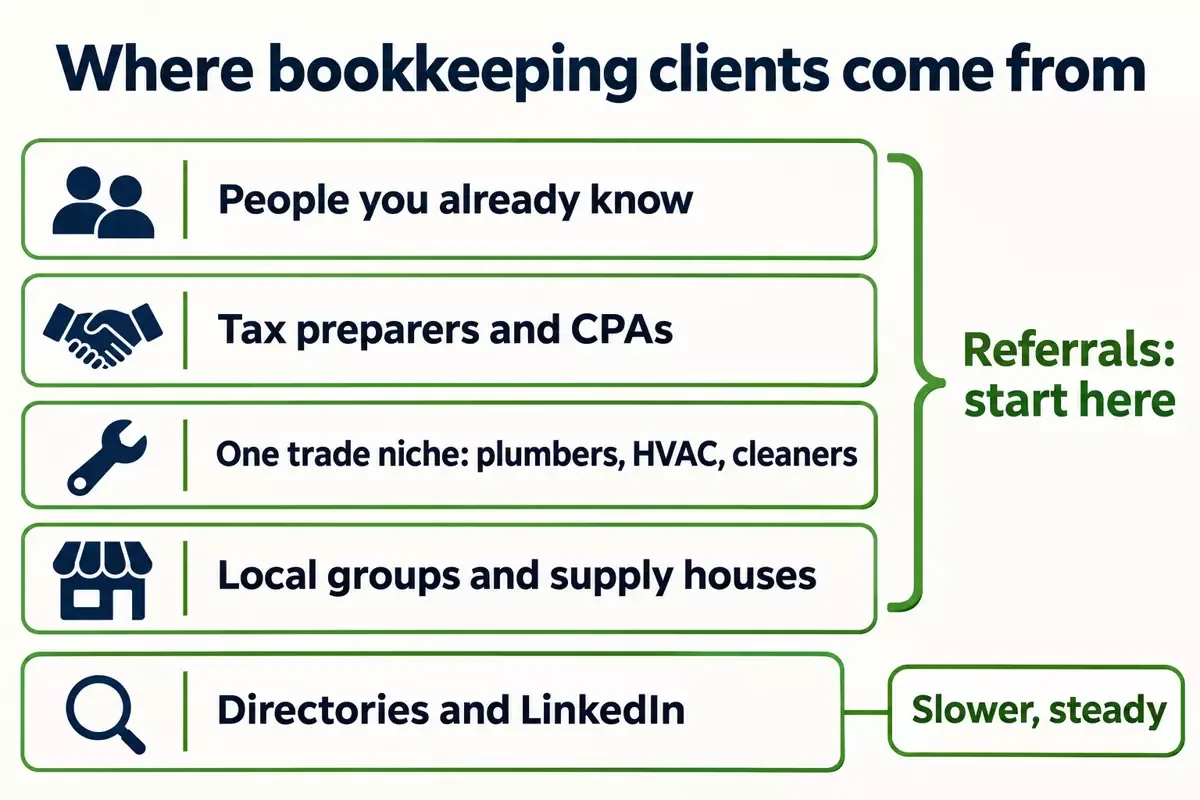
| Channel | Cost | How fast it works | Best for |
|---|---|---|---|
| People you already know | Free | Days | Your first one to three clients |
| Tax preparers and CPAs | Free, you trade referrals | Weeks | Steady cleanup work, every spring |
| One niche you know well | Free to cheap | One to three months | Becoming the default name |
| Local groups, trade counters, associations | A few hours a month | One to three months | Meeting owners face to face |
| LinkedIn posts and local groups online | Free, takes time | Three months and up | Being remembered when the need comes |
| Software and accountant directories | Usually free | Slow and uneven | Filling gaps once you have reviews |
Paid ads sit off this table on purpose. A bookkeeping client is a trust purchase. People hand you their bank logins and their tax risk, so they want a name someone vouched for.
Pick one trade and become its bookkeeper
Small business owners hire the bookkeeper their peers already use, so the fastest way to get bookkeeping clients is to stop marketing to "small businesses" and become the bookkeeper for one trade. A generalist competes with every bookkeeper in town. The person who "does the books for half the plumbers on the east side" gets called by name.
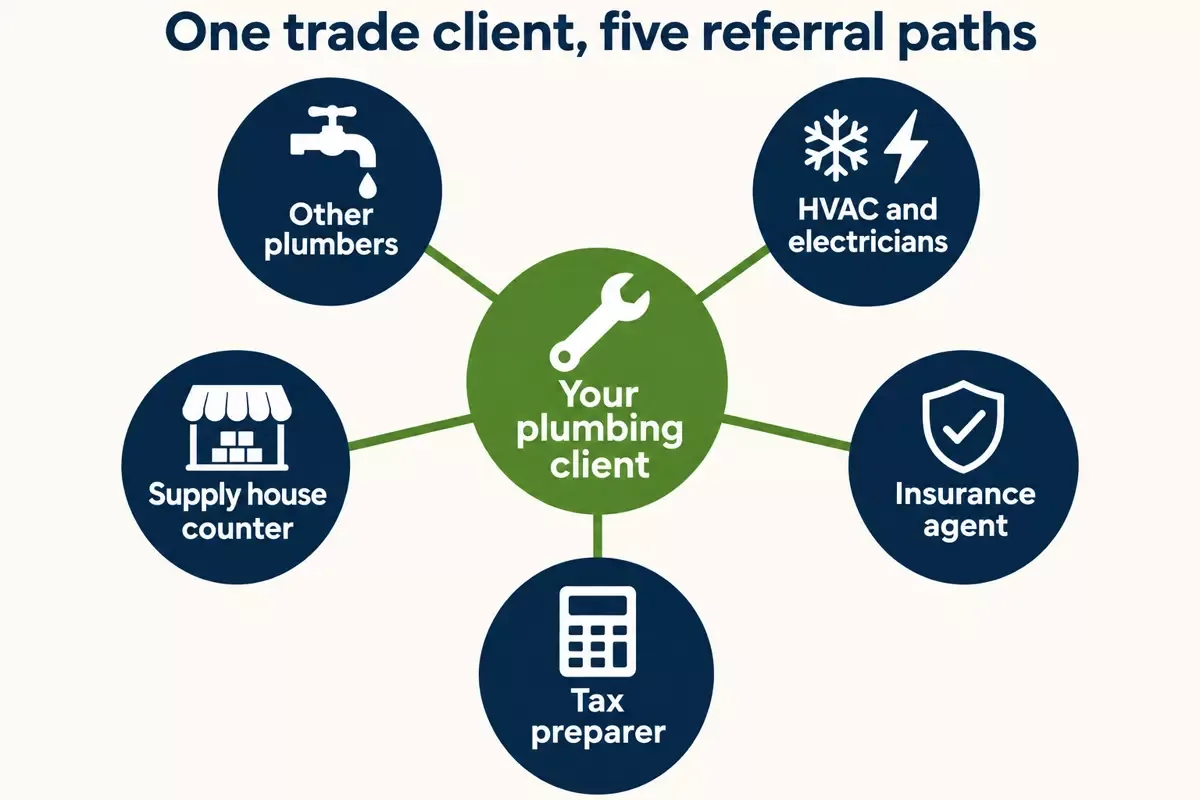
Trade contractors are a strong niche for three reasons:
- The books are messy in the same way. Supply-house receipts on the dash, invoices on a carbon pad, deposits that never get matched to a job. Once you fix it for one crew, you know exactly how to fix it for the next.
- They need job costing, not just a tidy ledger. Most small crews do not know which jobs made money. If you can tell a plumber that water heater swaps pay and drain calls do not, you are worth far more than data entry.
- They refer each other. Plumbers know electricians, HVAC techs know the guy at the supply counter, and everyone has the same insurance agent. One happy client opens five doors. Real estate agents build their business the same way, which is why the realtor client guide tells them to partner with the trades.

If you came out of a trade company's office, that is your niche. You already know what a service call, a trip charge and a price book are. If you want the owner's side of it, the guides to starting a plumbing business and starting an HVAC business show what the first year of paperwork looks like from the truck.
Which niche fits where you are now?
Pick the niche where you already have a head start. The table is a verdict, not a menu.
| Your situation | Start with | Why |
|---|---|---|
| Brand new, no clients yet | People you know, then one cleanup job | You need one finished file and one reference before anything else works |
| Former office manager at a trade company | That trade, starting with your old boss's contacts | You speak the language and can name the problems before they do |
| You already prepare tax returns | Your own tax clients with messy books | They already trust you and you already see the mess |
| Your spouse or family runs a crew | That crew, then their trade friends | A real case study inside a week |
| You like routine monthly work | Recurring-route trades: cleaning, lawn, pool, pest | Lots of small invoices, steady volume, easy monthly packages |
How do you find your first bookkeeping client?
Your first client almost always comes from someone you already know or someone they know. Tell people, specifically, what you do and who you do it for, then ask for one name.
How to get your first 5 bookkeeping clients
- Pick one niche
Choose the trade or business type where you already have contacts or experience. Write one sentence: "I do the books for small plumbing and HVAC crews."
- Message 50 people you know
Family, old coworkers, neighbors, your gym. Say what you do and who you do it for, then ask: "Who do you know who runs a crew and hates paperwork?"
- Meet two tax preparers
Offer to take the cleanup work they do not want. Ask what their messiest small business files look like.
- Sell one fixed-price cleanup
Quote a flat price to catch up a set of books. It is a smaller yes than a monthly contract.
- Turn the cleanup into a monthly client
When the books are current, show the owner what they learned and offer to keep them that way every month.
- Ask for a referral and a review
Ask every happy client for one name in their trade and a short written review you can show the next prospect.
1. Start with people you already know
Write down 50 names before you build a website. You need clients more than you need a logo. Tell each person the one sentence about your niche, then ask for an introduction, not for work.
The ask matters. "Do you need a bookkeeper?" gets a no. "Who do you know who runs a small crew and does the paperwork at night?" gets a name. For more ways to get in front of service businesses, the guide to getting clients for a home service business covers the channels your future clients use themselves.
2. Partner with tax preparers and CPAs
Tax preparers see the worst books in town every spring, and most of them do not want to fix them. Offer to take that work. They get cleaner files next year; you get a steady stream of owners who already know they need help.
Be clear about scope. If you plan to prepare federal tax returns for pay yourself, the IRS says anyone who does that must have a valid PTIN. Many bookkeepers stay on the books side and refer tax work back to their partner, which keeps the referrals flowing both ways.
3. Sell a fixed-price cleanup first
A cleanup is the easiest first yes. The owner has a pile of paper and a deadline, and a flat price for "get me caught up" is easier to agree to than an open-ended monthly bill.

Price the cleanup by months behind and accounts to reconcile, not by the hour. Hourly cleanup scares owners because they cannot see the end. A flat price also rewards you for getting faster. Once the books are current, sit down with the owner, show them one thing they did not know, such as which job type lost money last quarter, and offer the monthly package right then.
4. Show up where your niche already gathers
Small contractors do not read accounting blogs. They stand at the supply-house counter at 7 a.m., go to trade association meetings, and ask questions in local business groups online.
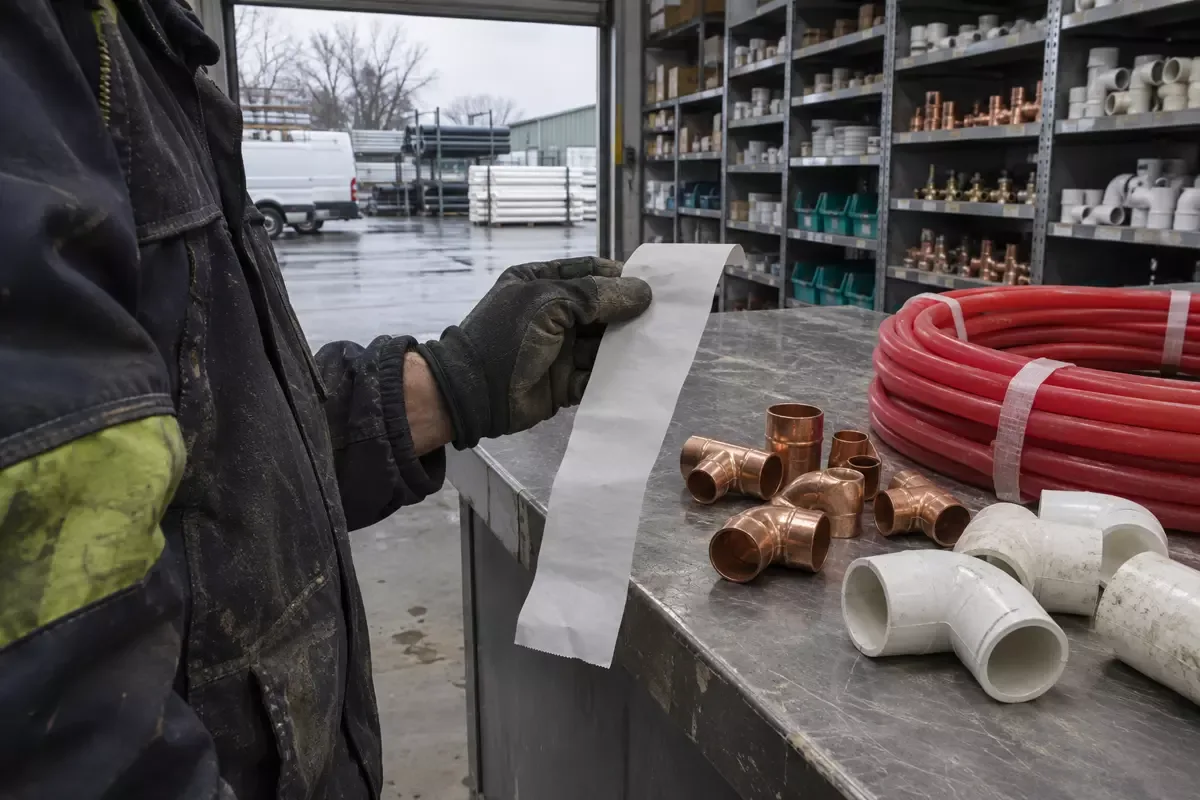
Go where they are. Ask the counter manager at a plumbing or electrical supply house if you can leave cards. Ask the local chapter of a trade or home builders association whether they take associate members. Answer bookkeeping questions in local groups without pitching. Be the person who explained sales tax on materials clearly, and people will message you.
5. Post like a specialist on LinkedIn and in local groups
Short posts that solve one problem build your name over months. Write for your niche, not for other bookkeepers.
Good topics for a trade niche:
- How to tell which jobs actually made money
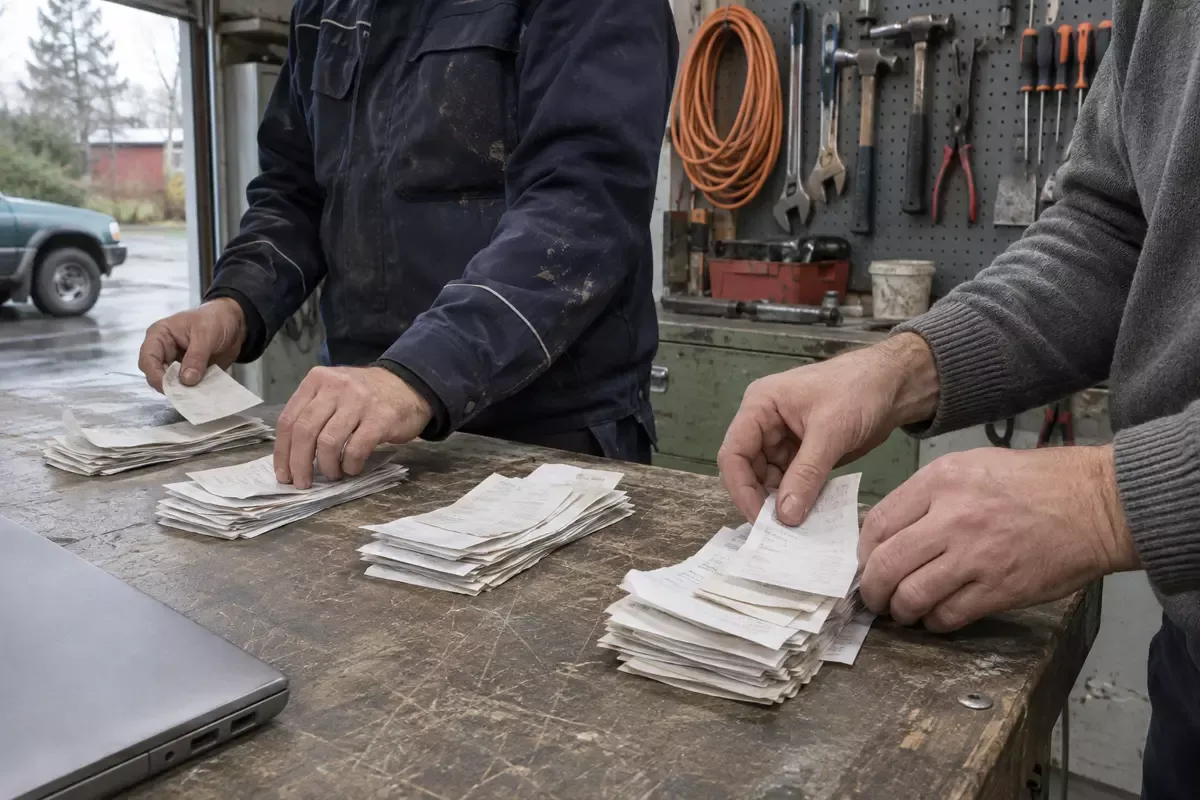
- What to do with a shoebox of receipts before tax season
- Why your deposit and your final payment need to point at the same job
- How a crew of three should think about paying themselves
Post once or twice a week and answer every comment. It is slow, but it compounds, and it gives every referral something to look at when they check you out.
6. List yourself in directories, then keep going
Accounting software companies and some professional associations run free directories where owners look for a bookkeeper. List yourself, fill in your niche in plain words, and add reviews as you collect them.
Do not wait on them. Directories send uneven leads, often to several bookkeepers at once. Treat them as a bonus once your referral channels are working.
Price it so the client count works
Decide how much you need to earn, then work backwards to how many clients that takes. The monthly fee decides how many clients you need, and that decides how hard your marketing has to work.
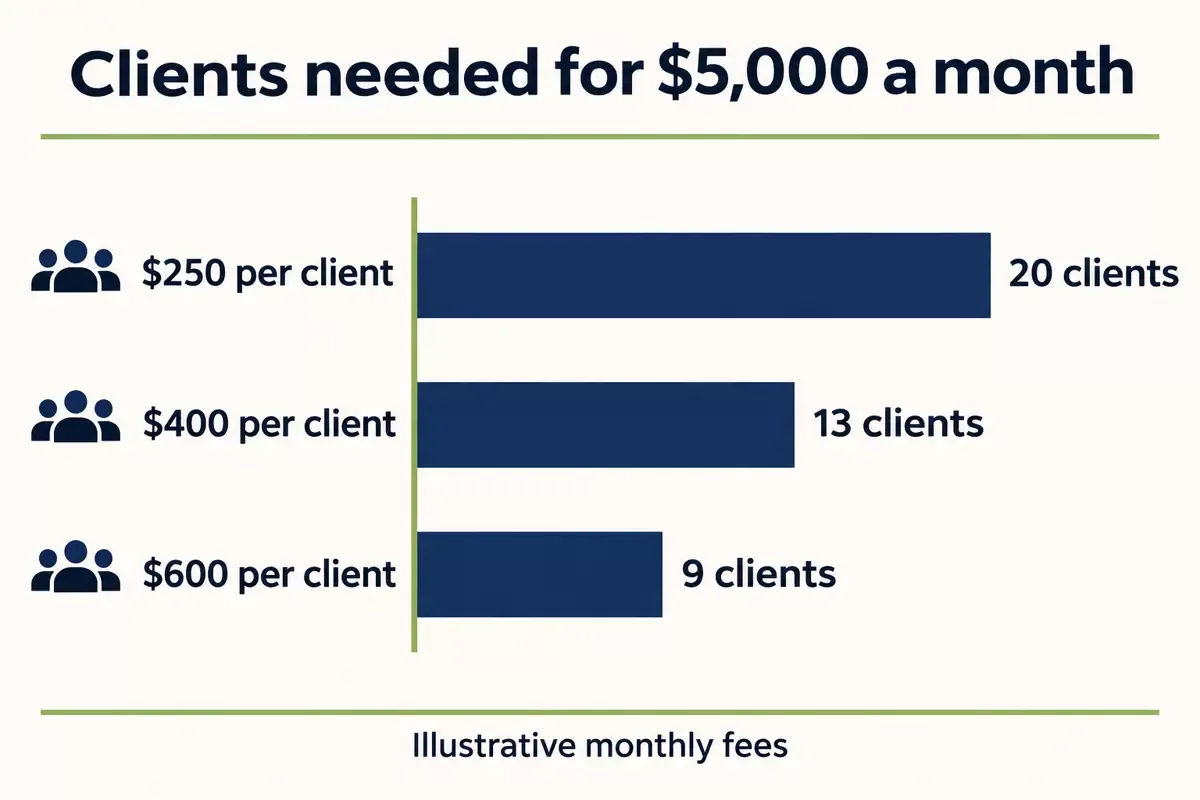
Here is the math with illustrative numbers for a $5,000 a month goal:
| Monthly fee per client | Clients needed for $5,000 | Hours a month at 4 hours per client | What that means |
|---|---|---|---|
| $250 | 20 | 80 | Lots of small clients, more chasing, more churn |
| $400 | 13 | 52 | A manageable book for one person |
| $600 | 9 | 36 | Fewer clients, but each one needs a reason to pay more |
The fee you can charge depends on what you sell, not on how many transactions you enter. A crew owner pays more for "you will know which jobs make money" than for "I will reconcile your bank account". Job costing, sales tax on materials and a short monthly call are how you move up the table.
To set your own floor, work out what an hour of your time really costs with the labor cost calculator, then add your software and insurance. The same margin logic your clients use on their jobs, shown in the markup and margin calculator, applies to your packages too.
Where the shoebox system breaks
You can fix a shoebox once. The problem is next month. If your client still writes invoices on a carbon pad and takes payments by check, cash and three apps, you are re-typing their business every month and guessing which payment belongs to which job.
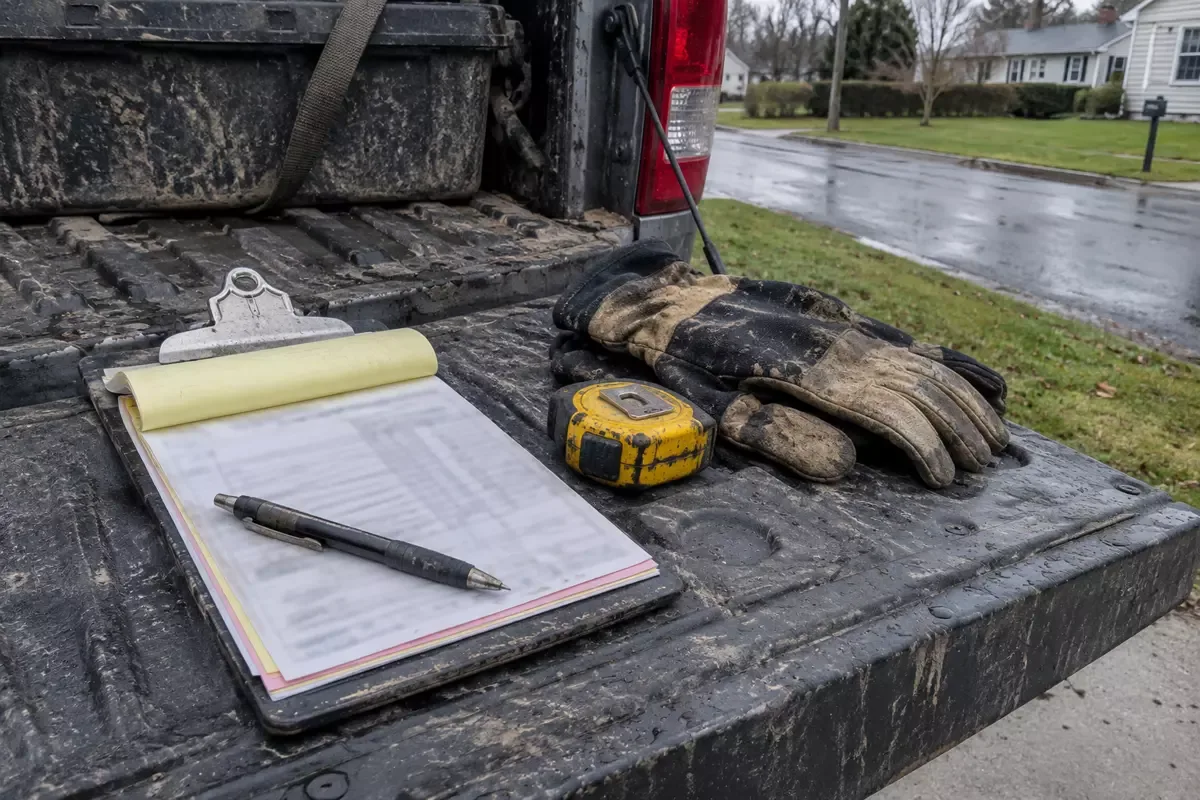
The fix starts in the field, not in your ledger. Ask every new client to photograph receipts the day they get them, and to send every quote and invoice from one place.
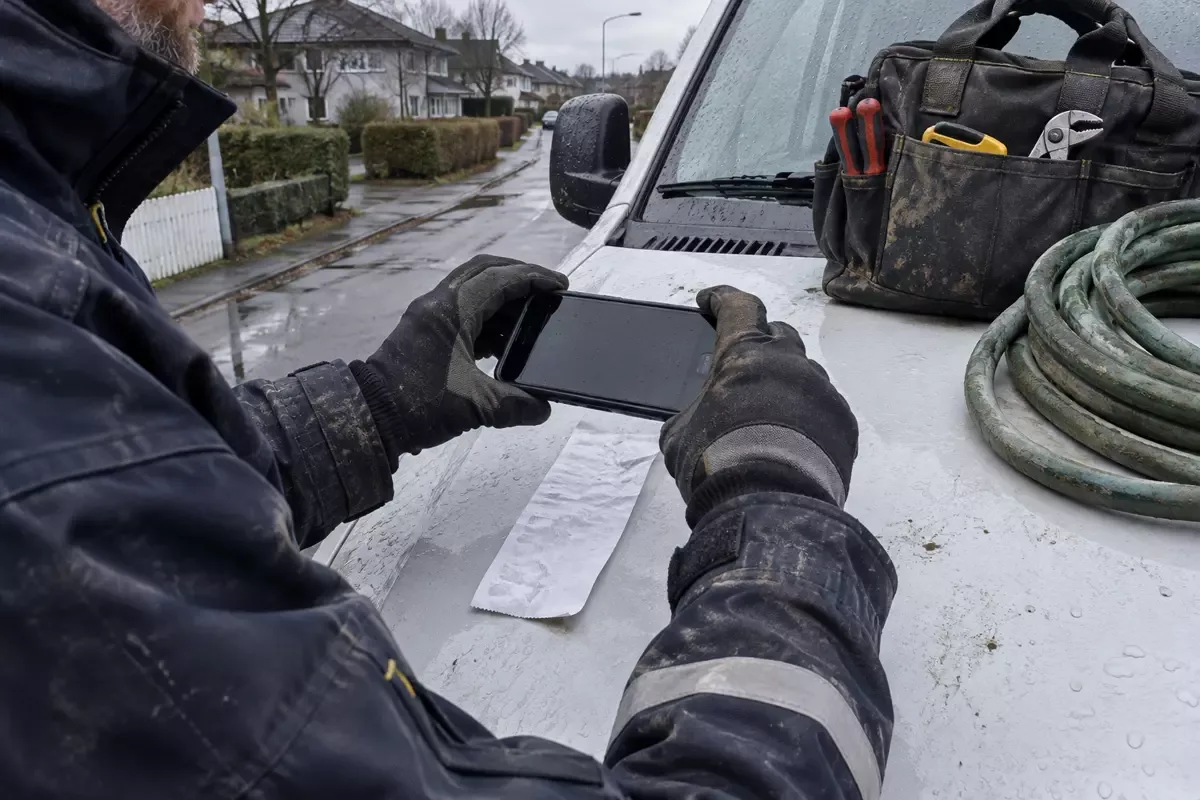
That one place is where Driveway Desk comes in. Your client quotes from the driveway on their phone with their own price book, sends the invoice in one tap, gets paid into their own Stripe or Square account, and the invoices and payments sync to QuickBooks or Xero, so each payment arrives already tied to a customer and a job. One flat price covers the whole crew with no contract, which makes it an easy tool to recommend. If a client asks how it stacks up against the bigger names, the comparison of Jobber alternatives lays out the plans and prices side by side.
If you run the crew yourself, price it once, then start your first quote from the driveway next time.
Price it once, then start your first quote from the driveway next time.
Mistakes that cost new bookkeepers clients
| Mistake | What it costs you |
|---|---|
| Marketing to "all small businesses" | Nobody remembers you, so nobody refers you |
| Quoting cleanups by the hour | Owners stall because they cannot see the final bill |
| Doing the work without a written scope | Monthly work creeps into payroll, tax and admin you never priced |
| Skipping the monthly offer after a cleanup | The books slide back and you start from zero next year |
| Waiting for directory leads | Months with no clients while the referral channels sit unused |
| Never asking for a referral | Your happiest client tells nobody, because nobody asked |
Put the scope in writing before you start, even for a friend. A one-page agreement that lists what is included, what is extra and when you need their documents saves the relationship. The same habit helps your trade clients: a clear quote with a written scope wins jobs and prevents arguments, and you can show them one.
Pick a niche, then let it refer you
Getting bookkeeping clients is a referral game. Start with the people you know and two tax preparers, sell a fixed-price cleanup, then turn it into a monthly package. Pick one niche, ideally one you already understand, and become the name its owners pass around.
If you choose trade contractors, the work is waiting in the truck. Every crew that switches from paper to clean quotes and invoices makes your month easier, and the cleaning business client guide shows how fast those small crews are growing their own customer lists.
Put the method to work
Markup and margin calculatorMarkup divides profit by cost; margin divides profit by selling price. Convert either percentage before quoting.
Frequently asked questions
The first one or two are the hardest, because you have no references yet. After that it gets much easier, as long as you pick a niche and ask every happy client for one referral. Most of the difficulty comes from marketing to everyone instead of one group that talks to each other.
Message 50 people you know with one sentence about what you do and who you do it for, and ask each for one introduction. At the same time, offer two local tax preparers to take the cleanup work they do not want. A fixed-price cleanup is usually the first paid job.
The best sources are referrals from people you know, tax preparers and CPAs, and one niche you serve well, such as plumbers or cleaning crews. Supply-house counters, trade associations and local business groups put you in front of owners. Directories and LinkedIn are slower and work best once you have reviews.
Most small business owners prefer a flat monthly fee, because they can see the cost in advance. Price cleanups by months behind and monthly work by accounts, volume and what is included. Work out your own hourly cost first so every package stays above it.
Put the method to work
Labor cost calculatorDivide paid-hour costs by the billable-hours ratio, then allow for your target margin to find a selling rate.
Your prices, remembered.
Build your first quote on your phone in about two minutes, send it, and get paid into your own account.
Start your first quoteShare article
About the author
Field notes team
We write practical guides for home service crews of one to five. Our editorial standard is to show the calculation, state its assumptions, cite primary sources for factual claims and date competitor comparisons. We distinguish worked examples from market prices and correct errors when they are found. We do not claim trade licenses or credentials on behalf of the team.
More articles

Running a small crew · 13 min
What Do I Need to Start a Mobile Detailing Business? Full Checklist
The mobile detailing startup checklist: paperwork and insurance, the wash and interior kit for the services you sell first, how many towels to stock, and the quote, work order and payment setup.

Running a small crew · 13 min
Roofing Company Business Plan: 7 Parts + Cash Flow Example
A roofing company business plan in seven short sections, with a worked example: one reroof priced line by line, revenue by month, and how much cash a busy June ties up before homeowners pay.

Running a small crew · 11 min
How to Get Clients as a Realtor: 5 Channels That Work
How to get clients as a realtor: start with your sphere and past clients, build referral partners among the trade pros already inside homes, then add open houses and one farm area. Includes a 90-day plan and the commission math.

Running a small crew · 13 min
How to Start a Mobile Detailing Business: Water, Kit, Prices
Start a mobile detailing business in order: pick your first customers, sort licenses and insurance, solve water before buying a polisher, price by your real hours plus the drive, and book the maintenance wash.

Running a small crew · 13 min
How to Get Clients for Your Home Service Business: 7 Ways
How to get clients for a home service business: tell everyone you know, verify a free Google Business Profile, ask for reviews, work the street around every job, and follow up every quote you already sent before you buy a single lead.

Running a small crew · 13 min
How to Get a Contractor License in Texas: Who Needs One
Texas licenses the trade, not the title. General contractors, remodelers and roofers need no state license, just city registration. Electrical, A/C and plumbing contractors need TDLR or TSBPE licenses, experience, an exam and $100,000 to $300,000 insurance.