How to Start a Painting Business: 6 Steps and the Math
Driveway Desk team 9 November 2026 12 min read
Your next job
Less time at the desk.
Build your price book, schedule the next visit and turn completed work into an invoice.
Start your first quoteIn this article
To start a painting business, pick one kind of work to sell first, register and insure the business for your state, buy only the kit that work needs, and set a bill rate from your real costs before you send a bid. Most new painters do best starting with interior repaints for homeowners: the kit is small, the work runs all year and the jobs are easy to measure.
Short answer
Start with interior repaints. Register and insure for your state, buy a basic kit and rent the sprayer, set a bill rate near $56 an hour from your own costs, and time every job so your production rate is real before you bid bigger work.
Which kind of painting business should you start?
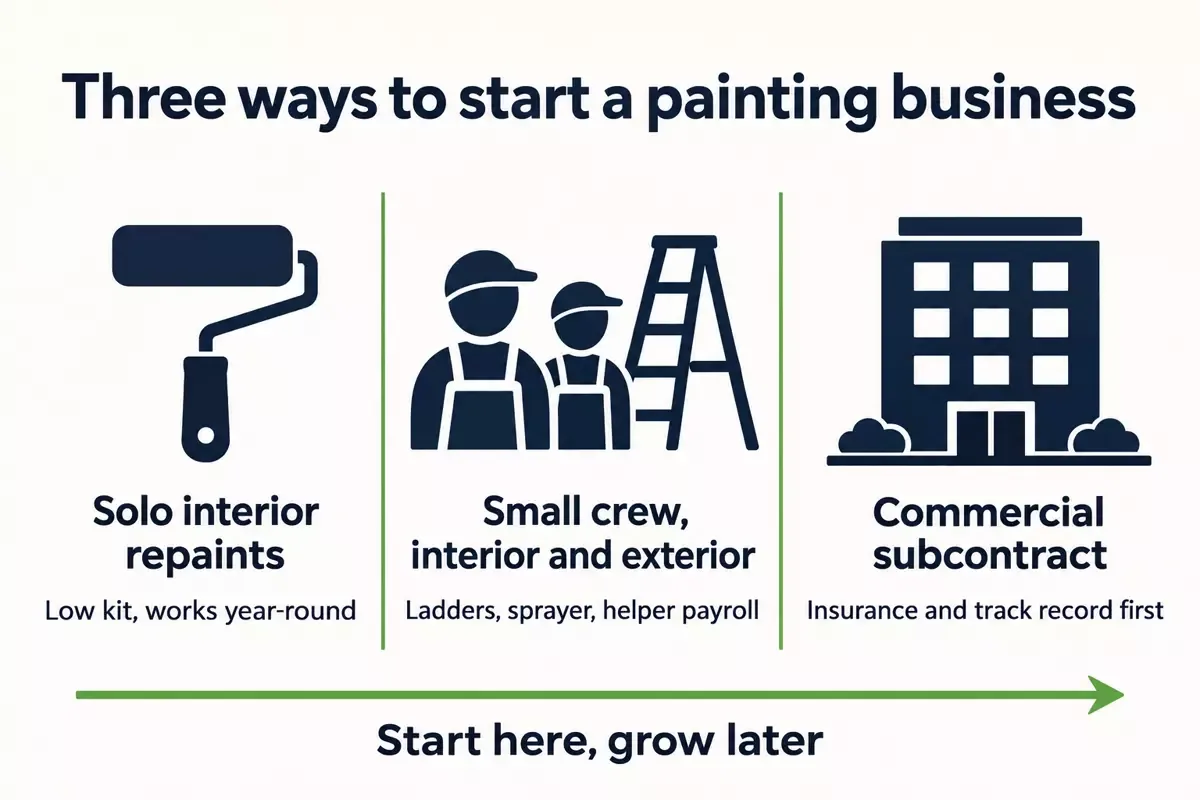
Pick by where you are now, not by where the money looks biggest. Commercial work pays well, but it asks for insurance, paperwork and a track record that a first-year business does not have yet.
| Your situation | Start with | Why |
|---|---|---|
| New to painting, working alone | A season on someone else's crew, or small single-room repaints | You need a few dozen rooms behind you to know how fast you really paint |
| Experienced painter, going solo | Interior repaints for homeowners, priced from hours | Small kit, works in winter, short sales cycle, easy to measure |
| Two or three people, a truck | Interior plus exterior in season | Ladders and a sprayer pay off once you have hands to move them |
| Aiming for commercial | Residential first, then subcontract to general contractors | GCs ask for insurance certificates, references and line-item bids |
If you are still deciding between trades, the same first-year order applies to becoming a handyman, and painting is often the first service a handyman adds.
Register, license and insure the business
Rules vary by state, county and city, so check yours rather than trusting a list. The usual layers:
- Business structure and EIN. Many painters start as a sole proprietor or a single-member LLC. Get an EIN if you will hire or open a business bank account.
- Licenses. Some states license painting contractors, some only above a job value, and many cities want a general business license. The SBA guide to licenses and permits explains the federal, state and local layers. Start at your state contractor licensing board.
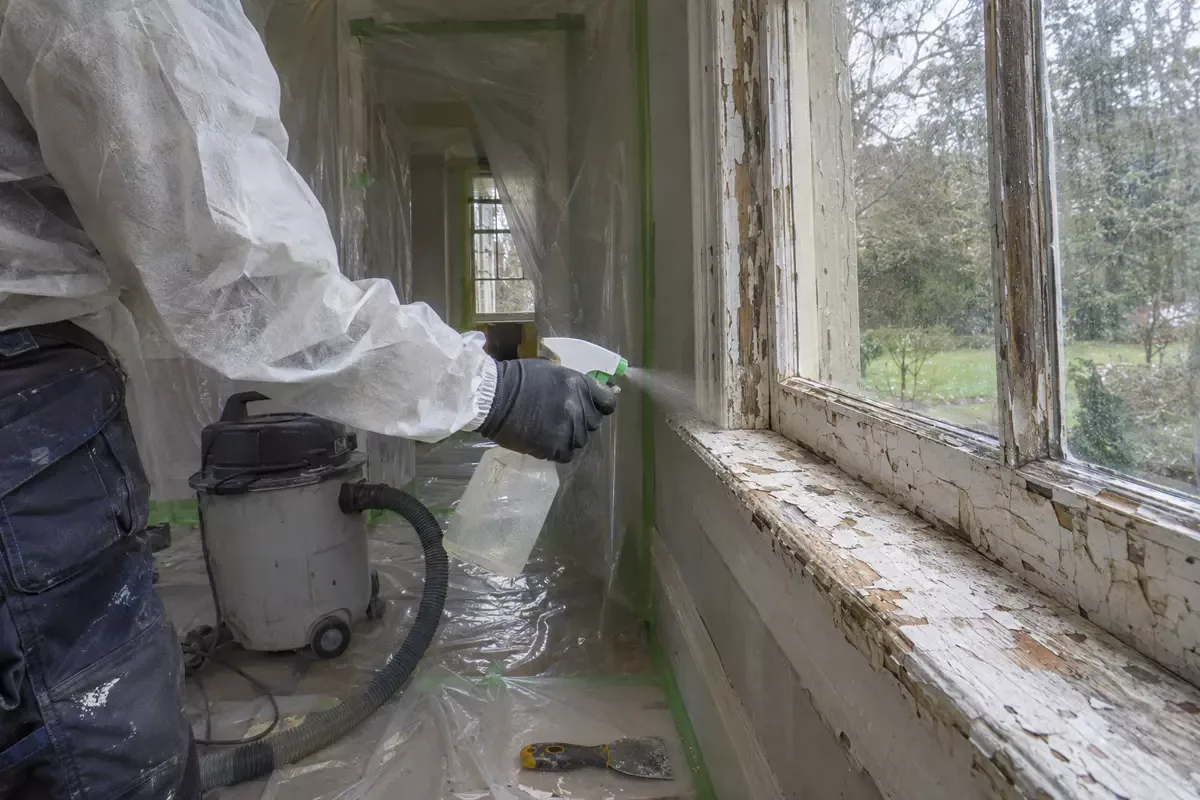
- Lead-safe certification. If you will disturb paint in homes, child care facilities or preschools built before 1978, the firm must be certified and the work led by a certified renovator under the EPA Renovation, Repair and Painting rule. In older neighborhoods that is most repaint work, so plan for it from day one.
- Insurance. Get general liability quoted before the first paid job. You will be on ladders next to someone else's floors, cars and windows. Add workers' comp when you hire, as your state requires.
- A business bank account. Keep job money out of your personal account from the first deposit, so tax time is a download, not a project.
What equipment do you need to start a painting business?
Less than you think. Buy what an interior repaint needs and rent the rest until a job pays for it.
| Item | Needed for | Buy now or later |
|---|---|---|
| Brushes, roller frames, covers, extension pole | Every job | Buy now, buy good brushes |
| Drop cloths, plastic, painter's tape | Protecting the house | Buy now |
| Step ladder | Interior walls and ceilings | Buy now |
| Patch, caulk, sanding sponges, putty knives, caulk gun | Prep | Buy now |
| Buckets and roller grids | Rolling from a bucket, not a tray | Buy now |
| Extension ladder | Exteriors, stairwells | Later, when you sell exteriors |
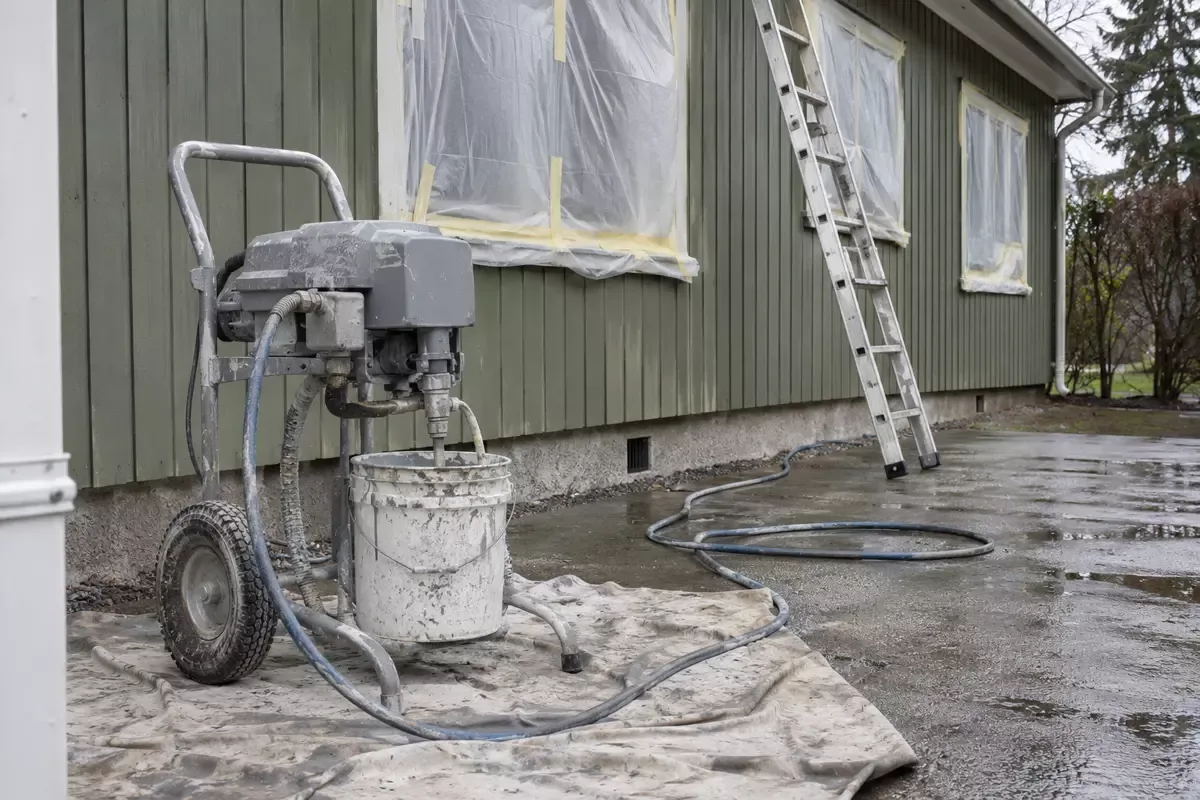
| Airless sprayer | Exteriors, new construction, cabinets | Rent until you book enough spray work |
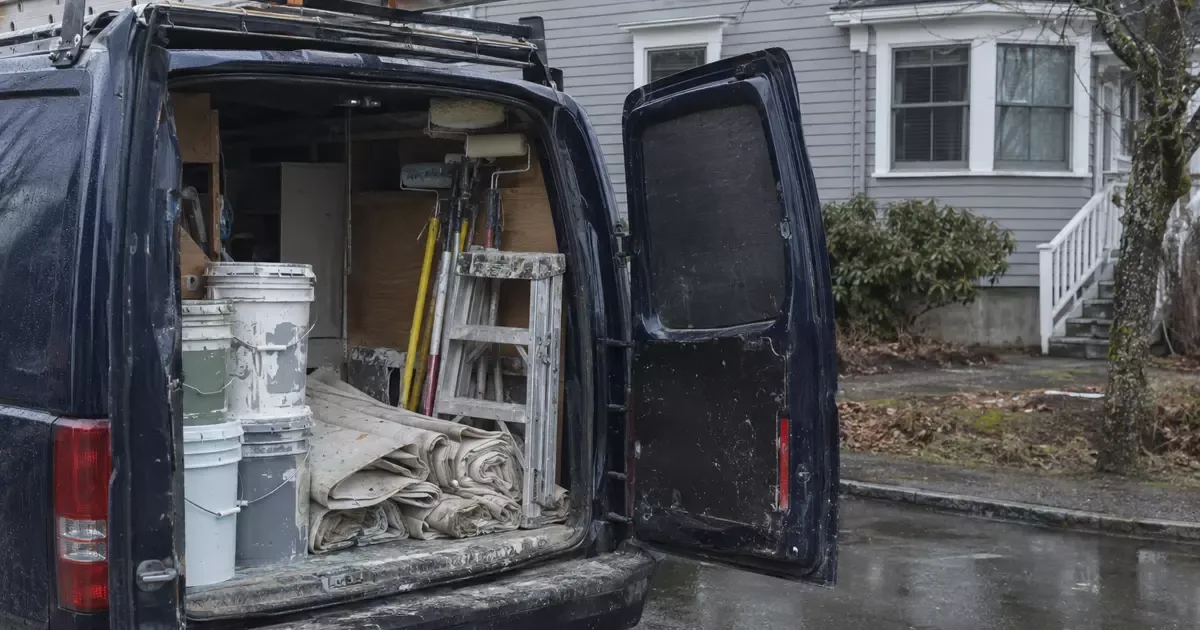
| Van or trailer | Hauling ladders and buckets | Use the vehicle you have first |
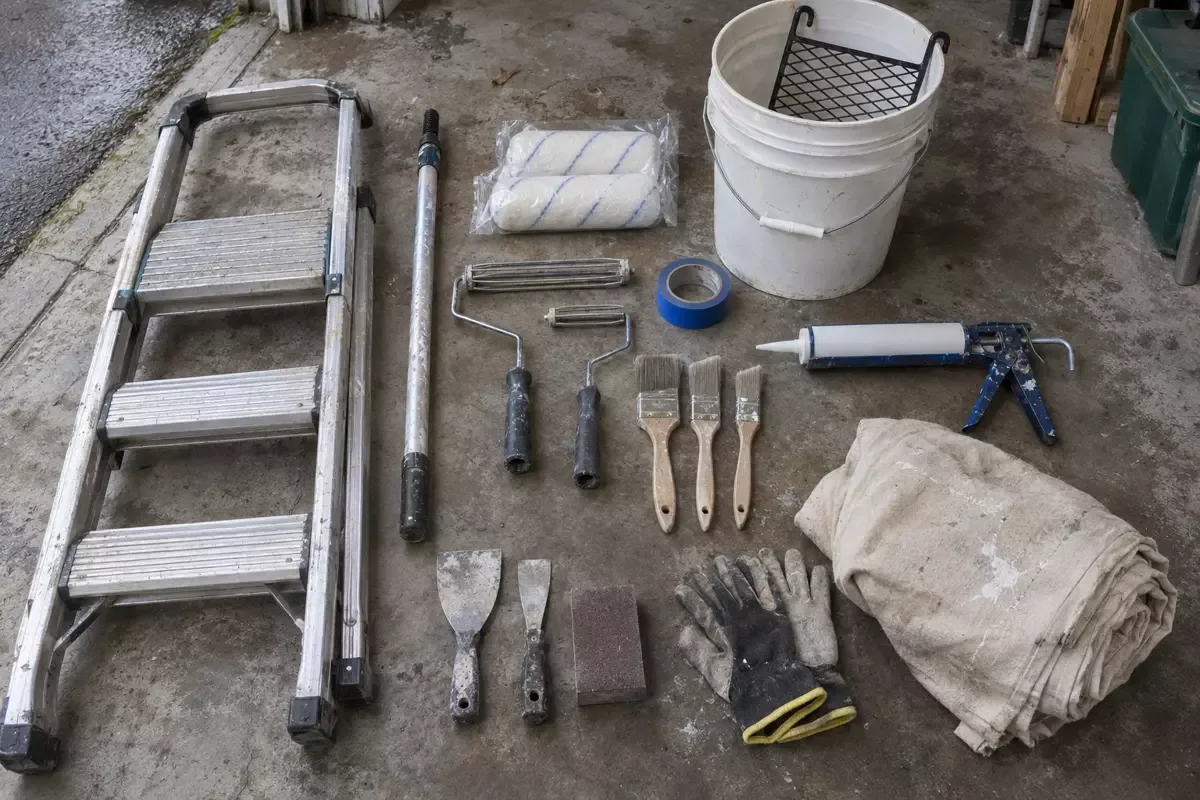
Price the "buy now" rows at your local supply store, add insurance, licensing and three months of phone and fuel, and that total is your startup budget. You will use it in the payback math below.
Your production rate is the business
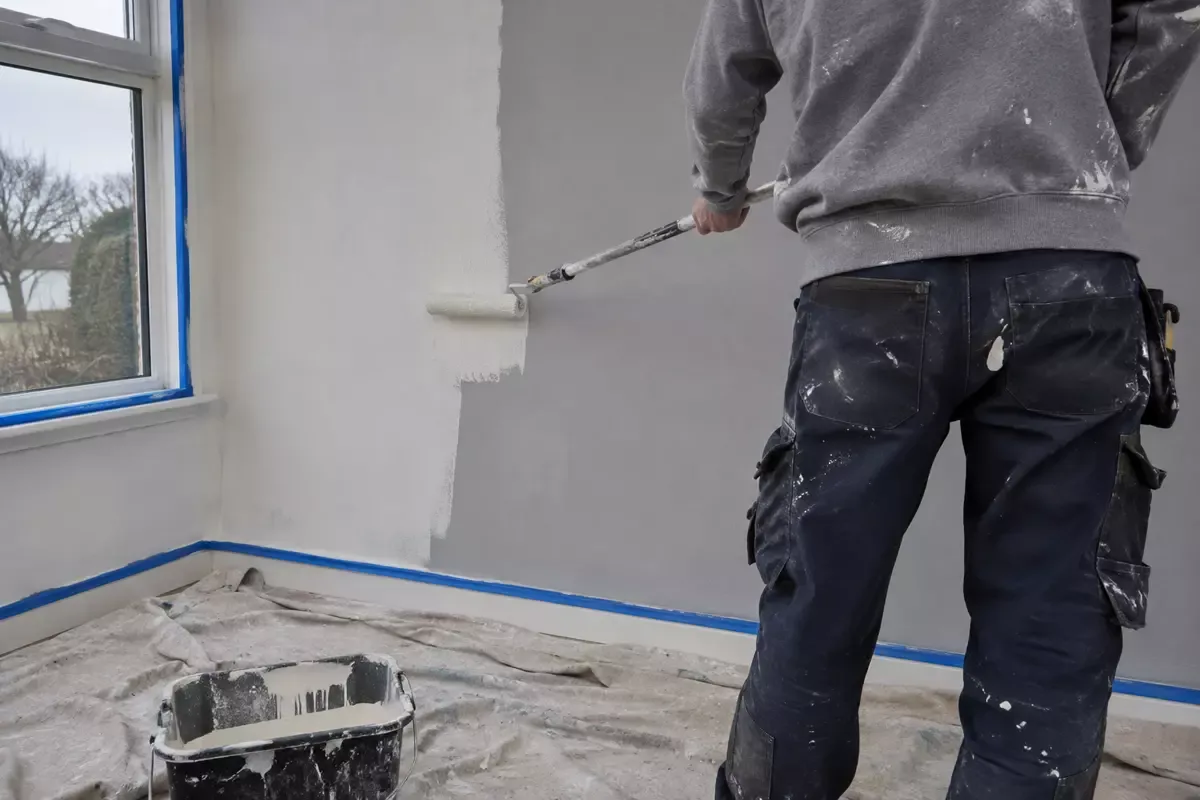
Here is the part most new painters get backwards. Your painting skill is not what makes the business work; knowing your production rate is. A painting bid is hours times your bill rate plus materials, and the hours come from how many square feet you cut in and roll in an hour. Get that wrong and every bid is wrong by the same amount.
Take the 1,000 sq ft interior repaint from our worked painting bid: 38 labor hours, about $645 of paint and $100 of supplies, $2,875 total. Now see what each kind of wrong guess costs on that one job:
| Wrong guess | Math | What it costs you |
|---|---|---|
| Paint costs $5 more per gallon than you priced | 15 gallons x $5 | $75 |
| Walls roll 20% slower than you planned | 20 wall hours become 24, 4 hr x $56 | $224 |
| Prep takes a full day, not 4 hours | 4 extra hours x $56 | $224 |
A slow production rate costs three times what a paint price surprise does. So time yourself. Write down the square feet and the hours on every job for your first two months, by task: setup, prep, ceilings, walls, trim. After ten jobs you will have your own rates, and your bids stop being guesses.
Set your bill rate from your real costs
Your bill rate is not what a painter earns per hour as an employee. You also pay for the hours you cannot bill and for your overhead, then you need a profit. Here is the same build as in our guide to what painters charge, with illustrative inputs:
| Line | Worked example | How it is calculated |
|---|---|---|
| Your pay per hour worked | $28.00 | What you want to earn per hour |
| Share of hours you can bill | 70% | The rest is quoting, driving, supply runs |
| Your pay per billed hour | $40.00 | $28 / 0.70 |
| Overhead per billed hour | $9.00 | $12,000 a year / 1,400 billed hours |
| Profit at 15% | $7.35 | $49 x 0.15 |
| Bill rate | $56 | Rounded |
Try your numbers
Example estimate of your job price. Before tax.
Your billable rate
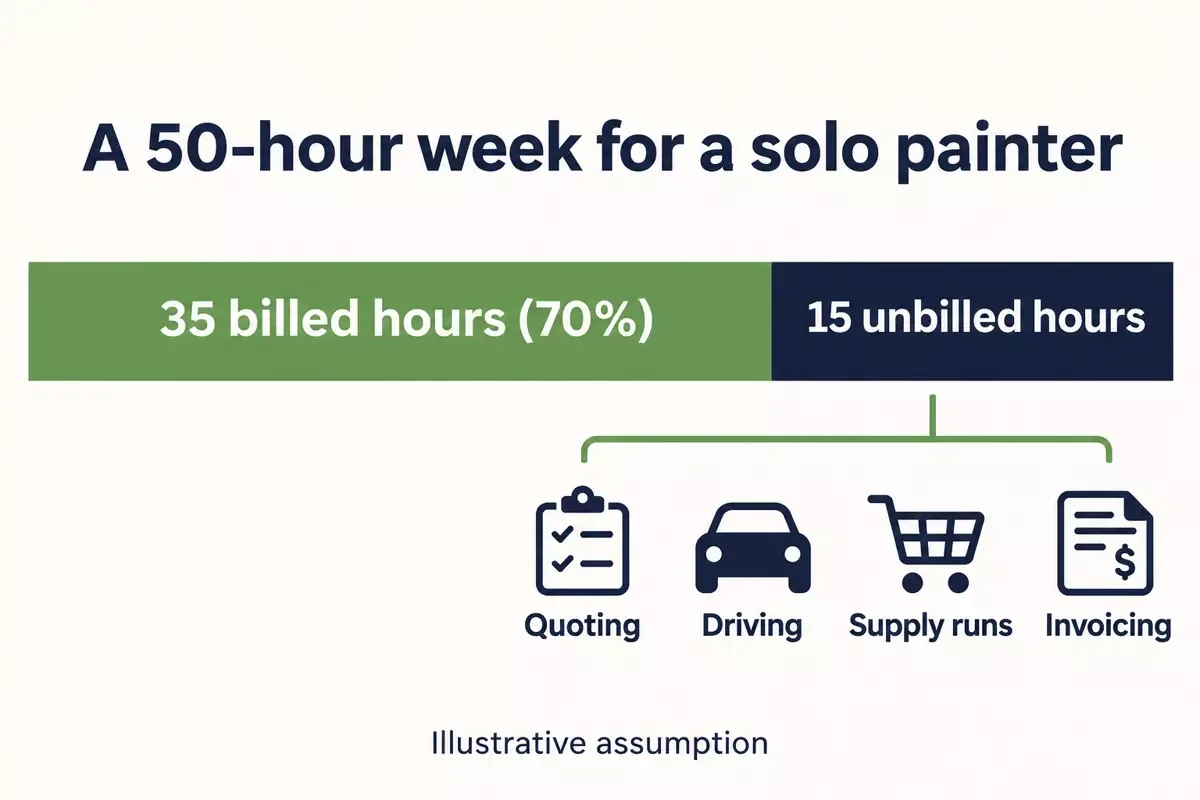
That 70% is the number to protect. Every hour you spend retyping a quote at night or driving back for a forgotten gallon is an hour the bill rate has to cover. If you buy materials and resell them on the invoice, the markup and margin calculator shows what a markup actually leaves you.
How many jobs pay back your startup costs?
Divide your startup budget by what each job leaves after your own pay. On the $56 build, every billed hour carries $9 of overhead and $7.35 of profit, so $16.35 an hour goes toward paying back the kit and the paperwork.
| Line | Amount |
|---|---|
| Illustrative startup budget: kit, insurance, licensing, three months of phone and fuel | $3,000 |
| Billed hours on the $2,875 interior repaint | 38 |
| Overhead and profit per billed hour | $16.35 |
| Paid back per job | $621 |
| Jobs to pay back the budget | 5 |
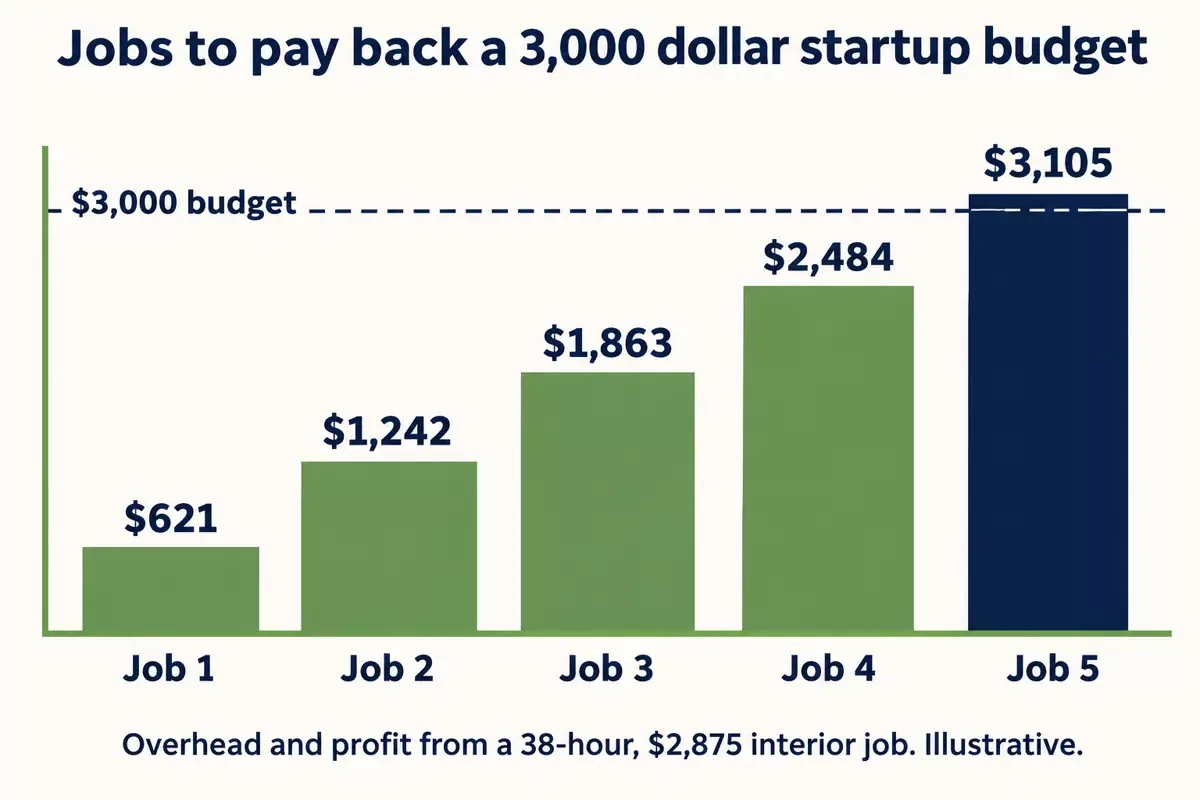
Five whole-floor repaints, or a couple of months of single rooms. Use your own budget and your own hours, but keep the order: price first, then buy. Price it once, then start your first quote from the driveway next time.
How do you get your first painting customers?
Start close to home and make every job produce the next one.
- People who already know you. Tell neighbors, friends and past employers you are taking interior repaints. Your first jobs come from trust, not ads.
- Rental turnovers. Property managers and landlords need empty units painted fast between tenants. Quote a per-unit price built from your hours and you can get repeat work.
- A Google Business Profile. Add photos of finished rooms and your service area.
- Reviews on every job. Ask on the last day while the room looks its best. If you send review requests by text, get the customer's consent first, as US texting rules (TCPA) require.
- Pressure washers and handymen. They see houses before they are painted. Trade referrals with them; exteriors are washed before they are painted, which is why pressure washing businesses make good partners.
Start your painting business in order
How to start a painting business
- Pick your first service
Choose interior repaints, exteriors or both, and write down what you will not take yet.
- Register, license and insure
Set up the structure, EIN and bank account, check your state and city licensing, get lead-safe certified if you will work on pre-1978 homes, and buy general liability insurance.
- Buy the starter kit
Buy what an interior repaint needs. Rent the sprayer and the long ladders until a booked job pays for them.
- Set your bill rate
Build it from the pay you want, the share of hours you can bill, your overhead and a profit, as in the table above.
- Bid every job from measurements
Measure the walls, ceilings and trim, turn the square feet into hours with your production rate, add paint and supplies, and send a written estimate or a fixed quote with what is and is not included.
- Time the job, invoice the same day
Log the hours by task, send the invoice before you leave the house and ask for a review.
Run the office from your phone
The paper version works for your first ten jobs: a notebook for measurements, a spreadsheet for rates, an invoice template. The wall comes when you are retyping the same room prices into every quote at the kitchen table at night and chasing last week's invoices. That is time your bill rate has to pay for. Driveway Desk keeps your price book, so a painting quote is a few taps in the customer's driveway, and the invoice goes out the day the job is done, paid into your own Stripe or Square account. One flat price for the crew, no contract. Compare that with what Housecall Pro costs a small crew, or see plans and pricing.
Price it once, then start your first quote from the driveway next time.
Mistakes that cost new painting businesses money
- Bidding from a per square foot number you found online. It hides whether ceilings, trim and doors are in. Build the price from your hours, then use square feet only as a check.
- Buying a sprayer before you have spray work. It sits in the van while you roll rooms. Rent it for the first few exteriors.
- Skipping lead-safe rules on older homes. On a pre-1978 house, disturbing paint without certification and lead-safe work practices is a federal violation, and it puts the family at risk.
- No written scope. "Paint the living room" becomes "and the closet, and the trim" when the quote does not list what is included.
- Not timing your jobs. Without your own production rate, your next bid is a guess too.
Start with rooms, not a rig
Start with interior repaints, get the paperwork right for your state, buy the small kit and rent the big one, and set a bill rate that pays for your unbilled hours. Then time every job until your production rate is your own. When the first bids go out, build each one from measured hours and keep them on the same estimate every time.
Put the method to work
Estimate templateCreate a free estimate with separate materials and labor, a fixed total or range, validity and assumptions. Save the finished document as a PDF.
Frequently asked questions
It depends on your state's licensing and insurance costs and how much kit you already own. List the brushes, rollers, ladders, drop cloths and prep tools an interior repaint needs, add insurance, licensing and three months of phone and fuel, and price each at your local suppliers. Rent the sprayer and long ladders until a job pays for them.
It depends on where you work. Some states license painting contractors, some only above a certain job value, and many cities require a general business license. Check your state contractor licensing board and city hall. If you will disturb paint in homes built before 1978, the EPA lead-safe rule applies in every state, run either by the EPA or by your state.
As a bill rate, $50 an hour is close to the $56 build in this guide, which pays $28 per hour worked, covers unbilled time and overhead and leaves 15% profit. Whether it is good for you depends on your overhead and how many of your hours you can bill. Build your own rate before you quote it.
There is no single official rule. Painters most often use it to say that prep, not the final coat, decides how the job turns out: patching, sanding, caulking and masking take most of the effort. For a new business the lesson is the same: put prep on its own line in your hours so it is paid for.
A 12x12 room with 8 ft walls, one door and one window has about 348 sq ft of wall to paint. In our worked example at a $56 bill rate, walls only with two coats come to about $446, walls and ceiling about $570, and walls, ceiling, trim and door about $707. The scope moves the price more than the room size.
It can be, if the bill rate is built from your costs and your bids come from your real production rate. In the worked example, each billed hour leaves $7.35 of profit after your pay and overhead. Profit disappears when bids rest on guesses, prep is unpaid and invoices go out late.
Put the method to work
Labor cost calculatorDivide paid-hour costs by the billable-hours ratio, then allow for your target margin to find a selling rate.
Your prices, remembered.
Build your first quote on your phone in about two minutes, send it, and get paid into your own account.
Start your first quoteShare article
About the author
Field notes team
We write practical guides for home service crews of one to five. Our editorial standard is to show the calculation, state its assumptions, cite primary sources for factual claims and date competitor comparisons. We distinguish worked examples from market prices and correct errors when they are found. We do not claim trade licenses or credentials on behalf of the team.
More articles

Running a small crew · 13 min
What Do I Need to Start a Mobile Detailing Business? Full Checklist
The mobile detailing startup checklist: paperwork and insurance, the wash and interior kit for the services you sell first, how many towels to stock, and the quote, work order and payment setup.

Running a small crew · 13 min
Roofing Company Business Plan: 7 Parts + Cash Flow Example
A roofing company business plan in seven short sections, with a worked example: one reroof priced line by line, revenue by month, and how much cash a busy June ties up before homeowners pay.

Running a small crew · 11 min
How to Get Clients as a Realtor: 5 Channels That Work
How to get clients as a realtor: start with your sphere and past clients, build referral partners among the trade pros already inside homes, then add open houses and one farm area. Includes a 90-day plan and the commission math.

Running a small crew · 14 min
How to Get Bookkeeping Clients: 6 Ways That Actually Work
How to get bookkeeping clients: start with people you know and local tax preparers, sell a fixed-price cleanup first, then pick one niche, such as trade contractors, and become the bookkeeper its owners refer.

Running a small crew · 13 min
How to Start a Mobile Detailing Business: Water, Kit, Prices
Start a mobile detailing business in order: pick your first customers, sort licenses and insurance, solve water before buying a polisher, price by your real hours plus the drive, and book the maintenance wash.

Running a small crew · 13 min
How to Get Clients for Your Home Service Business: 7 Ways
How to get clients for a home service business: tell everyone you know, verify a free Google Business Profile, ask for reviews, work the street around every job, and follow up every quote you already sent before you buy a single lead.